
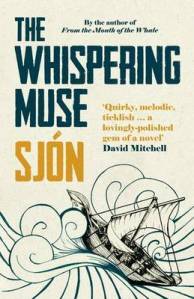
 The Whispering Muse by Icelandic poet, songwriter and novelist Sjón, known for his collaborations with Björk and winner of the Nordic Council Literary Prize (equivalent of the Man Booker Prize) for this novel, was the first book I chose to read for the New year.
I chose it because it’s by an Icelandic author and because it delves into the realm of myth and fable, Alberto Manguel called it:
“an extraordinary, powerful fable – a marvel.”
I loved this gem of a book, which demanded much more from the reader wanting true fulfilment, than the mere 143 pages it was written on.
It is an invitation to embark on the adventures of The Argonauts, as told by the second mate Caeneus, who while voyaging on a ship in 1949 narrates his previous adventures on the ship Argo under Captain Jason in their quest for the Golden Fleece.
“Before embarking on his tales the mate had the habit of drawing a rotten chip of wood from his pocket and holding it to his right ear like a telephone receiver. He would listen to the chip for a minute or two, closing his eyes as if asleep, while under his eyelids his pupils quivered to and fro.”
Not being familiar with the epic poem written by Apollonius of Rhodes, (Hellenistic poet, 3rd century BC) I diverged off course to familiarise myself with its plot, and some of the named characters mentioned, as the book is full of mythological literary references that make a pleasant and fulfilling divergence in its reading, not least of which we learn why Caeneus has much respect for wood, though more is revealed on its significance later.
Set in 1949 as an elderly, eccentric Icelandic man is invited by the father of one of the fans of his work on Nordic culture and fish consumption, to embark on a voyage at sea from Copenhagen to the Black Sea, he recounts his journey as he sees it, while learning about the grand voyage of Caeneus and his many transformations.
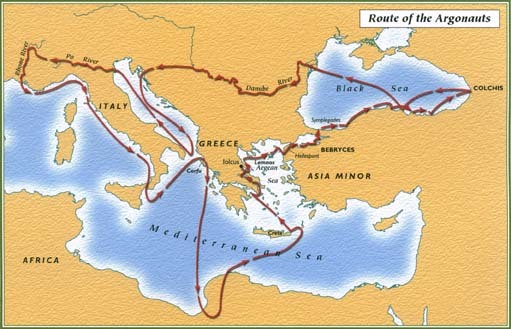
The sources quoted on the last page provide a link to the ancient sparks that ignited the imagination of Sjón. Familiarity with The Argonauts, Medea, Hypsipyle and Metamorphoses would benefit, but the story is equally accessible with superficial knowledge of those stories.
Entertaining, intriguing, intellectually stimulating and fun, what more could one ask for from a book read on the 1st day of the new year 2016.
I scribbled more notes in the margin than I have every done before and I’m still wondering whether the old man might have had a mild dementia, as the latter part of the book has him witnessing some strange, unaccounted for events. Nothing is ever as it seems and a reader’s imagination can contribute as much to the story as one wishes.
“I was thinking: could the voice you detect in the humming of the wood be your own voice? Like the poet who obstinately believes that he is writing about the world but is in reality only telling yet another story about himself?”
 It wasn’t the bookies favourite, but it was the bestselling book of the
  to avoid his death which it the oracles say will follow his killing of Hector.

 Word by Word