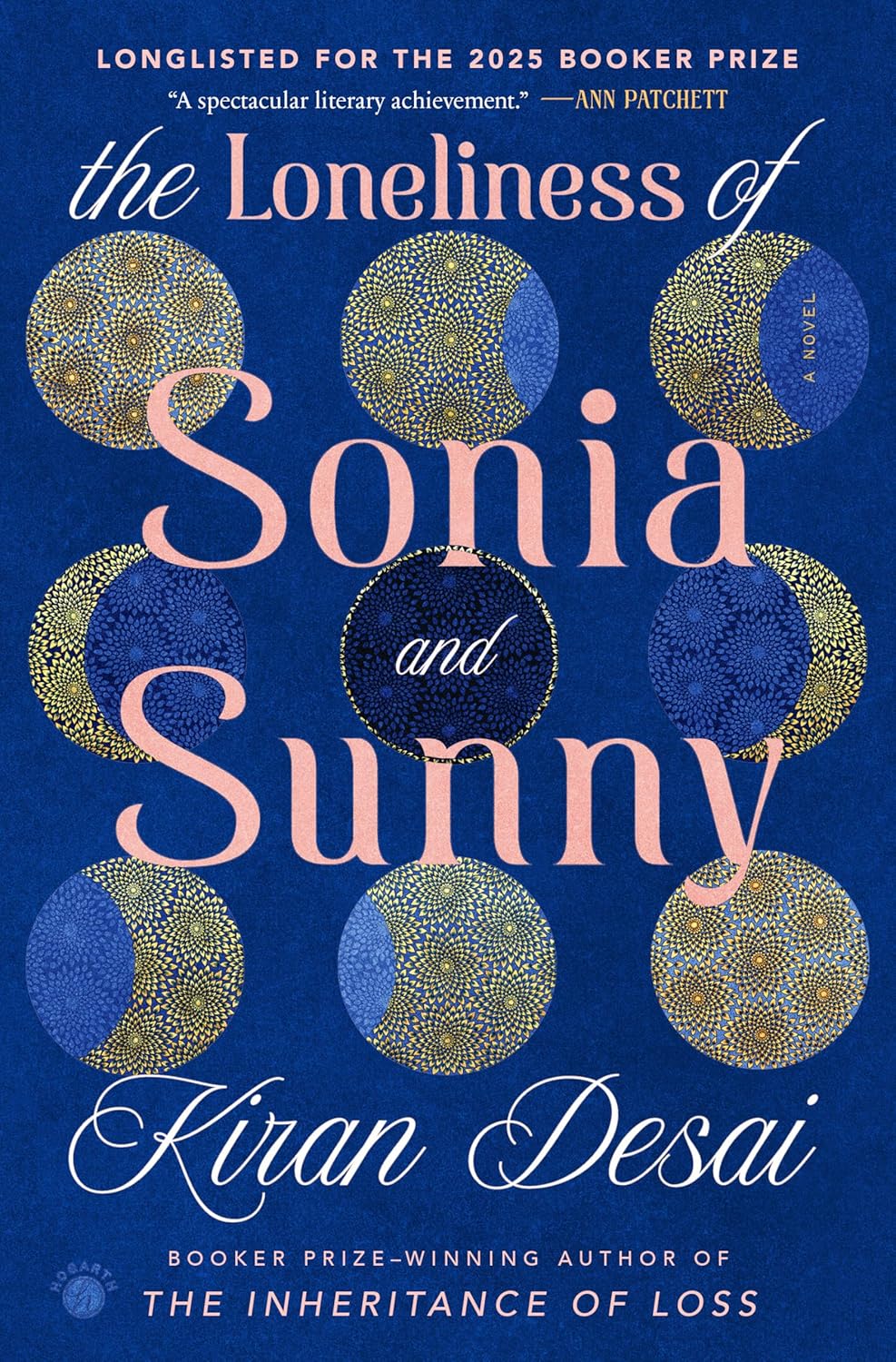
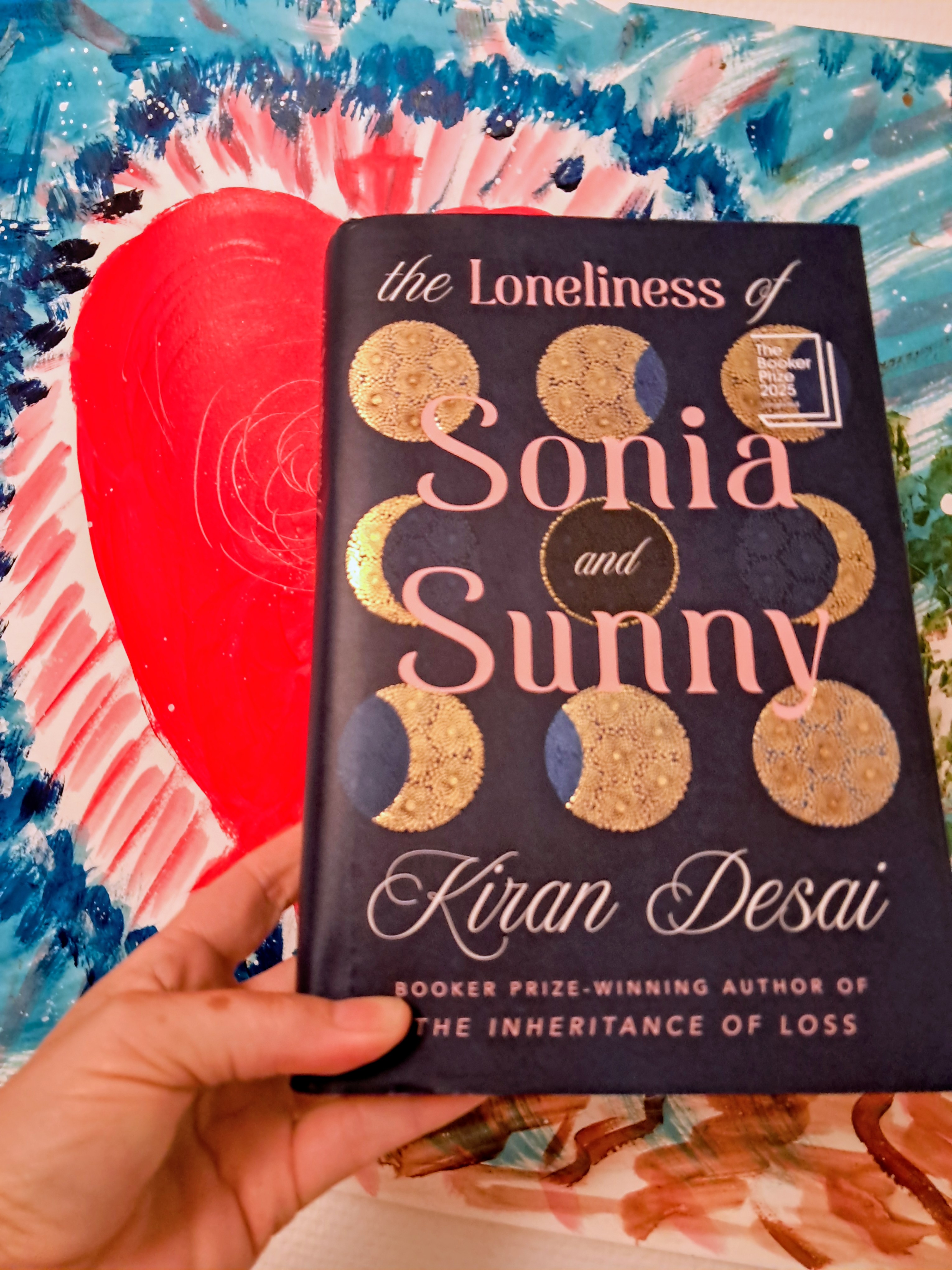
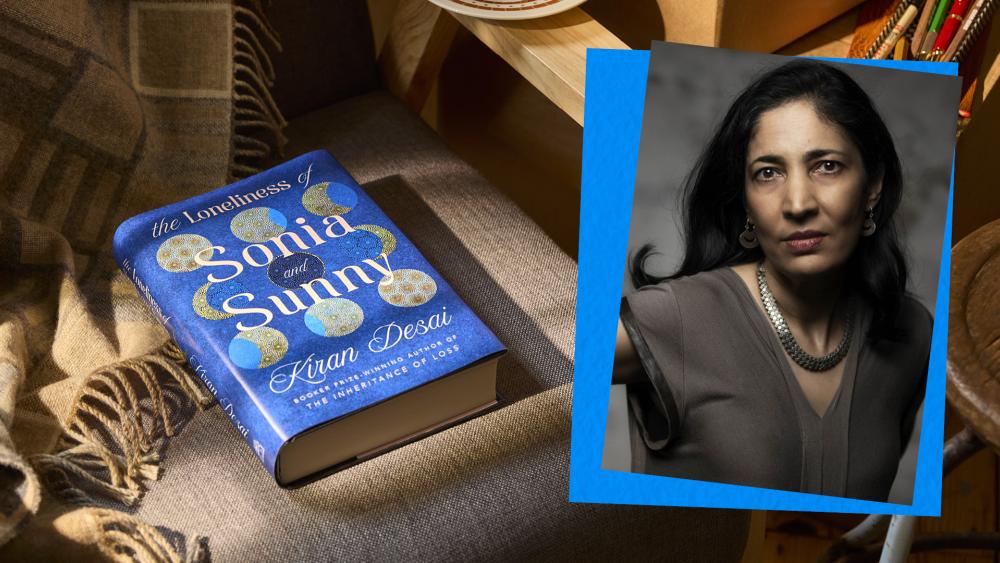
It has been twenty years since Kiran Desai published her Booker Prize winning The Inheritance of Loss, so this latest novel has been much anticipated by many.
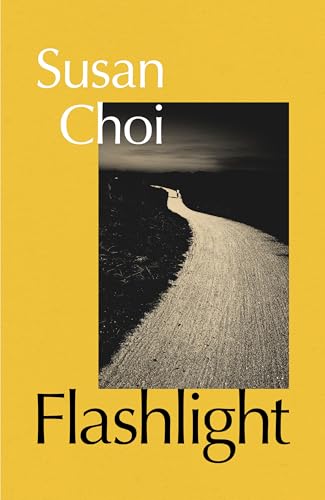
It was one of two Booker shortlisted novels this year that I was interested to read, because of their cross-cultural settings, the other being Flashlight by Susan Choi, set in Japan, US and North Korea.
Character led New Generation Indian Drama
At 670 pages, I had to be sure about Desai’s novel before committing to read it, an immersive Indian family saga sounded promising, then the author’s intention to write ‘a present-day romance with an old-fashioned beauty’ sealed it for me.
It was everything I hoped and more. All the old fashioned values and dilemmas of an India of the past and then the mix of young people sent abroad for an American education, isolated from their home culture and influences, while both benefiting from, and coping with the effect of a western education and so-called freedoms as they try to find their place in the world.
We also bear witness to the imbalance in power in a co-dependent and coercive relationship of a manipulative and emotionally abusive man over a young woman, who struggles to see what is happening to her and yet knows it is not right.
The Loneliness of Winter in a Foreign Country
In this modern day Indian family chronicle, we meet aspiring novelist, freelance writer Sonia in the snowy mountains of Vermont, and Sunny a struggling journalist now in New York.
Unable to return home during the holidays, having been in America for three years and not returned to India for two, Sonia complains to her family.
“Lonely? Lonely?”
In Allahabad they had no patience with loneliness. They might have felt the loneliness of being misunderstood; they might know the sucked-dead feeling of Allahabad afternoons, a tide drawn out perhaps, never to return, which was a kind of loneliness: but they had never slept in a house alone, never eaten a meal alone, never lived in a place where they were unknown, never woken without a cook bringing tea or wishing good morning to several individuals.
In Vermont working on campus in the library over the two month winter closure, with two foreign students, one day she encounters a much older man Ilan de Toorjen Foss, who invites her to dine, promises to find an internship for her. He takes something from her that becomes one of the core threads of the story, the thing that will bring Sonia and Sunny’s fates full circle.
Her colleagues in the library are suspicious.
“I still don’t understand who this person is and why he is here in the dead of winter. It doesn’t add up. Where is his family?”
When Sunny’s American girlfriend Ulla opens a letter from his mother with a photo of Sonia inside, he tries to downplay the foreign custom it refers to. She is suspicious.
“There’s nothing sinister about the letter,” he said. “Everyone gets these at my age, forwarded by relatives, friends, people who’ve never set eyes on you – a great pile arrives when you finish college, and the flood continues until everyone is settled. Then there is a lull before they begin marrying off the progeny of these mishaps, each generation lesser than what came before, because what hope can you have from such a process?”
Sunny avoids answering his mother’s calls and now his girlfriend suspects this custom might be the real reason he is reluctant to tell his family about their relationship. He finds it increasingly difficult to navigate his relationship, discovering there are as many pressures and expectations, with little understanding of the rules. He seeks an escape.
An Arranged Marriage? Not Likely!
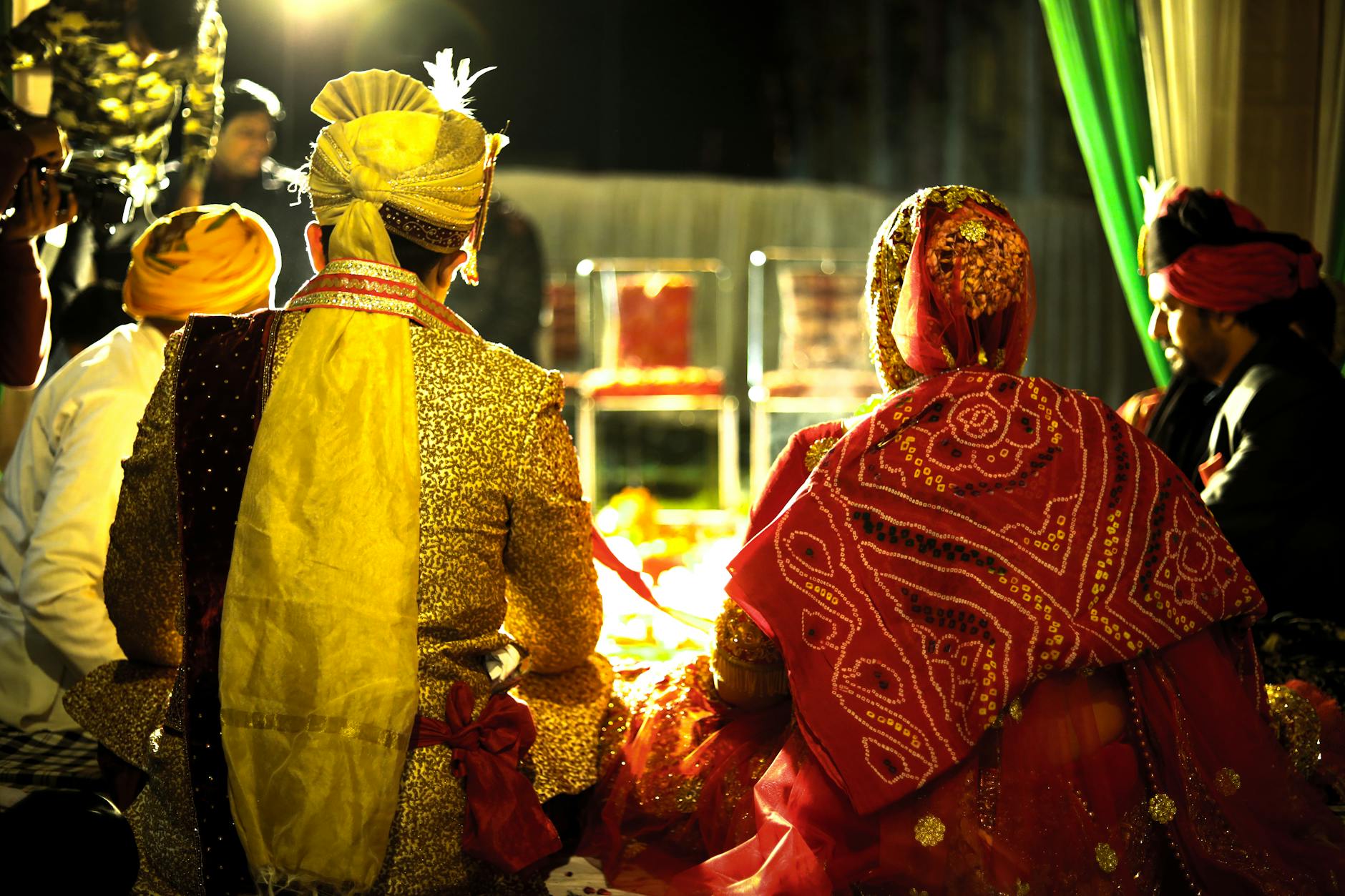
Neither Sonia or Sunny are thinking about marriage according to the cultural traditions of their parents generation; they are too swept up dealing with their current circumstances. The letters they received were a response to a letter in India, sent from one family to the other, suggesting a match, inferring but never outright stating, a kind of favour that might balance out an old grievance these families had faced a decade ago, after an investment turned sour.
It was essential to remain close to those who had caused you harm so that the ghost of guilt might breathe through their dreams, that their guilt might slowly mature to its fullest potential. Not that Dadaji had thought it through – it never worked to consciously plot, to crudely calculate – and he himself was astonished at the possibility of what was unfolding. Even now it would never do to name this liability. The Colonel would not allow his grandson to bear the burden of his grandfather’s mistake. Dadji and Ba may simply suggest a desirable match between the grandchildren, two America-educated individuals, two equals, two people who naturally belonged together because of where they came from and where they were going. Without either of them mentioning it, the obligation might be beautifully unravelled.
The intended match fizzles out without Sonia or Sunny meeting, neither are interested, both already in romantic connections they are attached to but not entirely happy in.
However their paths will cross, igniting intrigue, but again they separate, as they struggle to find their place in the world and in themselves and overcome the mistakes they have made on the way, which have nothing to do with each other.
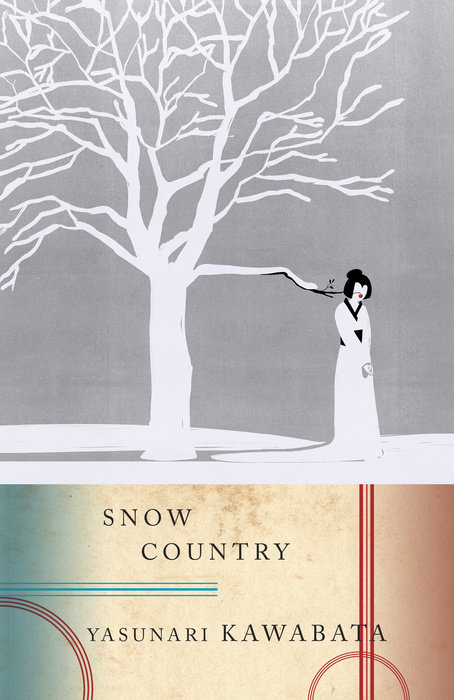
He passed a young woman sitting cross-legged staring at the rain. By her side was a book. Because Sunny couldn’t abide passing a book whose title he could not read, he walked by again and saw she had a face planed like a leopard, long lips, and watchful eyes, hair in a single oiled braid, but he still couldn’t see the title. So he passed by again. And one more time before he detected it: Snow Country by Kawabata.
Ultimately the two young people flee their present and go into a period of self imposed reflection, Sonia retreating to her mother’s house in the mountains, where she has mystical revelations that she decides not to be frightened of, but to look for simpler meaning from; while Sunny finds solace in nature and human rhythms in a village on the coast of Mexico, blending in with locals and receiving a visit from his friend Satya who is having his own realisations, seeking apology and reconciliation.
There is so much to navigate and nothing mentioned gives anything away, just an idea of the journey these two will go on as they seek a solution to their loneliness, a confrontation with themselves, in various parts of the world.
I was hoping for an immersive, character led Indian novel and this was everything I hoped for and more. It had all the old fashioned values and dilemmas of an India of the past and then the interesting blend of young people sent abroad for an education, isolated from their culture and influences, experimenting with the new and forbidden, benefiting from and coping with the effect of a western education and freedoms, while trying to understand themselves and their place in the world.
Though there were aspects that were deeply troubling, like the grooming of a young foreign student by a much older man, they are sadly relevant to the situation an isolated young woman without family around, might encounter abroad.
At the same time there were generational threads and mystical elements that disturb the equilibrium; there are parasitic entities met on their paths that cause them to learn, to suffer and grow, requiring surrender and courage. Everyone, young and old alike, must deal with their situation in order for any kind of balance to be regained.
I found the novel thoroughly entertaining and engaging, the mix of traditional and contemporary attitudes, the facing up to change and resistance against old roles. To a certain extent, as outsiders to the culture, we rely on authors to represent it authentically, but here we have characters that have been influenced and educated outside their own culture from within privileged families, which makes them neither one thing nor the other.
Loved all of it, did not want it to end, the ending was perfect.
Kiran Desai was born in New Delhi, India, was educated in India, England and the United States, and now lives in New York.
She is the author of Hullabaloo in the Guava Orchard, which was published to unanimous acclaim in over 22 countries, and The Inheritance of Loss, which won the Booker Prize in 2006, as well as the National Book Critics Circle Award, and was shortlisted for the Orange Broadband Prize for Fiction. Her third novel, The Loneliness of Sonia and Sunny, was shortlisted for the Booker Prize 2025.
In 2015, the Economic Times listed her as one of 20 most influential global Indian women.
In the past of my parents, and certainly my grandparents, an Indian love story would mostly be rooted in one community, one class, one religion, and often also one place. But a love story in today’s globalised world would likely wander in so many different directions. My characters consider: Why this person? Why not as easily someone else? Why here, not there? In the past people were always where they had to be. My indecisive lovers, Sonia and Sunny, meet and part across Europe, India and America, their idea of themselves turning ever more fluid.
As I mentioned in the Booker Prize shortlist post, this is one of the two shortlisted novels I’m reading before the winner announcement on Nov 10.
Cross Cultural Relationships, Identity and Belonging
Flashlight interested me because it is a portrayal of a cross-cultural marriage and family that highlights the tensions between adults with different backgrounds and expectations, coping within one culture and the way a child of that union navigates both her life and her parents, when she comes from them both.
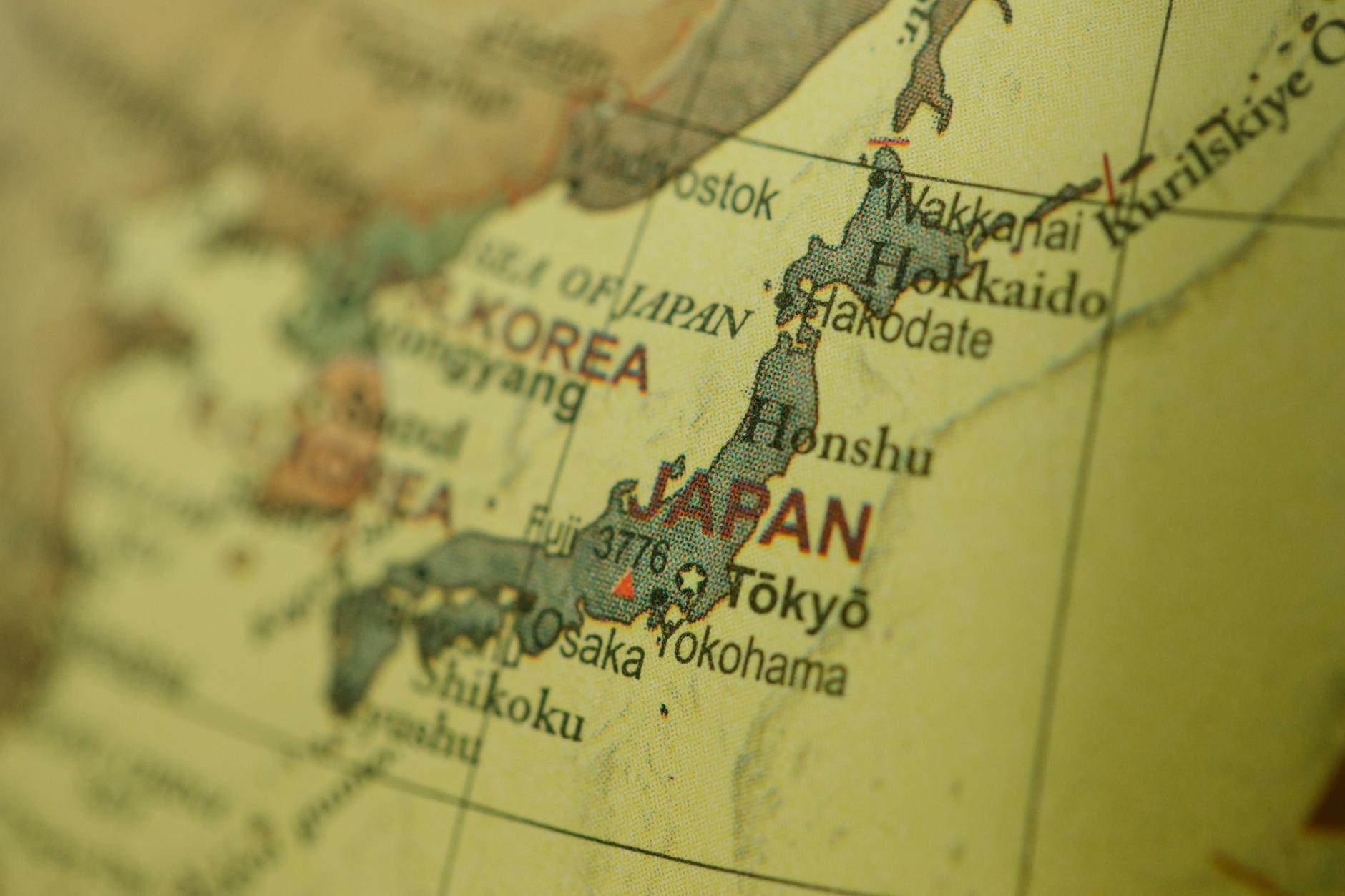
The novel begins with a scene plucked from the middle of the story, when ten year old Louisa and her father Serk are out for a walk in the early evening, in a coastal town in Japan.
Serk was born in Japan to Korean parents and while furthering his education in America, met Louise’s mother Anne. The family are in Japan on a one year secondment from his American university.
Hours later, Louisa is found washed up on the beach and her father is missing, presumed drowned.
Finding One’s Place Nowhere
The story then returns to the beginning, where we learn of the childhoods and upbringing of Serk in Japan and Anne in America, of his attachment to Japan and his success in school, while his family long to return to Korea (having not told him earlier where they were from) and wish their children to attend another school where they can learn about their culture and identity.
To learn it was not Japanese but Korean was so profoundly disorienting that the greater discovery, that he himself was Korean, was for the moment secondary.
As Serk matures, he comes to understand the ambiguous nature of nationality and belonging, of being caught between two nations, perceived and treated as an outsider by both of them; American thus becomes both an escape and an even greater frustration.
…disillusioned as he was, when his parents decided to abandon Japan he was dumbfounded.
The first half of the novel, prior to his disappearance has the feel of domestic fiction as the family navigate the intimate dramas of their lives and find their way.
Both Serk and Anne have withheld parts of their lives from each other and this adds tension to their marriage, as these things are sensed but unknown, or threaten to become visible, ultimately undermining their relationship.
That fall, Serk’s college announced it would send a member of its history department as a visiting professor to Japan, starting the following April. Before the history professor was chosen, Serk was asked if he would like to be considered and said he would not.
Louisa becomes partially aware of their secrets, adding to her own confusion and struggle to find a sense of belonging.
When Louisa hated her mother, it was because the thought of her caused her so much pain.
When she hated her father, it was because she was conscious of emulating his remoteness.
Shattered Lives Separate
In the second half of the novel, the family is no longer a cohesive unit, their lives diverge and chapters are then told from each character’s separate location and perspective. The pace changes, an element of mystery appears in the timeline and there was such a feeling of a true-crime element, that I paused reading and checked the back of the book for a bibliography. Sure enough, there are 15 works of fiction and non-fiction referenced, very revealing.
As the mystery of what happpened to Serk is revealed, other characters appear who are searching for their own disappeared and thus stories of a similar nature are discovered, told with such detail that they seemed as though true.
So while the novel continues, it also provides an insight into historical tensions between Japan and North Korea and the untold stories of a number of families whose tales of missing members of their family were ignored and disbelieved until subsequently proven to be true.
I don’t want to reveal too much more than what you can read in the blurb, because encountering the story is all the better for not knowing. Not everything that occurs is written, as each character chapter ends, we often know what is to be revealed and we fill that in ourselves, creating connections as the narrative leaps forward from one character to the next.
Perhaps no one but Anne, who had lived with him and tried for so long, could understand how impossible Serk made it to know the least thing about him. A constant wretched privacy had radiated from him, more powerful and more wretched the nearer you got.
An Illuminating Text
Flashlight was so many things, a complex story of a multi cultural family, the relinquishment of a child, four people whose lives came together then split apart, who we continue to observe, often decades later. It explores the effect on each person in the family of their culturally diverse pasts, their birth circumstance and the geographic moves they make that shift perceptions of who they are.
It exposes the cruelties of nations, abuses of humankind, the determination of those who seek the truth, the perseverance of those who want to bring justice and the importance of closure, of being present even when someone seems beyond comprehension.
What an effort to bring all that together and create a novel that traversed so many elements of the cross cultural family, the immigrant life, the (false) allure of the return, lost family members and the dangers of trying to find them. I was reminded a little of Jessica Au’sCold Enough for Snow, but this is much less introspective and Min Jin Lee’sPachinko, but with a different focus on aspects of history & family predicaments.
This was such an eye opening, thought provoking read that felt like reading two novels, the first half interesting but mundane and predictable, the second half mysterious, disconcerting and dangerous. For me it started a little slowly and almost methodically and then suddenly you become aware of a much greater story within which this narrative sits, and then it became completely absorbing and I didn’t want to put it down.
‘Flashlight is a sprawling novel that weaves stories of national upheavals with those of Louisa, her Korean Japanese father, Serk, and Anne, her American mother. Evolving from the uncertainties surrounding Serk’s disappearance, it is a riveting exploration of identity, hidden truths, race, and national belonging. In this ambitious book that deftly criss-crosses continents and decades, Susan Choi balances historical tensions and intimate dramas with remarkable elegance. We admired the shifts and layers of Flashlight’s narrative, which ultimately reveal a story that is intricate, surprising, and profound.’ Booker Judges
Author, Susan Choi
Born in South Bend, Indiana, Susan Choi is the author of six novels.
Her first novel, The Foreign Student, won the Asian-American Literary Award for Fiction. Her second, American Woman, was a finalist for the 2004 Pulitzer Prize. Her third, A Person of Interest, was a finalist for the 2009 PEN/Faulkner Award for Fiction. In 2010 she was named the inaugural recipient of the PEN/W.G. Sebald Award. Her fourth novel, My Education, received a 2014 Lambda Literary Award. Her fifth novel, Trust Exercise, won the 2019 National Book Award for Fiction – and was a US bestseller.
Her sixth novel, Flashlight, began as a short story in the New Yorker in 2020, and won the Sunday Times Audible Short Story Award in 2021. She serves as a trustee of PEN America and teaches in Writing Seminars at Johns Hopkins University.
The winner of the Booker Prize 2005 will be announced on Monday November 10. I only read one novel from the longlist, Love Forms by Trinidad and Tobagan author Claire Adam (my review here). Initially, I perceived on the list as being too clever with the form, even if that is a characteristic of literary fiction, but then I saw two novels that fit my own preference, written by women, about lesser known cultures.
Below is a reminder of the six books on the shortlist being considered for the prize with a quote from the author and another from the judges answering different questions about each novel. You can read more interesting facts about the shortlisted authors here.
In the coming days I’ll share my thoughts on the two that I am reading, Flashlight by Susan Choi (my review here) and The Loneliness of Sonia and Sunny by Kiran Desai (my review here).
The Booker Shortlist 2025
Penned in English, these shortlisted books are worldly in settings and universal in their themes, often featuring characters living outside their familiar communities and cultures, navigating a diverse set of eye-opening challenges, exposing aspects of history and geopolitical issues from Hungary to Japan, from Venice to New York, from India to England’s West Country.
If you click on the title of the book, you can read an extract from the novel:
‘I wanted to write a present-day romance with an old-fashioned beauty’
– The Loneliness of Sonia and Sunny is the epic tale of two young people navigating the many forces that shape their lives: country, class, race, history, and the complicated bonds that link one generation to the next. A love story, a family saga, and a rich novel of ideas, it is said to be the most ambitious and accomplished work yet by one of our greatest novelists.
What do you think it is about this book that readers will not only admire, but really love?
Its rich intricacies and the sheer bounty each page offers. Inter-generational family saga, sharp humour, poignant love story, state-of-the-nation novel, this book has it all. As a result, reading The Loneliness of Sonia and Sunny is an immersive, wonderful experience.
‘Reading a great book feels like being dropped onto an alien planet’
– Flashlight moves between the post-war Korean immigrant community in Japan, to suburban America, to two children trying to forge their own identities, and an eye-opening venture into the fate of those returned to North Korea, an astonishing story of one family swept up in the tides of 20th-century history.
What do you think it is about this book that readers will not only admire, but really love?
The scale of it, and the life-spanning trajectories of these characters of whom we get such intimate knowledge: all their drama and pain and, very occasionally, their joy. We found Flashlight to be one of those books that completely dominates your thoughts while you’re reading it.
‘As a culture, we’re becoming quite bad at holding a contradiction in our heads’
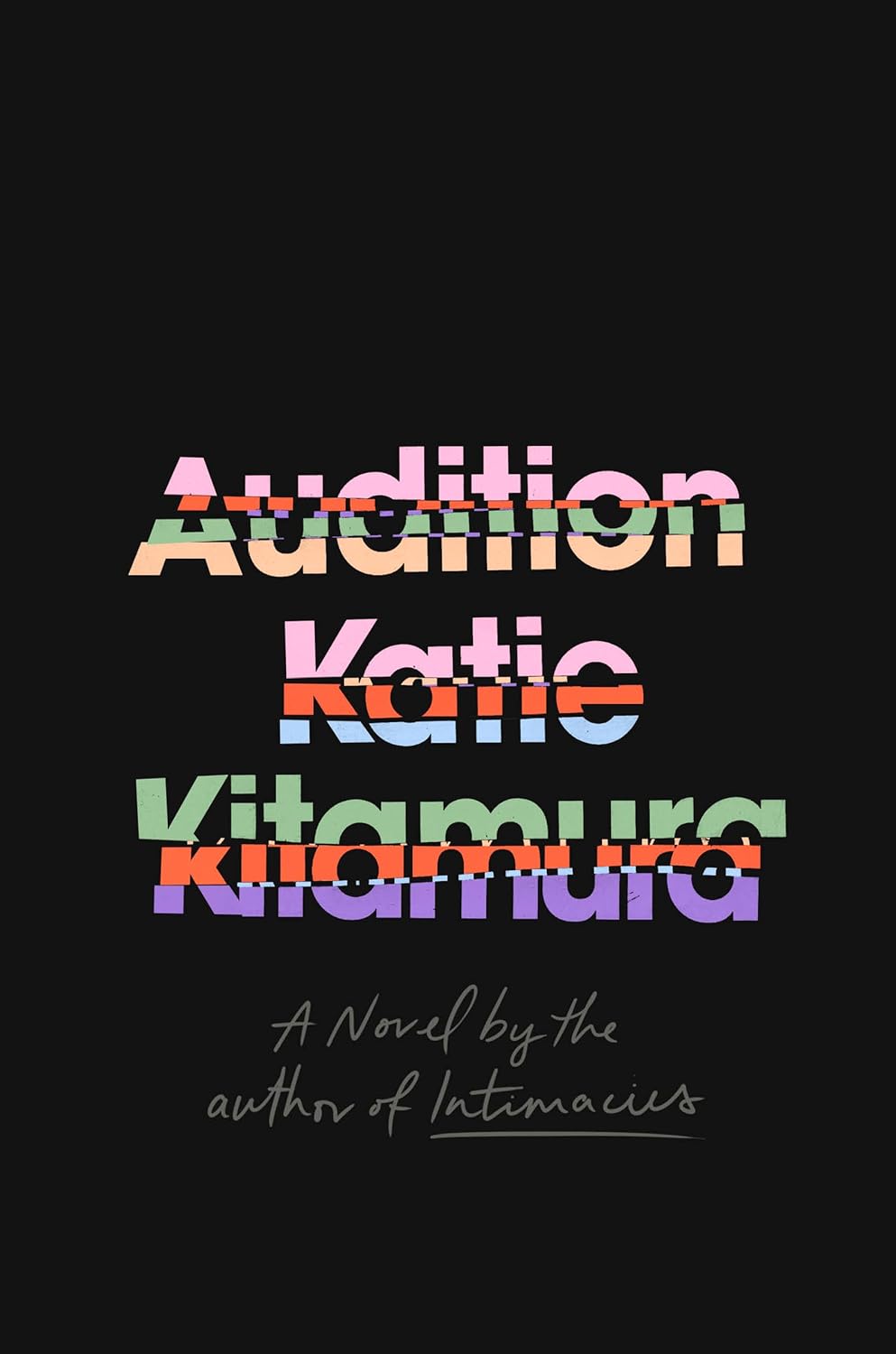
– An exhilarating, destabilising novel that asks whether we ever really know the people we love. In this compulsively readable, brilliantly constructed novel, two competing narratives unspool, rewriting our understanding of the roles we play every day – partner, parent, creator, muse – and the truths every performance masks, especially from those who think they know us most intimately.
Is there something unique about this book, something that you haven’t encountered in fiction before?
Yes, the way Kitamura transitions between supposed reality – modern-day Manhattan – and something deeper and stranger, is bracing. She doesn’t hand-hold or explain, which some might see as a kind of hostility towards the reader. We saw it as a marker of trust.
This is a very controlled performance of a book that intentionally leaves a lot open to interpretation. We think readers will love finding others who’ve read it and talking to them about what it all might mean.
‘I wanted to write about a certain period of family life coming to an end’
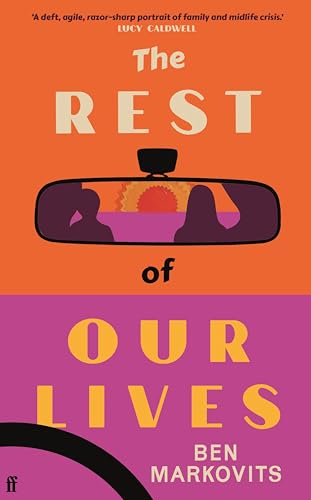
– An unforgettable road trip of a novel about a middle-aged academic whose marriage, career and body are failing him. Pitch perfect, quietly exhilarating and moving, The Rest of Our Lives is a novel about family, marriage and those moments which may come to define us.
What do you think it is about this book that readers will not only admire, but really love?
Tom is not a literary king – he’s a dad and basketball enthusiast. We think readers will admire and enjoy high-concept analysis recounted by a ridiculously relatable narrator.
The star of this novel is Tom’s voice: the lodestar and the ‘why now’. He is a democratic guide, he’s delightfully embarrassed, and he is as observant as he is negligent. But what’s most impressive is Markovits’ dedication to Tom as an averagely flawed human. Tom makes bad jokes, he’s a pushover, and it’s difficult to imagine being taken with him in person.
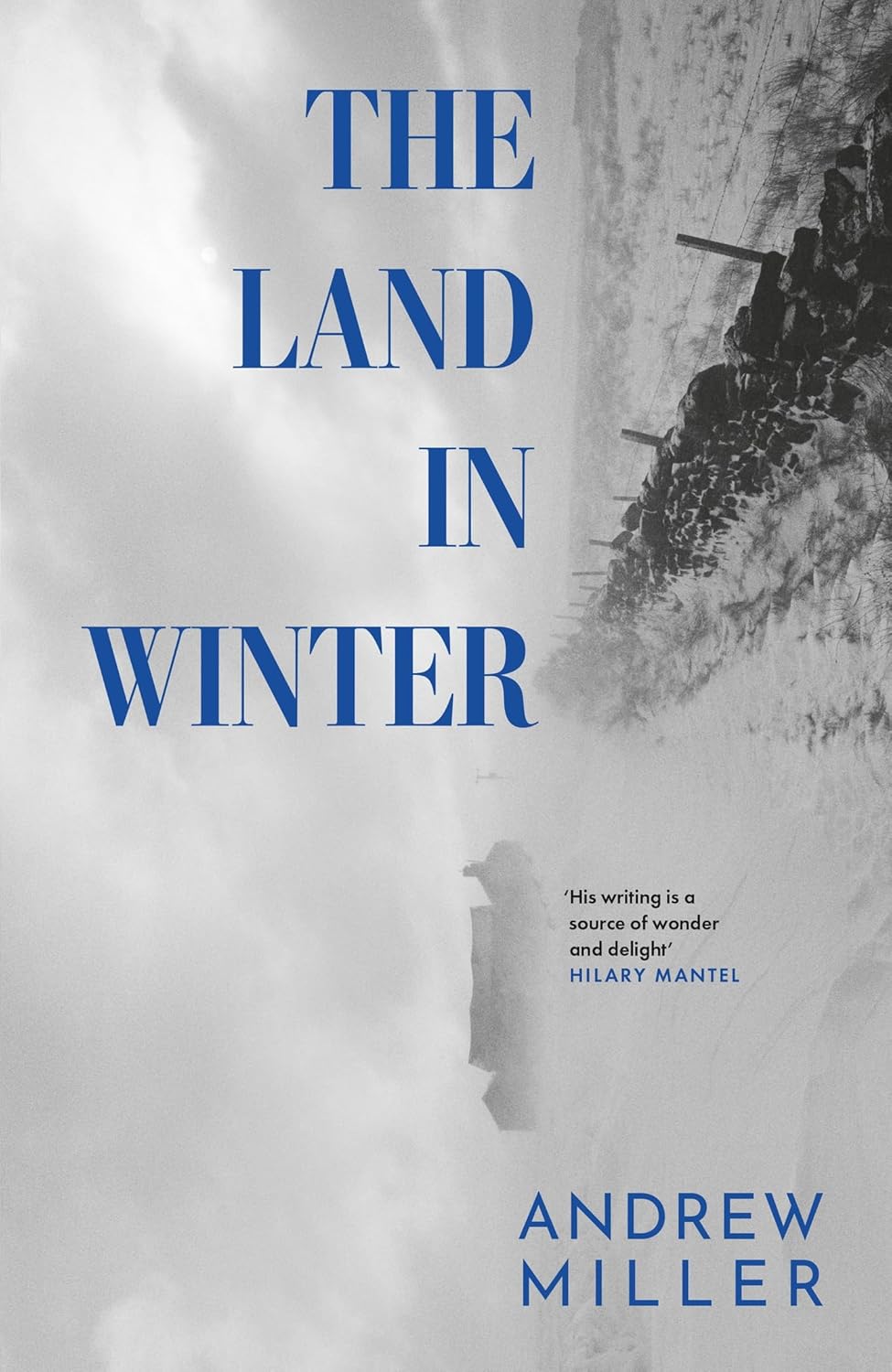
– A masterful, page-turning examination of the minutiae of life and a dazzling chronicle of the human heart. As the ordinary cold of an English December gives way to violent blizzards, two couples find their lives beginning to unravel.
Where do you hide when you can’t leave home? And where, in a frozen world, can you run to?
Although it’s a work of fiction, is there anything about it that’s especially relevant to issues we’re confronting in today’s world?
The novel is set during the harsh winter of 1962-63 and, given what’s been happening to the weather since then, a harsh winter would be reassuring. But the novel is about the tensions within marriage and other relationships and those tensions are the same today as they were back then. How to live: that’s the big human issue and it forms the spine of the book.
‘I wanted to write about what it’s like to be a living body in the world’
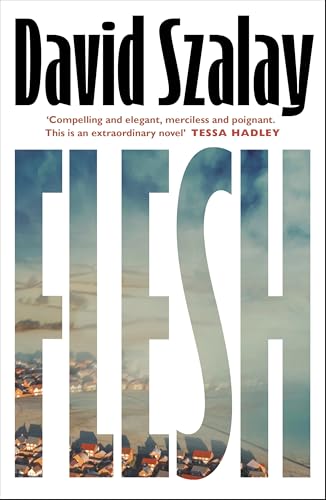
– A propulsive, hypnotic novel about a man who is unravelled by a series of events beyond his grasp. Fifteen-year-old István lives with his mother in a quiet apartment complex in Hungary. As the years pass, he is carried gradually upwards on the 21st century’s tides of money and power, moving from the army to the company of London’s super-rich, with his own competing impulses for love, intimacy, status and wealth winning him unimaginable riches, until they threaten to undo him completely.
What do you think it is about this book that readers will not only admire, but really love?
Flesh is a disquisition on the art of being alive, and all the affliction that comes along with it, but it is also an absolute page-turner. It’s nearly impossible to put down. The emotional detachment of the main character, István, is sustained by the tremendous movement of the plot. The pace of this novel speaks to one of the greater themes; the detachment of our bodies from our decisions.
* * * * * *
Have you read any of these novels from the shortlist? Do you have a favourite to win?

 Word by Word