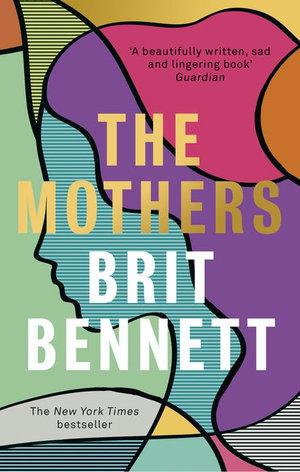
The Mothers (2016) by Brit Bennett

The Mothers by Britt Bennett author of The Vanishing Half

The third novel in my reading about mothers and motherhood is Brit Bennett’s The Mothers, the story of two young people, Nadia and Luke, who have both encountered significant turning points in their young lives, when they turn towards each other. Nadia, an only child, is mourning her mother, lost to suicide and Luke is nursing a football injury that has removed him from the limelight.

If Nadia Turner had asked, we would’ve told her to stay away from him.

Their coming together and drifting apart might have had less of an affect on their lives, had it not been for the teen pregnancy and cover-up that resulted from it, forever creating a fusion between them they have trouble negotiating, despite the years and distance they have put between them.

Her mother had died a month ago and she was drawn to anyone who wore their pain outwardly, the way she couldn’t.

Elder Knowledge and Wisdom

Luke is the son of a pastor and within that community are the older ‘Mothers‘, who provide the ‘We‘ voice to the narrative that isn’t always kind, it is the voice of those who have seen it all before.

We would’ve told her that all together, we got centuries on her. If we laid all our lives toes to heel, we were born before the Depression, the Civil War, even America itself. In all that living, we have known men,. Oh girl, we have known littlebit love. That littlebit of honey left in an empty jar that traps the sweetness in your mouth long enough to mask your hunger. We have run tongues over teeth to savor that last littlebit as long as we could, and in all our living, nothing has starved us more.
Photo by M. Kirkgoz Pexels.com

Though they don’t comment directly to Nadia or provide support to her, they are the all seeing, all knowing voice of the past, who also know that one has to live through their own experiences to learn anything, and so they enjoy their gossiping and smug knowledge of knowing how it will end before the living is done.

All good secrets have a taste before you tell them, and if we’d taken a moment to swish this one around our mouths, we might have noticed the sourness of an unripe secret, plucked too soon, stolen and passed around before its season. But we didn’t. We shared this sour secret, a secret that began when Nadia Turner got knocked up by the pastor’s son and went to the abortion clinic downtown to take care of it.

Nadia hides her secret from everyone, including her pious best friend Aubrey, the distance she puts between herself and her hometown, her foreign boyfriend and her higher education assist her in creating a new life far from unwanted memories.

Community Intentions

The Mothers meet regularly to pray. They read the prayer request cards and pray for the community who share their pain, their resentments, their anger and fears. And that too, is how they know all that is going on in their community, the clues that along with chatter create the jigsaw puzzle of lives that come and go among them.

That evening, we found a prayer card with his name on it in the wooden box outside the door. In the centre, in all lowercase, the words pray for her. We didn’t know which her he meant – his dead wife or his reckless daughter – so we prayed for both.

Youth Must Experience It

The novel follows the lives of the young people as they eventually confront the things they have tried to ignore, when they realise the impact they continue to have on them and slowly, the story behind the lost mother comes to light.

But she saw then that Nadia didn’t speak about her mother because she wanted to preserve her, keep her for herself. Aubrey didn’t speak about her mother because she wanted to forget that she’d ever had one.

The Mothers is more reflective and less intense than the previous two novels I read, which concerned the death of a child, whereas here it is the loss of a mother and the loss of becoming a mother, and others for whom their mothers, though present, provide no solace at all. And the little spoken about loss of a potential father, a failure to perform one of the primary functions, to protect his family.

Each of the three stories shows communities as both supportive and punitive and mothers as complex products of their circumstances. Love is present, but so are disappointment, misunderstanding, judgement and the fear of not being enough. Silence too, becomes both a survival strategy and a cause of generational pain, broken through often by external friendships, safe spaces where women can express openly and move through their grievances towards healing.

I found The Mothers a thoughtful exploration of complex issues that youth encounter and then must live with and navigate and grow through. It shows the numerous ways people do that, sometimes in community, other times in isolation, but always seeking to find that peaceful place within which they can exist.
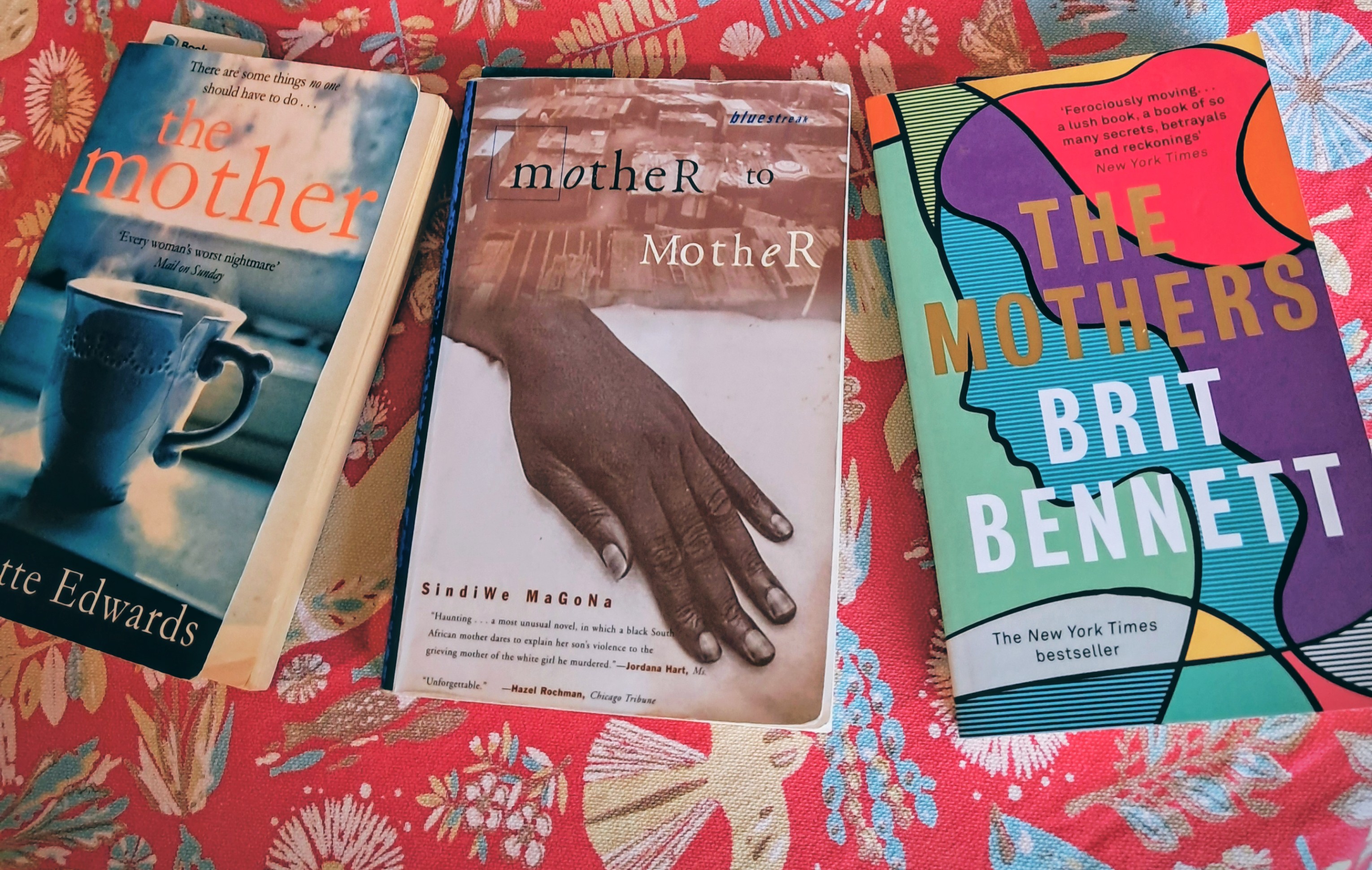
3 novels of mothers and motherhooh The Mother Yvvette Edwards Mother to Mother Sindiwe Magona The Mothers Brit Bennett

What is Brit Bennett Working On Now?

It has been a while since Brit Bennet’s second novel The Vanishing Half (2020), so I checked to see what she might be working on and learned that while there is no publication date yet, she is a ‘few drafts deep’ into a third novel, focused on R&B musicians, a girl group, about two singers who have a lifelong feud. It is said to deal with themes of rivalry, celebrity, and identity.

Author, Brit Bennett

Born and raised in Southern California, Brit Bennett earned her MFA in fiction at the University of Michigan.

Her debut novel The Mothers was a New York Times bestseller, and her second novel The Vanishing Half was an instant #1 New York Times bestseller. Her essays have been featured in The New Yorker, the New York Times Magazine, The Paris Review, and Jezebel.

The Amateur Marriage by Anne Tyler

This is the first Anne Tyler novel I ever bought and it sat on the shelf for 19 years, finally read thanks to #20booksofsummer23 where I try to shift some of these titles that have been sitting years on the TBR (to be read) shelf. It was longlisted for the Women’s Prize for Fiction 2004.

Why hadn’t I picked it up before now? Something about the cover, the title and the blurb – Tyler is a master in writing domestic fiction and perhaps it is no coincidence, that it is now possible to read this from a greater distance than the past 19 years allowed.

I was initially a little skeptical as the opening chapters are a somewhat clichéd account of what seems like a perfect couple getting together, only it turns out they are not ideal matched at all, and that is what makes the novel interesting.

Hasty Marriages at the Outbreak of War

The story begins in 1944 in the Polish quarter of Baltimore, an area that hasn’t quite forgotten it’s Irish roots and associated prejudices.

America has just entered the war and Michael, the son of the grocery store owner is caught up in the whirlwind of enlisting while catching the eye of Pauline in her red coat, a girl from the other side of town (and life).

“Pauline was wearing read again. Red seemed to be her colour. A red sweater over a crisp white shirt with a rounded collar. It was known by now that she came from a neighbourhood north of Eastern Avenue; that she wasn’t even Catholic; that she worked as a receptionist in her father’s reality office.”

Once they are connected, the colours Pauline wears are toned down, a metaphor of the adjustment she makes to try and conform to what is expected.

…she’d changed her colours just at the very time when she was changing in people’s opinions. From dangerous and dramatic red to gentle, soft pastels, she’d gone.

Each chapter skips a few years and we see the effect of this mismatched couple that stay together, how each of their three children navigate that dysfunctional environment and the long term consequences of it.

“Pauline believed that marriage was an interweaving of souls, while Michael viewed it as two people travelling side by side but separately.”

Tyler explores the nuances of the relationship, seen from each parents’ perspective, though rarely from the point of view of the children, we see the consequence and observe how they choose to live their lives, in the wake of their parents marriage.

We are left to wonder about the impact of generational attitudes and how the institution of marriage moulds everyone around it, for better, worse or otherwise.

A riveting, thought-provoking read.

Further Reading

Ladder of Years by Anne Tyler

A Spool of Blue Thread by Anne Tyler

Their Eyes Were Watching God by Zora Neale Hurston

Totally brilliant and original, what a voice, a narrative and an insight into a woman’s desire for fulfilment.

yin_yang_by_fallen_eyeIf you have read or were considering reading Marlon James Booker winning A Brief History of Seven Killings, then this is the Yin to his Yang, this is the feminine yearn to his masculine ambition.

Immersed in the dynamic culture of the American South, its language, traditions and folklore and equally fascinated by it, Zora Neale Hurston had instant access to a rich depth of stories, songs, incidents, idiomatic phrases and metaphors and an adept ear for the rhythm of speech patterns. With her literary intelligence and skill, she brings it together with remarkable power and beauty to the written page.

Their Eyes were Watching God is an American classic, the esteemed author Toni Morrison called her “One of the greatest writers of our time”, though she may be lesser known beyond those shores. There has been much written about her work and of this particular novel, criticized by feminists at the time of publication, yet come to be more appreciated and understood with time.

Alice Walker’s essay, “In Search of Zora Neale Hurston” revived interest in the author and since then there have been numerous new editions published. It was originally published in 1937.

Zora Neale Hurston tells the story of Janie, a girl raised by her Nanny, who was an ex-slave and therefore wanting to protect her daughter and grand-daughter from the things she feared, which amounted to marriage to a man with land or money or to live under the wings of a good, white family.

zoraUnable to protect her daughter, who was raped by her schoolteacher, her focus moves to Janie, whom the daughter leaves her with. As soon as adolescence beckons she arranges for her to marry an older farmer with land. Janie dreams of love and fulfilment and when mentions not finding it in this marriage is reprimanded by her grandmother for her romantic notions.
“There are years that ask questions and years that answer.Janie had had no chance to know things, so she had to ask. Did marriage end the cosmic loneliness of the unmated? Did marriage compel love like the sun the day?”

She moves on and marries Joe Sparks who takes her to a new town in Florida, a town built by black people for black people. It isn’t as Joe expects, so he sets about continuing its creation, getting himself elected as mayor and becoming a wealthy man. Janie becomes his showpiece, working in the shop, however he curtails her interactions with the community, thwarting her ability to be herself, even making her cover her hair due to his jealousy.

“She had found a jewel down inside herself and she had wanted to walk where people could see her and gleam it around. But she had been set in the market place to sell.  Been set for still-bait. When God had made The Man, he made him out of stuff that sang all the time and glittered all over. Then after that some angels got jealous and chopped him into millions of pieces, but still he glittered and hummed.  So they beat him down to nothing but sparks, but each little spark had a shine and a song. So they covered each one over with mud. And the lonesomeness in the sparks made them hunt for one another, but the mud is deaf and dumb. Like all the other tumbling mud-balls, Janie had tried to show her shine.”

Finally, her quest will become fulfilled, though not without its share of life’s ordinary and extraordinary sufferings, when she meets Tea Cake and they manage to ride life’s roller coaster of events and emotions, working together to deal with the demons and living their dream.

“Dis is uh love game.  Ah done lived Grandma’s way, now Ah means tuh live mine.”

The excellent afterword of the Virago edition I read, says the following to explain one of the reasons this novel has attributed such notoriety today and why it is that she achieved something so rare.

Black women had been portrayed as characters in numerous novels by blacks and non-blacks. But these portraits were limited by the stereotypical images of, on the one hand, the ham-fisted matriarch, strong and loyal in the defense of the white family she serves (but unable to control or protect her own family without the guidance of some white person), and, on the other, the amoral, instinctual slut. Between these two stereotypes stood the tragic mulatto: too refined and sensitive to live under the repressive conditions endured by ordinary blacks and too coloured to enter the white world.

Even the few idealised portraits of black women evoked these negative stereotypes. The idealisations were morally uplifting and politically laudable, but their literary importance rests upon just that: the correctness of their moral and political stance. Their value lies in their illuminations of the society’s workings and their insights into the ways oppression is institutionalised. They provide, however, few insights into character or consciousness. And when we go (to use Alice Walker’s lovely phrase) in search of our mother’s gardens, it’s not really to learn who trampled on them or how or even why – we usually know that already. Rather, it’s to learn what our mothers planted there, what they thought as they sowed, and how they survived the blighting of so many fruits. Zora Hurston’s life and work present us with insights into just these concerns.” Sherley Anne Williams

Zora Neale Hurston’s depiction of Janie’s life provides a wonderful insight into the character and consciousness of a woman of her era, drawing from her own experience, though the character of Janie has a different personality to Hurston, providing a look not so much into the experiences, but of the yearnings and emotional life of women, their quest for fulfilment and self-discovery and though it’s not without obstacles, allows a little light to shine on those moments where her life does reach that bitter-sweet destination, leaving wisdom in its wake.

Zora Neale Hurston

Zora Neale Hurston

Zora Neale Hurston (1892-1960) was born in Eatonville, Florida, the first incorporated black town in America. Her life there, nine years of wanderings is described in her book Dust Tracks on the Road. She studied at Howard University and began to write, attracting the attention of the Harlem Renaissance with her essays and short fiction and won a scholarship to Barnard College where she studied Cultural Anthropology, subsequently spending four years researching folklore on the South and publishing another five books including this novel and a collection of tales, songs, games and voodoo practices from the time.

Click Here to Buy a Copy of Their Eyes Were Watching God

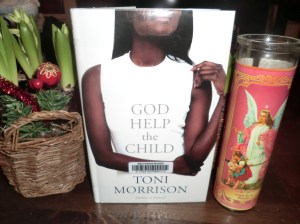
God Help the Child by Toni Morrison

Toni MorrisonBride is young, in her twenties, but has learned early the importance of a word, a gesture, a look that can change people’s perception of you, as long as you stick to it, you become known for it, unforgettable, and that one thing can change your world.

God Help the Child is mostly told through the life experience of Bride, a name she chose for herself as she launched herself into a successful and glamorous career in the perfume/fashion world.

It is far from the memory of neglect and disapproval that was her constant companion throughout childhood, channeled through the eyes, words and gestures of a mother unable to move beyond the disappointment of the blue/black tone of her daughter’s skin.

‘I told her to call me “Sweetness” instead of “Mother” or “Mama”. It was safer. Being that black and having what I think are too-thick lips calling me “Mama” would confuse people. Besides, she has funny-coloured eyes, crow-black with a blue tint, something witchy about them too.’

Before her second interview for the job she covets, she consults a designer called Jeri, who convinces her to only ever wear white, accentuating both her new name and because of the effect it had on what he described as her licorice skin.

‘At first it was boring shopping for white-only clothes until I learned how many shades of white there were: ivory, oyster, alabaster, paper white, snow, cream, ecru, Champagne, ghost, bone.’

Bride waits in a prison parking lot for a convicted felon to emerge on the last day of their sentence. She comes with a gift and a different form of naivety than that she possessed when her testimony put this person away for 20 long years.

Her current boyfriend Booker has just left her, and now this. She excels in acquiring knowledge to help her scale the ladder of success, but there is a gaping hole within that pushes her to put all else aside and find answers to questions she can barely articulate to herself.

On a whim, she tries to track down the man who disappeared without a goodbye and after a car accident and injury, finds herself living with a couple and a girl in self-imposed poverty; a stark contrast to her lifestyle. As she pursues those unclear questions, strange but noticeable things begin to happen to her body, as if it is regressing towards childhood.

Each subsequent part tells of an encounter of someone she meets or has met previously and although their stories differ there is a common thread that ties them all and demonstrates in various ways the effect these childhood experiences have on a person subsequently, how they shape who we become, how we react to things, how they affect one’s perception.

Toni Morrison

Toni Morrison

The characters enthrall, each one introduced fleetingly, intriguing and hinting at the depths that their own stories have led them to become. Morrison makes us wait and slowly reveals those experiences for the select few deemed important to the narrative. It is perhaps through this hinting at and omission, that much is left to the reader to contemplate, but then Morrison isn’t known for having to spell it all out or writing sagas, and there is enough divulged to create a balance and equal contribution between the four parts of the novel.

It is a thought-provoking, evocative novel that deserves more than one reading, demonstrating the ease with which Toni Morrison and her narrative skill are able to skate into the 21st century, to pick up and explore the nuances of another of society’s dysfunctional aspects, that the things you do and say to children in their early years really matter and will impact their adult perceptions, actions and relationships. However, there are moments, that if grasped, can and do lead one out of that.

Brilliantly told, subtle and yet powerful, Morrison’s final words at the end of the book, reminded me of the closing words of Maya Angelou in an interview she gave to the BBC near the end of her life, after a lifetime of addressing issues that manifest throughout life, her final words too, speak of children.

“Exercise patience with yourself first, so you can forgive yourself for all the dumb things you do. Then exercise patience with your children.” Maya Angelou

All Our Names by Dinaw Mengestu

All Our NamesFinding a book like this on the English language shelves of our local French library, is one of life’s small pleasures in a world that offers few escapes these days from tragic reality.
A book like this, by an author named Dinaw Mengestu, winner of the Guardian First Book Prize for his debut novel Children of the Revolution, chosen as one of the 20 best writers under 40 by The New Yorker in 2010, born in Ethiopia and raised in the suburbs of Chicago – well I cast all other reading plans aside and jumped right in, relishing the feel of the hardback, admiring the simplicity of such a striking cover and anticipating a joyous, literary ride.

The title All Our Names, reminded me immediately of Zimbabwean author NoViolet Bulawayo’s  We Need New Names, hers a reference to the move to America, while Mengestu delves further back and makes us realise just how deep and far-reaching the naming ritual is.

“On the bus ride to the capital, I gave up all the names my parents had given me. I was almost twenty-five, but by any measure, much younger. …I tried to think of myself as a revolutionary in the making, though I had come to the capital with other ambitions.”

Library Entrance

The Library Where This Book Lives

Ill-prepared for the world that awaited him, he assumed the few Victorian novels he had read would prepare him for studying literature, having been inspired by reading of a conference of a group of African writers and scholars in a newspaper that had belatedly arrived in his village.

“No one I met believed I was a revolutionary, and I didn’t have the heart to claim I wanted to be a writer.”

Right from the opening pages, when he meets the young man who tells him his name ‘for now is Isaac’, we are made aware of the significance and dispensability of names.

“Isaac” was the name his parents had given him and, until it was necessary for us to flee the capital, the only name he wanted. His parents had died, in the last round of fighting that came just before independence. “Isaac” was their legacy to him, and when his revolutionary dreams came to an end, and he had to choose between leaving and staying, that name became his last and most precious gift to me.

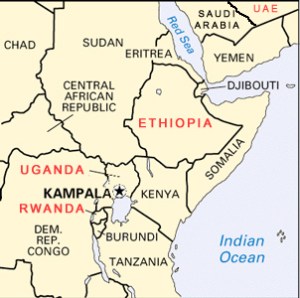
UgandaThe story is narrated in alternate chapters, one entitled Isaac, the other Helen. Isaac takes place during a short period in the life of the male protagonist after he has left the family village somewhere in Ethiopia, planning never to return, arriving in Kampala, a city in Uganda where he hopes to study at the university.

It is there he meets the young man named Isaac, recognising in him a similar ambition and humble origins, though in his presence he is also aware of an undercurrent of fear and trepidation, not yet realising, but intuiting the dangerous depths Isaac is capable of descending  into in order to achieve that ambition.

The Helen chapters take place in a small midwest town in the US, Helen is the social worker assigned to him when he arrives from Africa; she installs him in accommodation and helps him to adjust to the new life as a foreign exchange student.

The relationship becomes complicated when boundaries are breached, as the two offer each other something of an escape from their very different pasts.

It is a simple story possessing its own undercurrent that pulls the twin narratives along, the emotional pull in Helen’s story, her struggle to navigate the space between her feelings for him and society’s expectations and in the Isaac chapters, a mounting tension as student protests and harmless revolutionary activities turn sinister and violence becomes the shortest and most effective negotiating tool to obtaining power.

Set in the 1970’s during the Ugandan post-colonial revolt, this novel was hard to put down and offered a unique insight into one example of the kind of experience that might have occurred to any refugee fleeing a violent uprising. Equally, it aptly depicts the discomfort of even the most liberal, unjudging character, raised in a quiet, conservative town, whose wavers between ignoring and following her instinct to abandon all she knows in order to follow her heart.

“I wonder whether, if before meeting Isaac I had tried to challenge the easy, small-time bigotry that was so common to our daily lives that i noticed it only in it extremes. I might have felt a little less shame that evening. It’s possible that I might have been able to release some of it slowly over the years, like one of those pressure valves that let out enough steam on a constant basis to keep the pipes from bursting. It’s also equally possible that such relief is impossible, that, regardless of what we do, we are tied to all the prejudices in our country and the crimes that come with them.”

The Burgess BoysIt reminded me a little of Elizabeth Strout’s The Burgess Boys (read and reviewed in 2013), which I was a little disappointed by, this is the kind of book I was expecting, but understandably, she wrote it from the perspective of the Burgess boys, whereas Dinaw Mengestu gives us both perspectives and the story is all the more powerful for it.

Mengestu writes in an engaging and flawless style, his storytelling and insights are enough to convince me I will definitely be reading more of his work soon.