
 Rose Haldane is a feature writer for a popular newspaper. She spends her days chasing stories, researching popular subjects for features and occasionally interviewing high flyers that later on turn up at her house. Well, at least one, a guy named Nick who is the Managing Director of Biocare Beauty who she appears disinterested in, but is actually quite attracted to to, even though its against company protocol to get involved with interview subjects.
Rose was born in 1968 and her sister Lily not long after. Sometime after the death of their mother from cancer, when it appears their father hasn’t cleared anything away and is having a low patch, they decide to go through her belongings and clear things out. While doing so they discover among her possession a set of diaries. In a shocking revelation, Rose discovers her mother is not her biological mother and that members of her family have been concealing the truth from her. Using her well honed research skills, she sets to, to unravel the mystery surrounding her birth.
“At the beginning of the twentieth century, it was accepted that the best thing for the adopted child was a clean break with no contact with their birth parents, and no rights to search for them when the child was grown up. Then in 1953 a government report recommended that adopted children be told they were adopted or chosen.”

United Nations Article 7 – Children’s Human Rights
Her sister Lily is married to William and has a part time job, but is pining for a child and partaking all kinds of remedies to try to make it happen. Her neurotic obsession with becoming pregnant masks something lurking in her subconscious that will eventually force her to face up to the truth. She too, reads her mothers diaries to be sure of her origins and discovers other revelations that set her mind racing.
“His bowl contained organic fair trade muesli with honey and extra-chopped Brazil nuts (selenium for protection against cancer and heart disease; she was determined that William would not have a heart attack like Granddad Howard), soya milk (low cholesterol), and chopped apple from Kent followed by plain bio-yoghurt from Dorset cows.”
Simultaneously to Rose’s search, there is the love interest Nick, who seems to arrive just when she needs him despite her having forgotten to turn up to their first date, he is a pretty loyal and supportive catch, considering their brief acquaintance, and he is the perfect complement to Rose, accompanying her at the tricky stages of her investigation.
 And then there is the feature she must write on premature menopause, the more she finds out, the more concerned she becomes on behalf of her sister.
Ignoring Gravity is a fast paced novel, following the investigative skills of Rose to unearth the mystery of her birth and deal with the impact of receiving such knowledge without any prior warning, although it immediately explained in her eyes, the difficult relationship she had with her mother.
It was perhaps a little too fast paced for me, not in terms of reading the book, but in terms of how quickly she makes progress and takes significant steps to find out more about her origins, steps that by necessity mean prying into the private lives of others who have long let sleeping dogs lie.
I couldn’t believe that anyone would be able to absorb and assimilate that knowledge and move on to the next steps as quickly as she does. In reality it is a long, slow, reflective process, however the revelations when they do come are quite brilliantly conceived and although Rose doesn’t spend too much time imagining how the circumstances might have come about, she provides sufficient detail for the reader to ponder the situation and to wonder how we might react to such information and confront those who kept it secret.
As someone who was adopted in the same year as the protagonist of this book and been through the process of unravelling the mystery, there were many moments in the book that provoked familiar memories, although naturally everyone’s experience is different. It is certainly a book that will invite reflection and discussion, as it is a fascinating and oftentimes controversial subject within our society and within other cultures and how they perceive it.
Sometimes it is the little things, like those words “a chosen daughter”, which were used in place of simply “a son, or a daughter” in the birth announcements. And that detached feeling when being advised by well intended counsellors, knowing that you will find out in your own way and share it with no one until you can answer all the questions that are unknown at the outset.
An intriguing read, perfect for the holiday season and watch out for a follow up novel as Rose puts her investigative skills to the test in Spain.
Note: Thank you to the author Sandra Danby for providing me with the kindle version of the book for review.
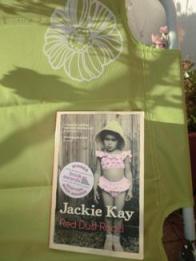 I discovered Red Dust Road after reading a feature about



 Word by Word