
After donating a bag of books at a recent book sale, I spotted a few novels on the shelves of this small English library that I was curious about, so joined the library and came home with four popular titles I thought I might read over the festive season, the first one being Intermezzo by Irish author Sally Rooney. I had heard it discussed by the Irish Times Woman’s Podcast Bookclub where thoughts on it were quite divisive.
Sally Rooney’s earlier novels Conversations With Friends (2017), Normal People (2018) and Beautiful World, Where Are You (2021) all examine how educated young people try to love each other under conditions of class inequality, political exhaustion, and intense self-consciousness, where desire is constantly constrained by these factors and the question then becomes whether love can survive these somewhat undermining conditions.
An Irish Millennial Perspective
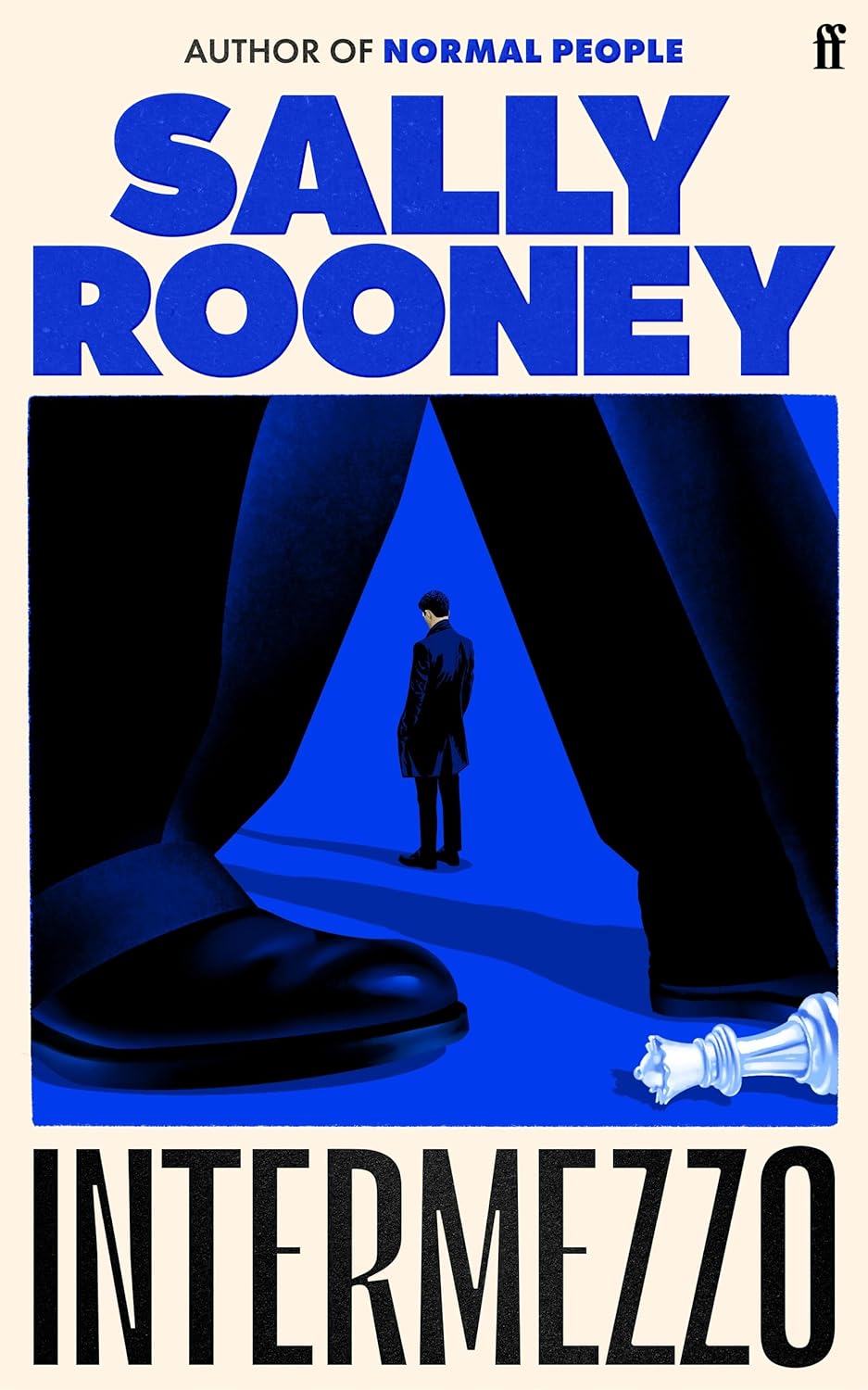
I haven’t read anything by Rooney, however knowing those novels have been a huge international success, being a writer with her literary pen poised on particular millennial characteristics, I picked up the latest, Intermezzo (2024) set in modern day Dublin, to understand what that might be all about.
I finished it in late December and overall I enjoyed it, though in the beginning I found it a little tiresome and repetitive, especially all the awkward self-conscious sex scenes between the younger brother and his newfound lover, but as the story progressed and the conflicts and mysteries become more present in the narrative, it became ever more psychologically interesting and I ended up really liking it. So it almost lost me in the beginning, but ultimately (in 442 pages) it gets there and I’m all the more appreciative of it for going back and considering it again now, from a distance.
Grief As a Turning and Growth Point

The novel charts the months following the father’s premature death and how it affects his two sons Ivan 22, a socially awkward, competitive chess player who has not been on form recently and is questioning whether he might be past his best, and his elder brother Peter 32, a corporate, detached Dublin lawyer juggling two relationships and medicating himself to get sleep.
You know, a lot of people told me I was letting it take up too much time, and I just thought they didn’t understand. But now I think, maybe I’ve really wasted a lot of my life.
Unresolved Mother Son Issues
The boys mother has long since moved on to a new relationship and the boys have complicated relationships with her.
I guess I would say, if you’re interested, they’re both kind of dominant personalities. Who like getting their own way. So my mother trying to be the authority figure, that never went down too well with Peter, if you get me. Because he wouldn’t be a great fan of getting bossed around.
I see, Margaret says.
Ivan is looking at her. Yeah, he says. Whereas with me, I guess, my mother can be the authority more. But with no great results, because she’s never happy with me.

The brothers have different personalities and are no longer close like they once were. In fact, they find it difficult being around each other without emotions escalating to volatility. And yet. Underneath, there’s a desire to connect.
Without their father present in their lives, they get easily derailed, falling into old destructive patterns. Something needs to shift and change if they are to arrive in a place of acceptance.
The same ritual he thinks each time. She tries to extract from him some valuably hurtful information and he tries to conceal from her any aspect of his life in which he suspects she might gain a foothold. Her fake innocuous queries and his studied evasions. Screens her calls whenever Naomi is home. Why does his mother even want to know; why does he want not to. Contest for dominance. Story of his life.
In essence, this is what the novel explores. Are these two brothers able to grow through the grieving process into a new form of relationship with each other that might sustain them in the years ahead? And can they successfully be in a relationship with another, given the stagnant place they are currently at.
Millennial Self-Consciousness and Entangled Love Lives
They are each trying to navigate romantic relationships, and here there is much interiority expressed, both anxiety and indecisiveness, but the feelings push them forward and the interactions they have with women allow them to be tested and move forward as they confront someone else they have feelings for and have to adapt to stay in relationship.
Ivan meets the older, separated Art Centre Manager, 36 year old Margaret, who struggles with how they might be perceived due to the age difference, but she can’t deny the strong connection and positive effect they have on each other. They must explore their own different perspectives and experiences to maintain that something they have together, if it is deemed worth it.
Dimly she wonders now whether she has been thinking somehow about herself, her own circumstances, and she feels her face again growing flushed. It is this, she thinks, her own sense of identification, that has thrown everything into confusion. She has lost sight of the brother Ivan has been describing, replacing him with herself, and therefore attributing to herself a greater understanding of his motives than she could possibly possess.
Peter is navigating the familiar, intellectually compatible friendship with his ex-girlfriend Sylvia, a chronically ill English literature professor he’s known since college, and a more challenging, non-committal relationship with student Naomi who sells images of herself online to help fund her studies.
Unclear whether you’re cheating on me with her, or you’re cheating on her with me, she said. Absentmindedly he considered the proposition. Either option preferable he thought. Dignity of old-fashioned faithlessness. Neither, he answered. Sylvia is a very dear friend of mine. And you’re just a homeless college student who lives in my house. That made her laugh. The actual disrespect, she said.
Using Voice Stylistically to Create Power Dynamics

Rooney explores how intimacy is negotiated under constant moral and social evaluation, both from the family and society and from one’s own self-judgement.
Peter’s thoughts are expressed in short, clipped, declarations with little depth, a voice trained to avoid vulnerability, and control interpretation, reducing the risk of him being misunderstood or judged, which doesn’t always help navigate the path of more intimate relationships.
This controlled minimal manner of speaking suits his profession and will have developed as he absorbed criticism in the maternal relationship and created a habit regarding his brother. His short sentences create discomfort, they become a form of domination by withholding forcing the other to elaborate.
They are initially disconcerting to read, but after a while you get used to the style. This manner has been said by some to be ‘Joycean’ not because it is like Ulysses in style, but because it shares with Joyce a particular attitude to consciousness, authority, and language under pressure. This way of expression gives Peter’s voice a hard, self-contained quality that Joyce often gave to male consciousness.
Meanwhile Ivan’s longer, more considered sentences allow for doubt and consideration, for exploration and confirmation in the relationship. Oh, and there is a touching storyline around the family whippet.
A Long Positional Game
Ultimately every character has a reckoning, no one is immune to the need to look at their own part in creating some of the perceived conflict and the novel travels the arc from the initial state of these relationships, through the hashing things out, blame, judgement, self pity, self consciousness, fear of what others might think, and out the other side to talking it out, owning up, allowing unconventionally without fear of judgement, settling differences through to forgiveness.
It’s not a fast paced read, it’s more of a slow, gradual navigation of challenging relationships between not particularly likeable characters, but that makes it all the more interesting to see how and whether they might overcome the exit of the one person who was their centre, and move to a healthier way of co-existing. It is an exploration of buried pain and unresolved issues meeting new opportunities and fresh hurts. A long, positional game played in mutual fear of getting it wrong.
Further Reading
The Guardian – Intermezzo by Sally Rooney review – is there a better writer at work right now?
Chicago Review of Books – Mixing Loss with Life in “Intermezzo” by Cait O’Neill, October 1, 2024
Author Sally Rooney
Sally Rooney is an Irish novelist from Castlebar, Country Mayo. She is the author of Conversations With Friends, Normal People and Beautiful World, Where Are You.
Interesting Fact: While attending Trinity College Dublin, Rooney was a university debater and in 2013 became the top debater at the European Universities Debating Championships.
 Word by Word
Loved this!Sent from my iPad
LikeLike
So great to hear Jan that someone else I know has read and enjoyed this! Have you read anything else by Sally Rooney?
LikeLike
No. But now she’s
LikeLike
An excellent post. Thank you
LikeLiked by 1 person
Pingback: A Flash Book Sale & Library Haul – Word by Word
I have read one Sally Rooney book and found it difficult to relate to the concerns of young middle-class people. I think I prefer Claire Keegan.
LikeLiked by 1 person
Yes I get that, it’s unlikely we’ll be relating when reading about the concerns of millennial generation youth regardless of class, but it can be interesting to tap in on occasion, to see what they are relating to themselves, I often feel like there is so much unknown or little understood and it can be so easy to compare or judge, but everyone has to go through a growth or transformation when grief comes knowing. I think this was handled quite well, the attempt to get in the mind of these two very different brothers and shift them forward in some manner.
I enjoy Claire Keegan’s work, though it feels a little more old-fashioned or distant from the present, which is way messier.
LikeLiked by 1 person
Pingback: 10 Minutes 38 Seconds in This Strange World by Elif Shafak – Word by Word