Birding by Rose Ruane

Birding by Rose Ruane is longlisted for the Women’s Prize for Fiction 2025.

The novel is about two women living in a rundown, gentrifying seaside town in Britain, arriving at their moment of realisation of how their lives have been affected by damaging events of the past and their beginning to separate from and reject the power this has had over them.

One Woman’s Trauma is Another (Wo)Man’s Drama

Lydia, in her late forties is contacted by Henry “the most assiduously avoidant human she’d ever encountered”, to inform her he will put on a play that recounts a part of their history that ought to have negated their continued contact. Lydia is stunned, haunted and full of regret.
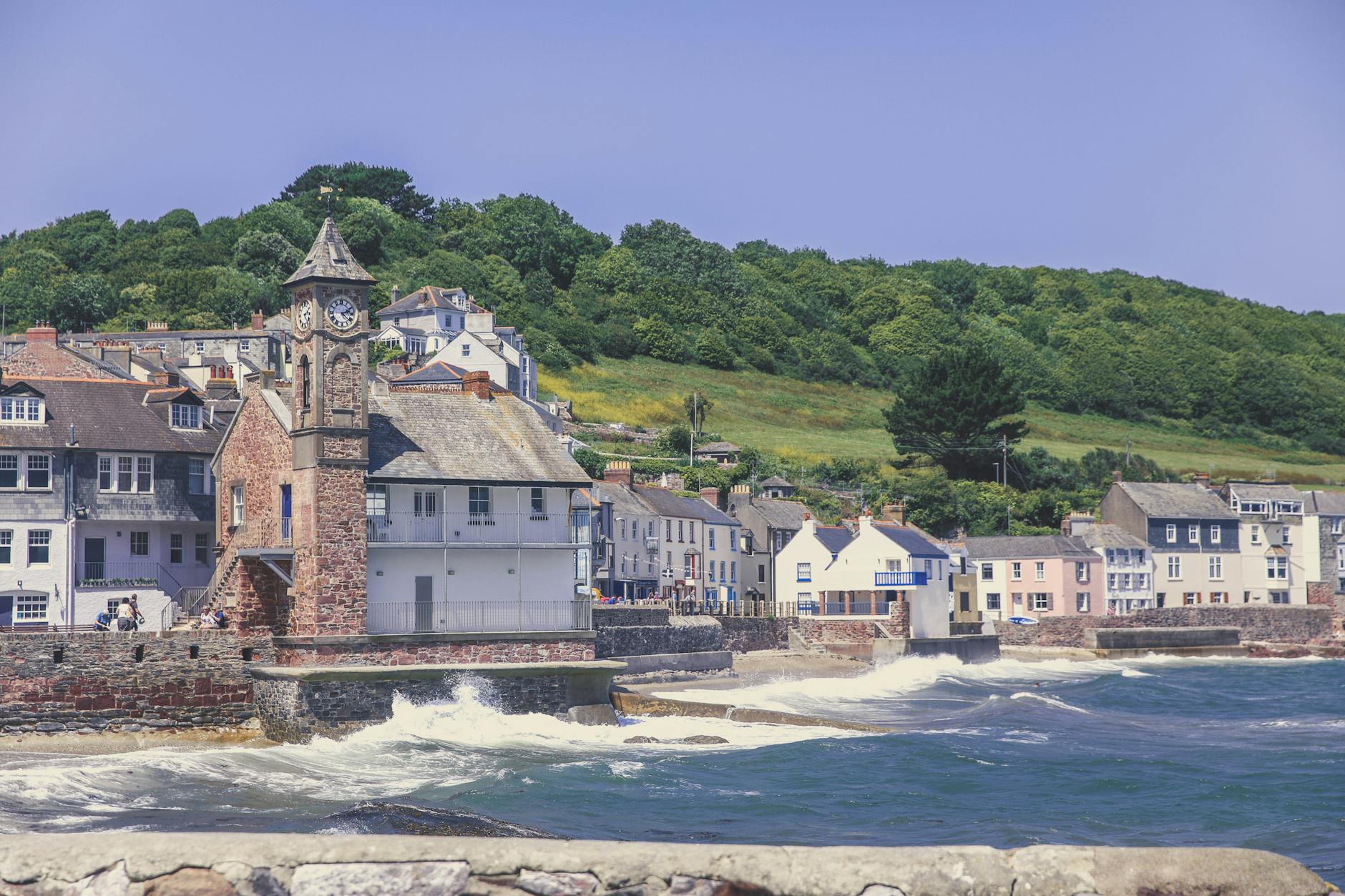
rundown gentrifying British seaside town Birding by Rose Ruane
Photo by R.Keating on Pexels.com

Joyce, of similar age, lives with her super controlling, critical mother Betty in a small house a few blocks back from the sea, after their comedown from The Palace, the departure of Joyce’s father without a word of explanation or contact since she was a child.

Beyond the beach, streets lined with terraces and bungalows crouch behind Victorian buildings with mid-century interiors; carved up into bedsits and B&Bs, their pastel facades crumble like stale cake after a party.

The impact of absent men on both women works like an invisible thread, until a mass social movement of women sharing their experiences of abuse awakens the impact and creates an increasingly conscious ripple effect in their lives.

Like Mother Like Daughter, But No

Photo by cottonbro studio Pexels.com

Joyce has never joined adulthood, her mother keeping her in a kind of stasis, until one Saturday evening when they prepare to go to the club, Betty utters that maybe they might meet a man, both of them, mother and daughter.

Joyce knows people stare because she and her mother wear identical outfits and hairstyles, attired as if they are twins.

Birding navigates a short period of time in these two women’s lives as they live with who they have become and reflect on significant aspects of the past in the 90’s that shaped them.

A lifetime’s habit of exactitude Joyce never used to question. But it has begun to feel stuffy and constricting, as if Joyce is outgrowing all her clothes.

Fake Spice Not Nice

Lydia and her friend Pandora had been a one hit pop wonder in their youth, a promising career thwarted by bad decisions made by powerful people that had little impact on the decision maker’s, but curtailed the girls’ dreams and made them targets of scorn for a while.

Lydia has always been carried by Pan’s sheer force of will; even when unsure if she’s been bullied or beloved, Lydia’s always ridden pillion on Pan’s survival instinct.

But whereas Pan has perfected the art of utter denial, Lydia has not. It never works.

Both have a desire to step outside of their patterns and in some small way the shift begins to happen, as their current minor transgressions exhibit a healthier rebellion and acknowledgement of what inside them, needs to find expression.

It’s a novel that carries a message of hope amid the lost opportunities that stunt some lives, showing the effect one has upon the other. In an interview about her multi-disciplinary creative life, Rose Ruane shared lines from a poem by Frank Bidart that reflect a truth she has learned to live by, one perhaps shared by her characters as they come into their own.

Whether you love what you love
Or live in divided ceaseless
Revolt against it
What you love is your fate

Further Reading

Women’s Prize: In Conversation With Rose Ruane

Irish Times : Birding by Rose Ruane: Friendship, friction and moments of reckoning

Article: Rose Ruane – A Creative Life Story by Leslie Tate

Birding asks if we can ever see ourselves clearly or if we are always the unreliable narrators of our own experiences. It is a story about the difference between responsibility and obligation, unhealthy relationships and abusive ones, third acts and last chances, and two women trying to take flight on clipped wings. Women’s Prize

Author, Rose Ruane

Rose Ruane is an artist and writer living and working in Glasgow. She graduated from the Glasgow School of Art in 2007 and completed a Master of Fine Art research degree and an MLitt in creative writing at the University of Glasgow. She has made podcasts and documentaries for BBC Radio 3, BBC Radio Scotland and Radiophrenia, exhibited her art at home and abroad, and was the 2015 winner of the Off West End Adopt A Playwright award.

Rose is chair of The Adamson Collection, comprised of work created in the art therapy studio at Netherne Hospital during the mid-20th century and is about to complete a PhD exploring the lives and experiences of the individuals who were compelled to live there. Rose is an avid collector of 20th Century crafts and kitsch. Birding is her second novel.

Trespasses by Louise Kennedy

Trespasses Louise KennedySet in Northern Ireland during ‘The Troubles’, in the mid 1970’s, Trespasses began with what seemed  like a chance encounter, when a known barrister, Michael Agnew, a married man of the opposite faith, a Protestant, known to provide legal defence to IRA members; a man who had known Cushla’s father, sat at the bar, while she was serving, engaging her in stilted conversation.

There are various types that frequent the pub, that one ought to be wary of, an aura of menace seems never far away. This man Michael asks her questions, coming across initially, to this reader, as a suspicious character. Yet, there is a chemistry between the two.

Cushla, 26 years old, is a teacher of primary school aged children and helps her brother in the family owned bar some evenings due to the deterioration of their mother into alcoholism. Much of her spare time is spent caring for her mother, trying to prevent something more than drunkenness from occurring.

Absent Father, Alcoholic Mother, A Rescuer Desires Love

We know the father has passed on, though we know little of the relationship dynamic he brought to the family, except that he was regarded as having married beneath him. He was a Lavery, a prominent family name. His wife, Cushla’s mother Gina, was always seen as ‘less then’, something Cushla has inherited, grown up with and allowed to define her, without a full appreciation of.

She has a soft spot for one of her pupils, Davy McGeown, she knows his mother is struggling with three small children, a wayward 18 year old son and a troubled husband. Her attempt to cut them some slack, to try and get the school to provide Davy school lunches brings the family unwanted attention. Moved by their need, her instinct is to get involved and help.

Friends and Lovers

Her colleague Gerry invites her out. He seems to be her one true friend, the only person she can rely on. But it is towards the older, in almost every way unavailable, Michael, she yearns.

The novel traces the early days of their doomed affair, displaying all the classic signs of being something to the side of one’s life, except that for her, she desires more. Though he takes her to his Irish conversation social gathering, the way his friends act is less than welcoming. Much of their connection, irrespective of their age and religious differences is frowned upon everywhere, it seems impossible and she wonders if she is just one in a line of other women.

News, Bad News, Terror and Scares

Trespasses Louise Kennedy Irish Fiction

Photo by S.DiMatteo Pexels.com

Each chapter begins with a radio news announcement, a politically motivated violent event, a death, a bombing, a recounting of damage, injuries, blame.

Every school day too begins with recounting the news, the children have no chance of not knowing the charged political climate around them, often their school events are interrupted by random police checks, a bomb-scare.

Those Trespasses

There are lines that should not be crossed, there are consequences unseen, random events that require little imagination to see how they might unfold. There are ordinary, dsyfunctional trysts and risky choices of career, that occur in all cultures and societies, but in some the punishment for what another might consider to be a transgression are more severe than others.

The lack of love in Cushla’s life might be what leads her to cross these lines, to defy convention without being the rebellious type. We don’t know much about Michael or why he made the decisions he did; he set out to protect some, which could disturb others, and his choices would make the women in his life suffer.

A Collision Course

Ultimately the connections Cushla has made will collide and demonstrate how easy it can be for one of those radio announcements to no longer be a mere repetition of the way life is, in a country where sectarian violence is normalised.

It is a sad depiction of life and an interesting novel to discuss, as it reinforces the necessity for so many to choose to leave, when their options and opportunities close on them.

Northern Ireland present

Entrance to Titanic Museum, modern day Northern Ireland

In this respect I was reminded a little of Michelle Gallen’s recent novel Factory Girls, where another young woman, in her naivety finds doors closing permanently, as she too leaves Northern Ireland.

I enjoyed how this all came together in the latter part of the novel, when it suddenly picks up pace, energy and suspense; I found the initial two thirds less engaging and too many pages given to the affair that could have more usefully been given to greater character development, that might have evoked greater empathy for some of the characters and the situation.

The depiction of the tense atmosphere and some of the revealing anecdotes that demonstrate the prejudices and slights people have against one another were incredibly well done and somewhat eye-opening, the result of a continued separation of people and a belief in their own self-made differences.

It left me with quite a few questions; however it was a thought provoking read, about an unsettling place and time, that remains something of an enigma to the outside world.

I read this during March 2023 for #ReadingIrelandMonth23

Louise Kennedy, Author

Louise Kennedy grew up in Holywood, Country Down, a few miles from Belfast.

Her stories have appeared in literary journals including The Stinging Fly, The Tangerine, Banshee, Awsfiri and Ambit and she has written for the guardian, Irish Times, BBC Radio 4 and rTE radio 1.

Her work has won prizes and she was shortlisted for the Sunday Times Audible short story award in both 2019 and 2020. Her short story collection The End of the World is a Cul de Sac was published in 2021.

Trespasses has been longlisted for the Women’s Prize for Fiction 2023. It won the An Post Irish Book Awards Novel of 2022 for

Before starting her writing career, she spent nearly 30 years working as a chef. She lives in Sligo with her husband and children.

Further Reading

New York Times review: In Northern Ireland During the Troubles, a Secret Romance by J. Courtney Sullivan

the guardian review: love amid the Troubles by Kevin Power