Lady Tan’s Circle of Women by Lisa See

A Girl Born into an Elite Family

15th century China, a girl from an elite family, follows in her grandmother's tradition, as a Doctor of Women's ailments.

Lady Tan’s Circle of Women by Lisa See is historical fiction set in 15th century China.

The story begins in 1469, the fifth year of the Chenghua Emperor’s Reign, when the main protagonist Tan Yunxian, is eight years old.

From the opening passages we see how she is being indoctrinated for the role ahead of her, as her mother who all refer to as Respectful Lady, an honorary title of rank, questions her on the rules she must know by heart.

“You are a little girl, so you are still in milk days. When you turn fifteen, you will enter hair-pinning days. The way we style your hair will announce to the world that you are ready for marriage.

She smiles at me. “Tell me Daughter, what comes next?”

The Year of the Metal Snake
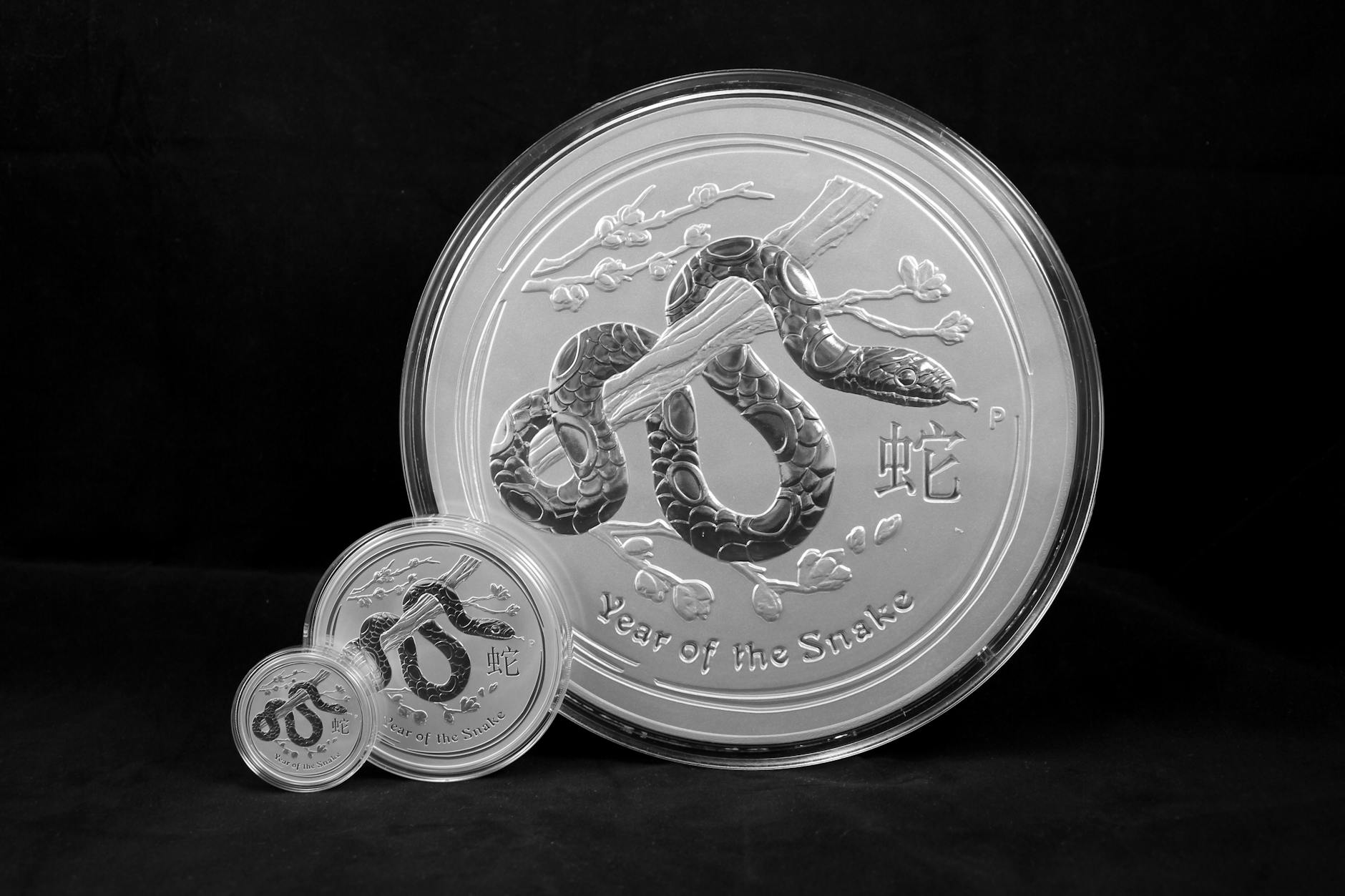
Photo by Zlau.cz on Pexels.com

The story unfolds around two characters of the same age, born under the same sign, in the year of the Metal Snake. Each of the twelve zodiac signs is paired with one of the five elements of Chinese Medicine and in the case of these two girls, it is the Metal snake.

Out of interest, we will enter the Year of the Wood Snake this January 29, 2025.

Of different classes, they are friends as children, one training to become a midwife, like her mother, the other to become a noble, cloistered wife and a doctor like her grandmother.

Respectful Lady asks me to repeat the rules we’ve covered.

“When walking, don’t turn my head,” I recite without protest. “When talking, don’t open my mouth wide. When standing, don’t rustle my skirts. When happy, don’t rejoice with loud laughter. When angry, never raise my voice. I will bury all desire to venture beyond the inner chambers. Those rooms are for women alone.”

The story follows their lives and the precarious events of navigating life under the rule of a mother in law, the intrigues of concubines, the ambitions of those seeking power and the risks of those who stand in their way.

I particularly enjoyed the descriptions of the different cases of disharmony and disequilibrium Lady Tan attended to, making her diagnoses according to the principles of traditional Chinese medicine, a subject I find endlessly interesting.

A Woman Doctor in 15th Century China
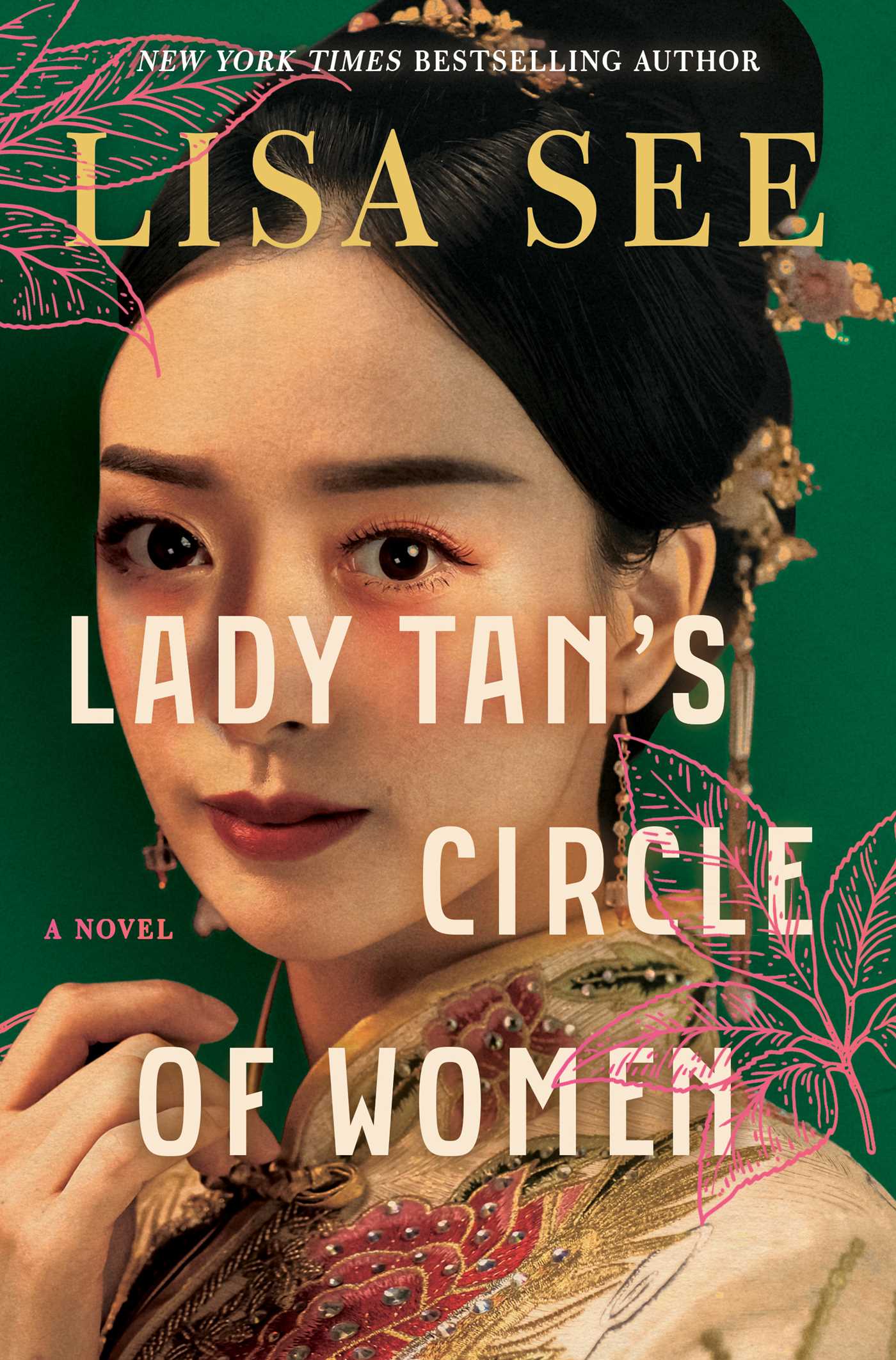
historical novel inspired by the true story of a woman physician in 15th-century China

Lady Tan was inspired by Tan Yunxian, a woman doctor in the Ming Dynasty, who at the age of fifty, was the first to write a book of medical cases about women’s maladies and treatments, an incredible feat given the era in which she lived. Many of the cases in her book have been used by the author, creating fictional lives around the information gleaned from that record.

If you enjoy historical fiction about the lives of women in centuries past, especially those that defy the norms and live remarkable lives, you’ll likely enjoy this. And if like me, you have an interest in traditional medicine philosophies and treatments, then this is a wonderfully insightful and interesting read.

Author, Lisa See

Lisa See is the New York Times bestselling author of Lady Tan’s Circle of Women, The Island of Sea Women (my review here), The Tea Girl of Hummingbird Lane (my review here), Snow Flower and the Secret FanPeony in LoveShanghai GirlsChina Dolls, and Dreams of Joy. She is known for her deeply researched, lyrical stories about Chinese characters and cultures.

Lady Tan’s Circle of Women is not only a captivating story of women helping women, but it is also a triumphant re-imagining of a woman who was remarkable in the Ming dynasty and would be considered remarkable and inspirational today.

She is also the author of On Gold Mountain, which tells the story of her Chinese American family’s settlement in Los Angeles. 

The Tea Girl of Hummingbird Lane by Lisa See

This was a title from my list of 20 Books of Summer 2023 by the author Lisa See, whose previous and more recent historical fiction set on the Korean island of Jeju, I very much enjoyed.

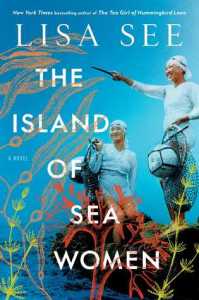
The Island of Sea Women was a novel about the haeyno women, a female diving collective, their history and how their lineage was changed by societal events happening around them. A stunning, unforgettable work of fiction that drew on a fascinating history.

In The Tea Girl of Hummingbird Lane, a girl named Li-yan from an Akha hill tribe in China learns everything in childhood from her mother, she is subject to the tribes rituals, beliefs, traditions. However, some of the events she witnesses mark her in a way that make her determined to avoid being subject to them.

The novel begins in the 1980’s and although Li-yan had little exposure to the outside world, she is less accepting of old ways that are cruel and barbaric. She is part of a consciousness raising, yet in some ways still tied to traditional expectations. The novel follows her through life up until present day 2016 (when it was written).

Young love feels invincible but can create a trap, so when Li-yan finds herself in a compromising situation, she and her mother do what they can to deal with it less harshly than what custom dictates. She crosses a line that no matter which way she turns will have devastating consequences, so makes the decision she can best live with, keeping it a secret from everyone else.

Her life continues after this event, and through her we witness aspects of Chinese life for this young woman who has a chance to be more formally educated and become knowledgeable about all things to do with Pu’er tea, about all kinds of tea trees, with the additional connection of coming from a land where her lineage has been long connected to these ancient trees.

“The colour of the brew is rich and dark with mystery. The first flavour is peppery, but that fades to divine sweetness. The history of my people shimmers in my bones. With every sip, it’s as if I’m wordlessly reciting my lineage. I’m at once merged with my ancestors and with those who’ll come after me. I grew up believing that rice was to nourish and that tea was to heal. Now I understand that tea is also to connect and to dream.”
Photo by Angela Roma on Pexels.com

In addition to her own personal secret, she shares with her mother, the secret location of one particular ancient tea tree, one she has inherited by birth and in a location that must continue to be hidden, due to superstition.

“Is this my land?” I ask.
“When I went to you a-ba in marriage, the old traditions were supposed to be over. No more buying and selling of women into slavery or marriage. No more dowries either. But it doesn’t matter what the government says. This land belongs to the women in our line. It is ours alone to control. It was given to me as my dowry as it will one day go to you with marriage.”

As the tea industry develops and booms and people begin to pay crazy prices for what perceive is precious, many in the village leave their old ways behind, following the allure of money and wealth. This too challenges relationships, friendships and threatens the long held bonds within the village.

The Tea Girl of Hummingbird Lane Lisa See
Photo by Quang Nguyen Vinh on Pexels.com

Simultaneously to the narrative set in China, the story dips in and out of the life of an adoptee, Haley Davis in America. It is a less profound exploration of a complex subject within the novel, and at times an uncomfortable exposure of the significant issue of intra-country adoption.

Overall, an engrossing, eye opening, well researched historical novel, that will make you think about tea in ways you may never have done before.

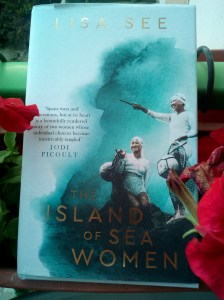
The Island of Sea Women by Lisa See

A fascinating read, an insight into a unique way of life by women known as ‘haenyeo‘ on the coastal, volcanic island of Jeju, in South Korea and a well-researched, thought-provoking work of historical fiction.
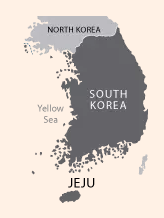
The novel is structured into chapters of time periods in four parts (Part 1 Friendship 1938, Part II Love 1944-1946, Part III Fear 1947-1949, Part IV Blame 1961), interspersed with chapters that cover four days in 2008, when a family of four from America come to Jeju Island and encounter a now aged Young-Sook, asking questions she turns away from.

The story follows the life of an elder daughter Young-sook, whose mother is the chief of their local collective of ‘haenyeo‘, women divers who harvest seafood (sea cucumber, urchins, abalone, octopus) all year round from the sea floor; they can stay underwater for sustained periods of time without breathing apparatus, wearing cotton garments that don’t protect them from the cold yet they don’t suffer hypothermia. As they rise to the surface, they emit a whistling noise ‘sumbisori’ an ancient technique to expel carbon dioxide from the lungs while also letting the other women know where they are.

The biggest risk is inattention, whether it’s abalone clamping down on a knife or a dangerous current sweeping them away (thus they always work in pairs). Before they enter the sea and when they return to land, they huddle around a fire in a seafront, stone enclosure called a ‘bulteok‘, share information, gossip, give advice and receive orders before going into the sea. Bulteok function as spaces for community life, changing of clothes by haenyeo, protection from weather, work activities such as repairs and storing their catch between dives and training.

In the 1960s, at their apex, there were 23,000 haenyeo women on Jeju, according to the island’s Haenyeo Museum. But now, only 4,300 haenyeo remain; many experts believe this generation will be the last, as young people flee to cities and pollution destroys the haenyeo’s place of work: the fragile aquatic ecosystem of the Strait. As of 2017, Jeju was home to only 67 haenyeo under the age of 50. In 2016, UNESCO awarded the divers a Cultural Heritage of Humanity designation.

A Typical Stone Bulteok Enclosure

They practice a form of Shamanism paying their respects to a Goddess, who helps them hold their breath and keeps them safe from danger. At certain times of the year, they hold ceremonies in honour of the goddess of the winds, launching mini straw boats out to sea, making sacrificial gifts of rice and other foods.

Although the Japanese had outlawed Shamanism, Shaman Kim, our spiritual leader and guide, our divine wise one, continued to perform funerals and rites for lost souls in secret. She was known to hold rituals to for grandmothers when their eyesight began to fade, mothers whose sons were in the military, and women who had bad luck, such as three pigs dying in a row. She was our conduit between the human world and the spirit world. She had the ability to go into trances to speak to the dead or missing, and then transmit their messages to friends, family, and even enemies.

Though the islanders live a simple life, they suffer the consequence of being a resting place for occupying forces, initially when the story opens, it is the Japanese military who occupy the island and create a bad feeling.
Young-sook’s best friend Mi-ja is an orphan, her mother died in childbirth and her father was believed to be a collaborator because he worked for the Japanese. She suffers from ‘guilt by association’, the villagers say she will be unlikely to find a good match in marriage despite her good looks. Young-sook’s mother teaches her to become a ‘haenyeo‘ and the two girls become firm friends.

A matrifocal society, it is the women/mothers who are the head of the household, who go to work, to sea, and the men who stay with the children and look after the home, or in some cases leave for the mainland to do factory work. When the girls are around 20 years old (in the 1940’s), they do ‘leaving-home water-work’ off the coast of Vladivostock. Apart from moving to Japan to do factory work, the only other legitimate way to leave the island was to work as haenyeo, diving from boats in other countries. The girls left for nine months at a time. They signed a contract for five years work.

During that time, the world – and not just our island – was shaken. For decades Japan had been a stable – if wholly hated – power on Jeju.

Back on their island, men and boys were being rounded up and conscripted into the Japanese army, sometimes without being given the chance to notify their families. At the end of WWII the Japanese occupying forces are replaced by American forces, and the country conducts it’s own elections, but people are preventing from voting and the incoming political party is mistrusting and treats people badly. Guilt by association leads them to kill indiscriminately, to burn villages, thus people leave in fear. The occupying forces don’t intervene.

This mid-section of the novel is subsumed by the changing political situation and the dire effect on the local population, nearly all of whom lose members of their family. Young-Sook’s family suffer severe tragedy, creating a deep resentment, causing her to abandon her friendship with Mi-ja.

We know that Mi-ja has an unhappy marriage, that she has one son, but with Young-sook’s unforgiving distance from her friend, the narrative around her life is full of gaps, we are witness only to Young-sook’s view, Mi-ja’s story is pieced together in patches until the end.

Rich in detail of the past and of the lives of Young-sook’s family, the story challenges the protagonist and the reader through the revelations of the interspersed four day narrative, when Clara, the young American great-grand-daughter of Mi-ja seeks out Young-sook. These short chapters drip feed the reader with insights into Mi-ja’s family after she left Jeju and bring the story to it’s thought-provoking conclusion.

It’s is a heart-breaking story of island women maintaining a unique tradition and way of life that has made them into unique humans, able to sustain the sea elements like no other and it is also a story of islanders at the mercy of inhumane political and military powers and policies, punished for expressing their opposition, for any form of protest and implicating everyone in their families if they do. It is a wonderful discovery and celebration of female partnership, collaboration and spiritual practice that has survived despite many setbacks, and a lesson in the necessity of forgiveness, and the sad consequence of stubbornly refusing it.

“To understand everything is to forgive.”

Highly Recommended.

 Further Information:

Haenyeo – a day in the life of a 12 year old Korean girl, learning to dive as a haenyeo on the island of Jeju.

Buy a Copy of The Island of Sea Women by Lisa See

via BookDepository