Pod by Laline Paull

I jumped at the chance to read Pod, after having read The Bees and been bowled over by the Mayan inspired beehive world the author created. I was excited to see what Pod might offer and delighted to see it shortlisted for the Women’s Prize for Fiction. (The winner to be announced on Wed 14 June, 2023)

Laline Paull is fast becoming an afficianado of fiction set in the natural world.

An Immersive Oceanic World

Ea dolphin narrator animal Women's Prize FictionThough not an easy read, Pod is a work of inspired literary genius. A cetacean epic, it is a fictional account of dolphin tribe rivalry and a coming-of-age of story of one of the pod, created from real knowledge of environmental science and marine biology. Clearly, a lot of background research and animal behavioural understanding underpins the narrative.

Laline Paull explains in an afterword how the novel was partly inspired following an excursion swimming with wild dolphins.

I learned that this big, noisy pod first appeared in this area after an oil spill up the coast forced them to move on. On arrival in this bay, they deposed the small resident pod of spinner dolphins, who left and were not seen again.

Set in the ocean, from within pods of dolphins, we view an underwater world, peopled by different species as their environment changes, how this affects their habits and behaviours towards others species.

Whales and dolphins are citizens of their world (the ocean), and Pod gives them voice, and readers a view, from within their ecosystem that humans have compromised. Referring to them collectively as people at first seems strange and then it feels appropriate.

Animals Like Humans Like Animals

Sometimes those behaviours mimic dysfunctional aspects of human societal behaviour, such as those brought about by a system of domination, the use of fear, violence and subjugation to keep the female species in line, making examples of the weak and young, banishing the old.

At the same time, their signals become confused by the changing conditions of the ocean, the noise from large ships, pollution, mutations, a general warming and the presence of a large contaminated patch full of micro-plastics.

It grew by the day, by the motion of each tide, yet it remained an inert drifting thing, a negative sea within the ocean. It gathered its great amorphous body piece by piece of plastic, and it made peculiar sounds as it crushed and released, spreading out on the surface, and down to the depths.

Pod Laline Paull spinner dolphin

Photo by Daniel Torobekov on Pexels.com

The story follows the lives of a young female spinner dolphin Ea, of the Longi tribe; another named Google who has been bred in captivity by a military handler, now alone and lost in the ocean he knows nothing of; a pod of bottle-nose dolphins, the Tursiops tribe lead by dominant, aggressive males who have harems.

There are also a few other fish species characters that provide lighter entertainment value, including an informative, commensal Remora that sticks to the dolphins and can infiltrate their thoughts.

To spin like everyone else was the key to fitting in, and if she could only hear the music of the ocean like everyone else, she too would be able to tune in and do it.

The Longi have been forced out of their homewater by an invasion of the cruel barbaric Tursiops tribe. After a tragedy, Ea leaves her pod and is abducted by a group of exiled male Tursiops.

With Google now roaming the ocean alone, it is only a matter of time before there will be an encounter, leading to the novel’s denouement.

When the sharks saw him, with his wounds and his peculiar energy like no other dolphin they had ever encountered, they left him alone. He was not prey, and when one sub-adult tiger shark became too curious, Google remembered the game of tag, and butted back harder than the juvenile had touched him. That was all it took, one contact and and another part of Google’s instinctive mind opened up. Shark.

Belonging, Finding Home, Community

Pod Laline Paull

Photo by Daniel Torobekov on Pexels.com

It’s an ambitious concept and at times difficult to read, due to the treatment inflicted and the dire presence of man, acting in a way that yields little respect for the environment these creatures live and spawn within.

Ultimately, it explores aspects of belonging to a species, how they control from inside and treat outsiders and the rebel within.

Their homewater was no more, powerful devils were ripping the ocean apart and their screaming was killing pods of pilots, of humpbacks, of dolphins.

It is appropriate to mourn the losses, who really knows what it must be like to be a marine animal living in an environment that has been so compromised by a species that lives on land, that continually exploits, pollutes and disregards the fragile biosphere within which they dwell.

Death was everywhere, people were fleeing, the ocean was either full of refugees or terrifyingly empty.

Natural World Fiction

As a work of fiction, this was far outside what I normally read and as such it is hard to describe in those terms. The dolphin characters were interesting as they tried to understand their own inner signals and navigate their increasingly confused environment and community. Reading about dolphins as a society is quite confronting, when we learn that they are far from the playful characters we have been lead to believe.

The unfamiliarity of some of the other species made it a challenge to visualise some of the characters, it was necessary for me to look up some of these fish species, testing the limits of my imagination.  It was just not possible to substitute Dory and Nemo for Wrasse, Fugu and Remora!

Pod is quite a ride, a thought provoking, confronting read that makes no apologies for the dark, realistic world it inhabits.

Further Reading

Interview Orion Magazine: An Ocean of Agony and Ecstasy – 7 questions for Laline Paull about her new novel ‘Pod’

Laline Paull on Substack: Storytelling and the Climate Crisis Science + emotion = change. Using the power of storytelling to communicate the climate crisis.

Captain Paul Watson: Where Others Fear To Go, We Will Continue to Fight

Seaspiracy Documentary Trailer

OceanaProtecting the World’s Oceans

Mission Blue – Hope Spots

Laline Paull, Author

Laline Paull was born in England. Her parents were first-generation Indian immigrants. She studied English at Oxford University, screenwriting in Los Angeles, and theatre in London.

She has had two plays performed at the Royal National Theatre, where she is currently adapting her first novel, The Bees. Her second novel The Ice, was set in the Arctic. She is a member of BAFTA and the Writers’ Guild of America. She lives in the English countryside with her family.

“I loved finding out about different dolphin cultural expressions, which made me think: They’re just like us. They’re tribal. They like different foods, different dances; they make love or coercively mate, have political alliances, get into great big amorous raves—it was wonderful to discover these things through the strict unemotional lens of science. Then run away and make a wild story of it.” Laline Paull, interview, Orion Magazine

Baileys Women’s Prize Short List 2015

From a long list of 20 novels and from a collection of 160 original entries, the five judges have narrowed the field down to 6 novels vying for the Baileys Women’s Prize for fiction 2015.

Five of the authors have been shortlisted previously and one, my favourite (though I have only read two on the list) is a debut author, Laline Paull.

The shortlisted novels are:

It’s another excellent list from this worthy prize that celebrates hard-working, talented and inspirational women writers with a particular talent for creating life-like characters inhabiting believable worlds, whether it’s the smaller canvas of detailed family life in Anne Tyler’s fiction, or the imaginative hive of Flora 717, brilliantly conceived in Laline Paull’s The Bees.

Syl Saller, Chief Marketing Officer, Diageo had this to say about the shortlist:

“From a debut to a twentieth novel, this year’s shortlist celebrates exceptional female writers who display a rich and diverse talent for telling stories. Having always championed women, Baileys is thrilled to be working with the Prize to get these six novels by inspirational women into the hands of more book-lovers around the world.”

And the shadow jury (a group of blogging reviewers who are reading all the books and creating their own short list and winner) organised by Naomi at WritesofWomen, came up with their alternative shortlist below, having read and debated the 20 nominated novels.

Shadow Jury Alternative Shortlist

Shadow Jury Alternative Shortlist

One of the jury members, our much admired reviewer Eric of LonesomeReader had this to say about the prize:

“Whichever book ultimately wins, I am so glad this prize has introduced me to a range of unique books I probably wouldn’t have read otherwise. From Laline Paull’s outrageously original The Bees to Jemma Wayne’s ambitious take on the aftershock of war in After Before to Rachel Cusk’s fascinating chorus of voices in Outline to Grace McCleen’s elegant portrayal of madness in The Offering to Marie Phillips’ hilarious Arthurian tale The Table of Less Valued Knights to Sandra Newman’s challenging mighty tome The Country of Ice Cream Star. In my opinion, book prizes help us notice great literature we might have missed and the Baileys Prize has offered up a lot of excellence this year.”

I recommend visiting either of these blogs mentioned if you wish to read reviews of the books.

So, any predictions for a winner? We will have to wait until 3 June 2015 to find out!

Bailey’s Women’s Prize for Fiction Longlist 2015

lbaileyslogoTwenty books have now been selected that make up the 2015 long list for the Bailey’s (previously The Orange) Prize for Fiction. They will be reduced to six on April 13 and the winner announced at the Royal Festival Hall on 3 June 2015.

Previous winners include Eimear McBride for A Girl is a Half-formed Thing (2014) and A.M. Homes for May We Be Forgiven (2013), Madeline Miller for The Song of Achilles (2012) and Téa Obreht for The Tiger’s Wife (2011).

Shami Chakrabarti, Chair of judges, had this to say about this year’s selection:

“The Prize’s 20th year is a particularly strong one for women’s fiction.  All judges fought hard for their favourites and the result is a 2015 list of 20 to be proud of – with its mix of genres and styles, first-timers and well-known names from around the world.”

From the list of 20, I have read only one and it was absolutely brilliant, Laline Paull’s The Bees and I am currently just over half through Anne Tyler’s A Spool of Blue Thread which reminds me of the experience of reading Jonathan Franzen’s family saga The Corrections.

So here it is, the list of twenty books long listed for the Baileys Women’s Prize for Fiction:

Rachel Cusk: Outline

Lissa Evans: Crooked Heart

Patricia Ferguson: Aren’t We Sisters?

Xiaolu Guo: I Am China

Samantha Harvey: Dear Thief

Emma Healey: Elizabeth is Missing

Emily St. John Mandel: Station Eleven

Grace McCleen: The Offering

Sandra Newman: The Country of Ice Cream Star

Heather O’Neil: The Girl Who Was Saturday Night

Laline Paull: The Bees

Marie Phillips: The Table of Less Valued Knights

Rachel Seiffert: The Walk Home

Kamila Shamsie: A God in Every Stone

Ali Smith: How to be Both

Sara Taylor: The Shore

Anne Tyler: A Spool of Blue Thread

Sarah Waters: The Paying Guests

Jemma Wayne: After Before

PP Wong: The Life of a Banana

The prize is being shadowed by a group of excellent bloggers, including one of my all time favourites Eric at Lonesome Reader, organised by Naomi at The Writes of Women.

They will be reading all the books and many of them have read at least five or six already, that’s where I’ll be heading to decide which books might appeal to me and where I recommend you look for some of the best reviews.

So which books have you read, or plan to read?

The Bees by Laline Paull

I came across this book The Bees by Laline Paull during the Literary Bloghop giveaway. Deb from The Book Stop was offering it as one of her giveaways and I was intrigued by the premise as it is narrated from the point of view of Flora 717, a worker bee!

Bees2The story begins with Flora’s awakening as she becomes conscious of her surroundings and who she is and what she is capable of doing. For not all bees are born equal in The Hive. Flora is a sanitation bee, one of the lowest kin and perceived by others as the most ugly, neither are they capable of speech. Except Flora. She has characteristics that are not like her kin and is fortunate being a mutant bee that she has been allowed to live.

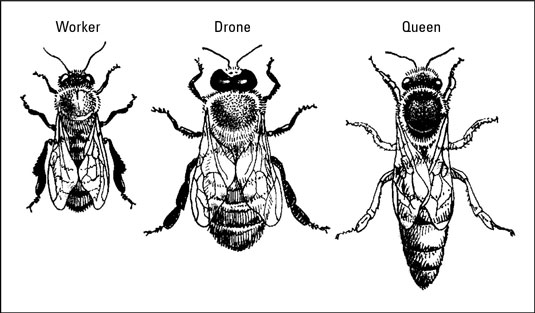
The majority of the bees in the hive are female, except the Drones, the only male bees and the only kin who don’t work. The bee kins have names like Clover, Sage,  Thistle. They mutter a mantra ACCEPT OBEY SERVE around the more senior sisters and priestesses, they do Devotions, are punished with Kindness, communicate what they have learned on the outside in the Dance Hall, including information about the dangers of the Myriad.

“The golden fragrance drew Flora on, until to her shock she realised she had passed unscathed through the scent-gates on the staircase to the highest level of the hive.”

Their talents and work include cleaning the hive, feeding the newborns with Flow, a substance some bees are able to regurgitate, foraging to collect nectar and pollen, working in the Patisserie, grooming the Drones and tending to the Queen.

Bee Castes

The bees possess a collective consciousness and through it they can receive information from the Hive Mind and Energy and Love from their Queen; their thoughts are able to be read by others through their antennae, unless they close them down, which Flora begins to do increasingly as she crosses boundaries and experiences thoughts she knows could endanger her life and others, should any of the  kin-sisters read them.

“Flora tucked her antennae sleek down her back as she advanced her speed. Never again would she leave her channels open in the hive, for any bee to grab and read. Sister Teasel was old and  could no longer work efficiently – but Flora’s wings beat with a new strength. She felt she could fly a hundred leagues  to serve her hive, and the sky streamed with all the scents rising from the wet earth – including mesmerisingly delicious nectar. Flora locked onto it.”

There are threats both within the Hive and outside.  The beehive is like a cult, its members know their place, their role and their boundaries, however everywhere there are risks and dangers both outside and more dangerously, within. ACCEPT, OBEY, SERVE. They live in a symbiotic relationship that ensures the safe function and progression of the hive. When something threatens that relationship, their safe haven is no longer assured.

Laline Paull has channelled an incredible and yet what read like a totally credible life and universe within a beehive, from the perspective of Flora 717. I know little about the bee world, but the environment the author creates is fascinating, intriguing and imaginative with references to monarchy, spiritual devotion, universal instinct and power. It also contains a subtle environmental reference, one that will be recognised by nature lovers everywhere, without compromising the essence of great storytelling.

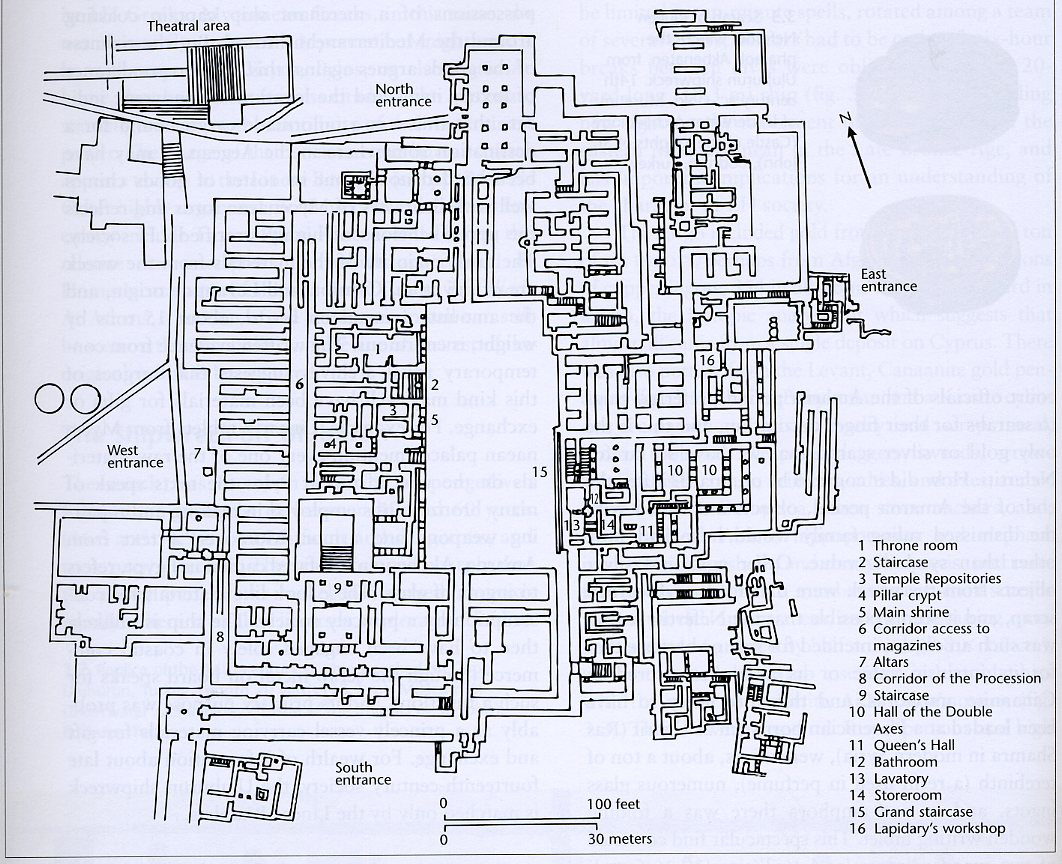
Labyrinthe of Knossos, Crete

Labyrinth of Knossos, Crete

Intrigued by the book, I was also interested to learn that Laline Paull was inspired by a Bronze Age Minoan Palace.

“The Cretan Minoan civilization dates from 1700BC, and was very sophisticated and sexually egalitarian, if not biased towards women. It was an inspiration for translating a real beehive into a fictional landscape.” Laline Paull

This description of the Labyrinth at Knossos, the largest of the Minoan palaces, gives you an idea of the influence on Flora’s world.

“Knossos is the largest of the Minoan palaces, and like others it is an agglomeration of rooms clustered around a long, rectangular central court. Only the ruins of its foundations have survived, but these reveal a vast interconnected complex of small corridors, staircases and private rooms containing residential quarters, workshops, administrative areas and many different cult centres.” Christopher Berg, Amazeing Art: Wonders of the Ancient World

The Bees is an utterly captivating read and a masterful feat of the imagination, Laline Paull has the reader on a knife-edge, knowing the dangers Flora 717 faces, yet her discretions feel necessary and we will her to continue, to survive and overcome all the challenges she faces.

I started it slowly and have since read others did find it is a slow start, however once into it, I could not put it down, it has been one of the best and most original reads of 2014 for me.