
A few catch up reviews from August 2025’s Women in Translation month. I realised I’ve mentioned them elsewhere but not here. The link above has a summary of all the novels I read during #WITMonth with links to reviews. So many of them were excellent 5 star reads, the 3 Italian novels, the Mexican, French.
Hungarian Literature in Translation
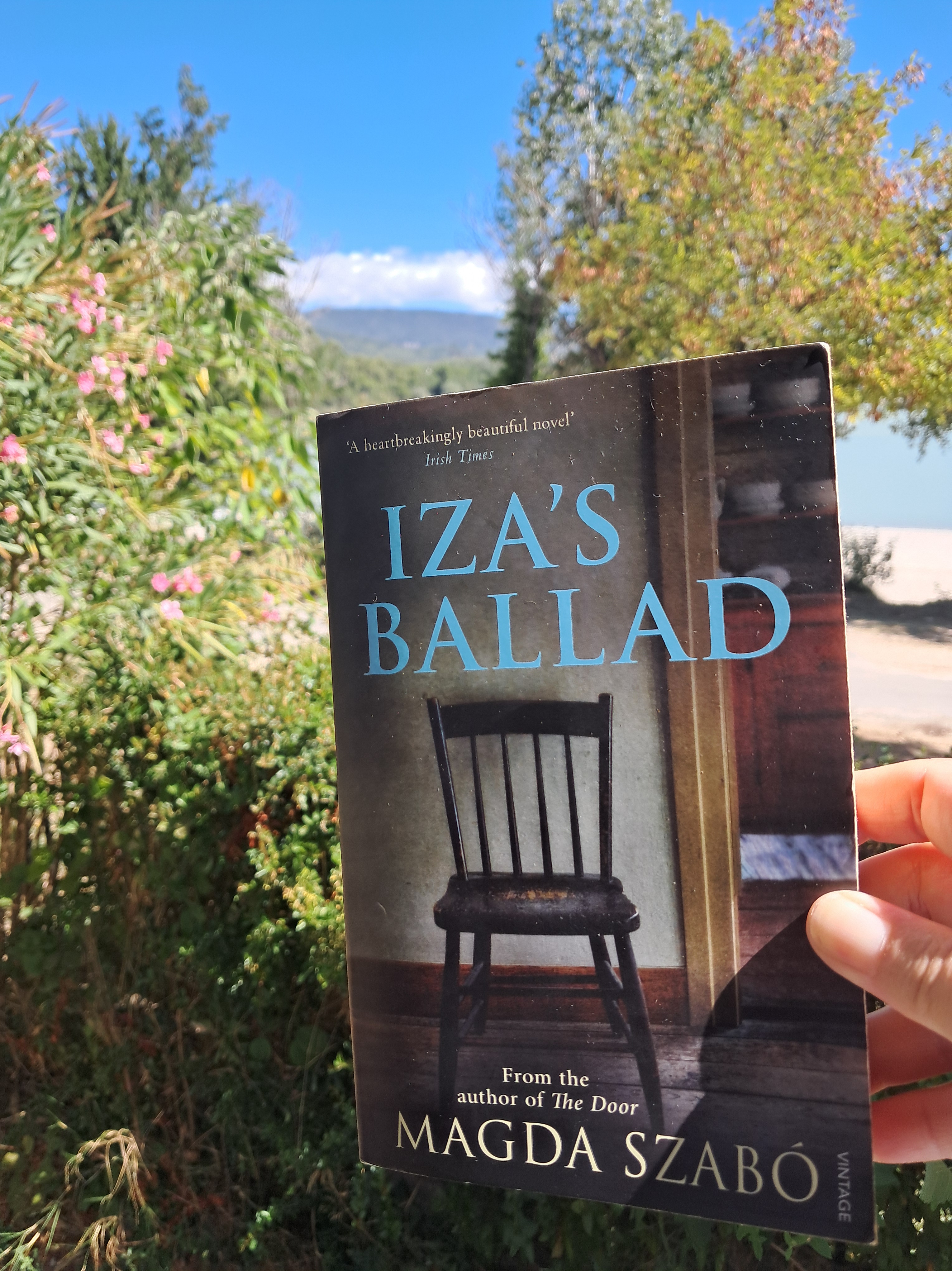
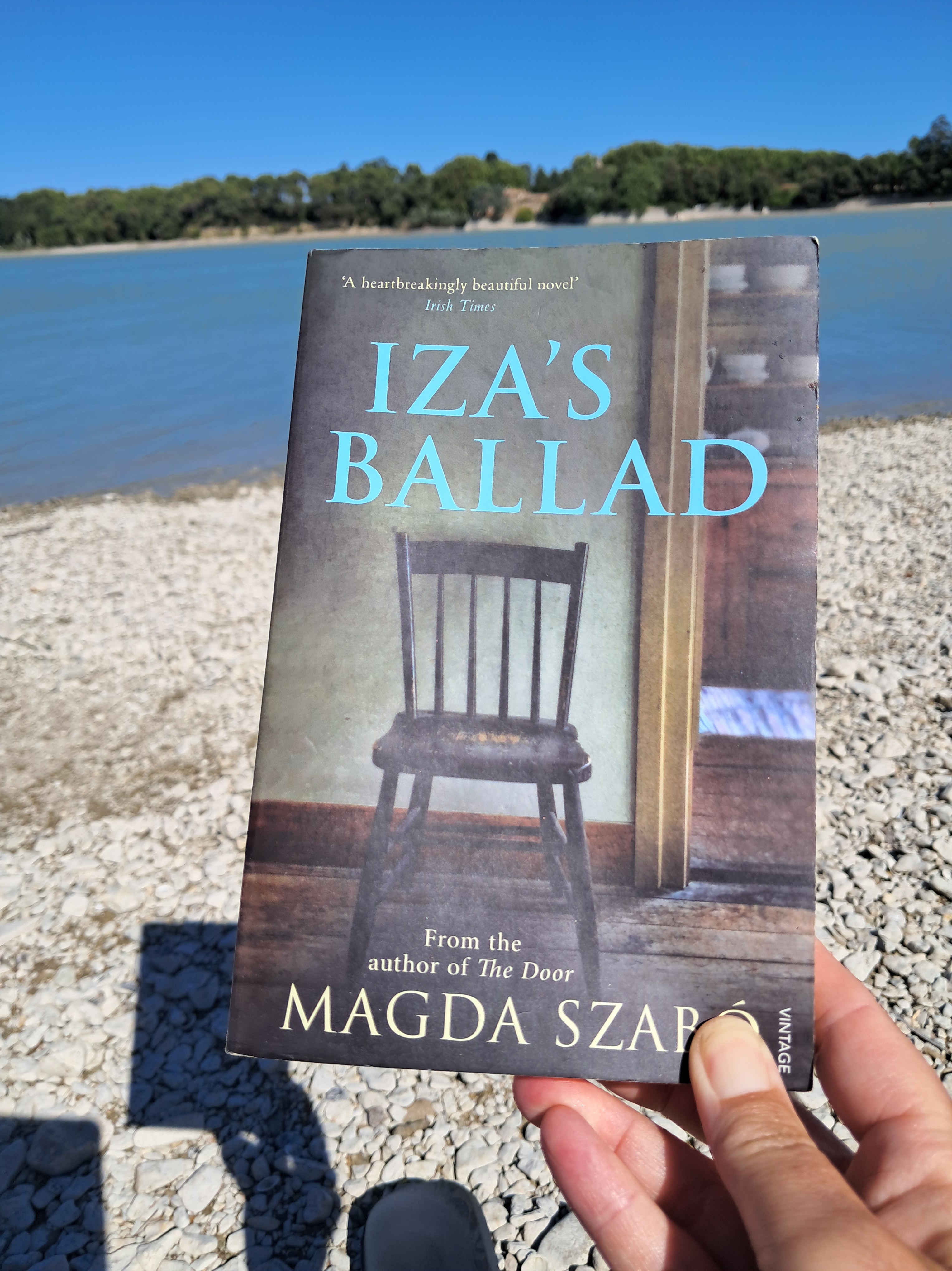
Magda Szabó’s Iza’s Ballad (2014), translated from Hungarian by George Szirtes was originally published in Hungary in 1963 and brought to English fifty years later in 2014. She was the most translated Hungarian author, brought back to popularity thanks to Len Rix’s translations of her novels Abigail (2020) and The Door (2006) and Katalin street (2017).
It is the story of traditional villager Ettie and her daughter Iza, who lives in Budapest and the sequence of events in the wake of the death of Ettie’s husband Vince, when the daughter swiftly moves her mother away from the countryside and her familiar community to the city, where everything will be taken care of.
The news arrived just as she was toasting bread.
Three years earlier Iza had sent them a clever little machine that plugged into the wall and made the bread come out a pale pink; she’d turned the contraption this way and that, examined it for a while, then stowed it on the bottom shelf of the kitchen cupboard, never to use it again.
Thrust into a Modern Era
Ettie’s grief finds no solace in the new situation, baffled by the ways of her daughter and the city, where she struggles to find her place or role to assuage her loss. Even getting outside for fresh air becomes a source of anxiety due to the confusion of not knowing the area, the traffic, the transport system. Teréz who cooks, is hostile doesn’t want her in the kitchen or cleaning, no one wants her old-fashioned coffee or help.
She understood how an old woman rapidly heading towards eighty, who had spent all her life on firm ground, coping with straight forward problems, would now feel as though her life were hanging by a thread, and she also understood the bitterness she must be feeling, a bitterness she had never articulated in words that must have been there all the time: she was, after all, an old but still active woman, and she was in mourning. Having established the nature of their relationship, Teréz wanted to show her some tenderness without endangering her own importance and position.
How Not to Age Gracefully

Written in four parts, Earth, Fire, Water, Air, the narrative hops back and forth from present to past as we grow to understand the family, their relationships and the great divide between their generations and the lives they lead.
The story moves slowly through Vince’s illness and past and then speeds up with his demise as Ettie is literally thrust into a new era.
She was right, she was always right, it was just that old people grow fond of things that mean much more to them than the young.
A Formidable Daughter
Iza is an adept busy Doctor, divorced, childless, has a night companion and is extremely independent. Employing teréz to take care of all her domestic arrangements, she wants her mother to be looked after and not to have to do a thing, believing she should appreciate that.

One activity at a time she tries to find her role, only to be continuously rebuffed. Everything is taken care of and the effect as she pulls back from one potential helpful chore after the other is a slow deterioration of all ‘joie de vivre’. Her daughter’s efficiency removes all chance of Ettie helping out and efforts to do so, create more problems, further undermining the elderly mother’s sense of well-being.
She felt as if some elemental blow had destroyed everything around her and that only now did she really know what it was to be a widow, someone absolutely abandoned.
Return to One’s Roots
When she hears the headstone is ready for placement, Ettie makes plans for her return. It is quite a revelation to her for everything to feel so familiar and so strange at the same time. But her time away has hastened her decline and things don’t go as smoothly as she would have liked.
There’s so much more to the story and the backstory of the character’s that leads them to the predicament they are in by the time Ettie reaches widowhood. It’s an incredibly well portrayed depiction of the sudden transition of the aging mother from her simple village home to the modern convenience of her daughter’s third floor apartment in Budapest, and the effect that removing an elderly person from their familiar environment and from the process of transitioning can have.
Thought provoking and reflective, with an element of tension as the status quo can not be supported, it’s an excellent novel that captures an important and little acknowledged societal shift, of a dying era and of interesting mother daughter power dynamics.
Have you read any good Hungarian novels?
Further Reading
The Grande Dame: Magda Szabó – A Portrait
Author, Magda Szabó
Hungarian novelist, essayist, poet and literary translator Magda Szabó was born in Debrecen, Austria–Hungary in 1917 and died in 2007. She began her literary career as a poet and disappeared from the publishing scene in the 1950’s for political reasons, making a living teaching and translating from French to English.
She began writing novels and in 1978 was awarded the Kossuth Prize, the most prestigious literary award in Hungary. Her novel The Door won the Prix Feminina Etranger in France and the Oxford-Weidenfeld Translation Prize and made into a film starring Helen Mirren.
She lived a long, eventful life decorated with many outstanding achievements in the field of literature, with several of her books being translated into more than 40 languages.
 Word by Word