All That Remains by Virginie Grimaldi tr. Hildegarde Serle (2025)

Contemporary French literature translated to English Virginie Grimaldi All That Remains Il nous restera ça three silhouettes mimosa flowers

We are just coming out of our second summer heatwave and in this kind of heat, where it’s 38°C (100°F) every afternoon, reading needs to be light and propulsive, because the brain just doesn’t function in the same way.

I chose to read French author Virginie Grimaldi’s All That Remains because I felt sure it would provide the sustenance I was looking for, without having to think too much.

Good-hearted, uplifting fiction, great characters and a connection with some of the best parts of French life, that help overcome universal problems that anyone might face. Positive aspects of humanity overcoming the oppressive.

I love the sprigs of mimosa on the book cover, a beautiful winter flowering shrub that thrives in difficult conditions, blooming on the coastal region of the south of France in January and February. It evokes such good feeling, symbolising new beginnings, resilience and adaptability and a sign that spring is on its way.

La Cohabitation Intergénérationnelle

In addition, when I read the premise of three generations living together, it reminded me of a news item I had seen on French television about “La cohabitation intergénérationnelle“, where residents (over 60 years) in Paris and elsewhere, at risk of needing to move out of their apartments or homes, were being matched with students (under 30 years) seeking affordable accommodation, able to be a reassuring presence, particularly at night, and share meals together.

Seeing these people on the screen, sitting talking together, feeling safer at home, having more space, companionship – able to get through those years of difficulty – well, as we say here, « Vive la France »!

Grief, Homelessness and New Beginnings
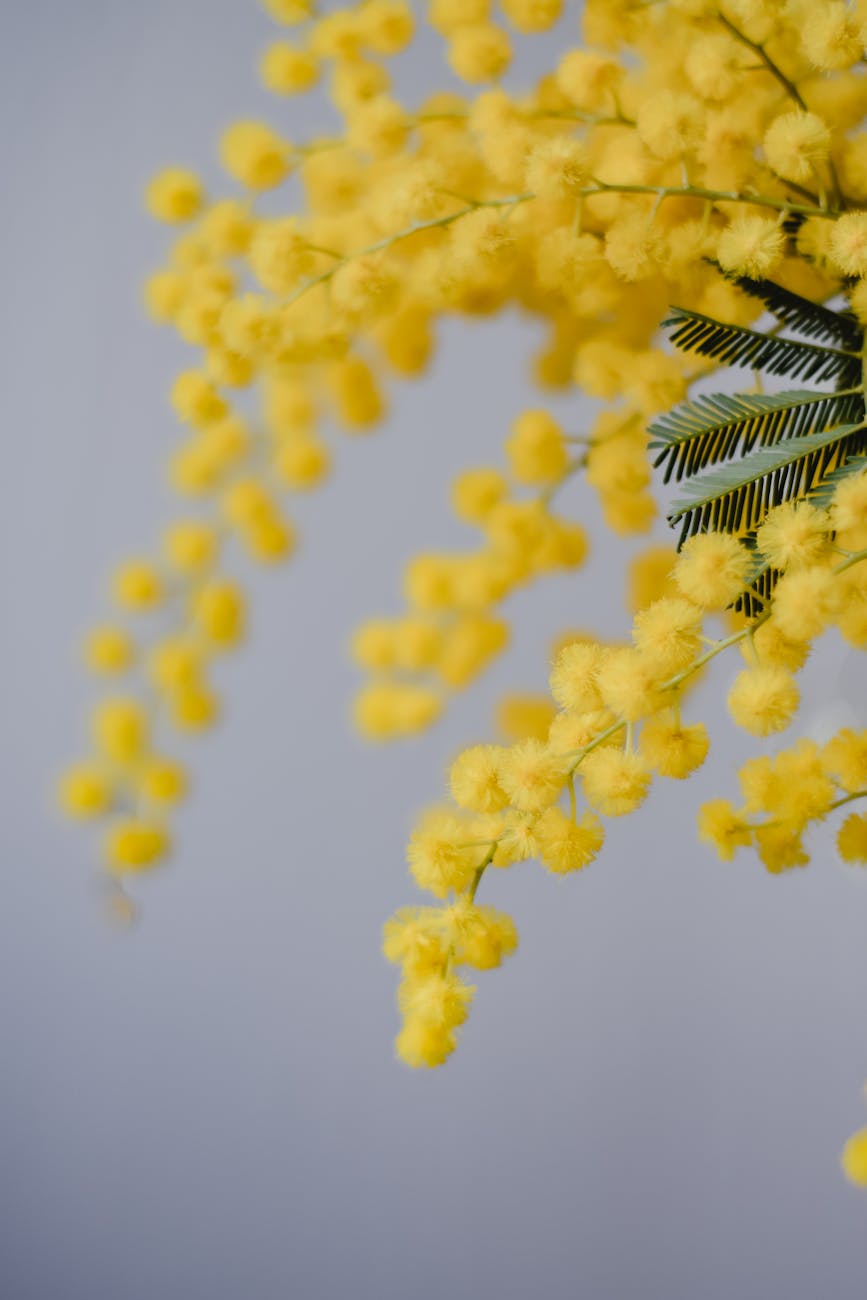
sprigs of mimosa new beginnings, resilience, surviving in difficult conditions Virgine Grimaldi All That Remains
Photo by Eva Bronzini on Pexels.com

It’s a novel about three people from three different generations, who wind up sharing an apartment together, when their needs intersect.

Jeanne (74) is recovering from unexpected widowhood and needs to do something soon to address unforeseen financial concerns, if she wants to remain in her apartment in Paris. The woman in the bakery won’t allow her to put up a notice, but fortunately someone overhears her asking.

For the past three months, Jeanne had been unweaving those habits, thread by thread. The plural had become singular. The setting was the same, the timing the same, and yet everything rang hollow. Even the melancholy had disappeared, as if her entire life had been training for the bereavement she was now facing. She was desensitized.

Iris (33) a care worker, is being evicted from her temporary studio, living out of a suitcase and in hiding from a situation that will be revealed.

“Hello Madame, I just wanted to confirm my interest in your room for rent. And please know that, if it weren’t for my tricky situation, I’d never have interrupted your conversation with the young man, who also seems in real need of a home. If you’ve not yet made your choice, I’d understand if you favour him. Regards Iris.”

Paul, a French boulangerie bakery in London and Aix en Provence patisserie

Théo (18) is an apprentice in a local boulangerie (bakery) and has just reached the age of independence. Having just bought a car for €200, he parked up outside the house with the blue shutters and thought he’d solved his accommodation woes, however his problems have just magnified.

I don’t intend to drive around in this car. I settle down on the back seat, head resting on my bag, covered with my coat. I put in my earbuds and play Grand Corps Malade’s latest song. I light the roll-up saved since this morning and close my eyes. It’s a long time since I’ve felt this good. No sleeping in the metro for me tonight. For 200 euros, I’ve treated myself to a home.

Jeanne, Iris and Théo in Paris

Each short chapter moves to the next character and within very few pages I was deeply invested in wanting to know more about each one and where the story was going. It’s a wonderful novel about perseverance and overcoming challenges and the messiness of life and finding support and comradeship in unexpected places.

I loved this book and would be not be surprised to see it being made into a film, it’s got all the good vibes and realistic issues that people f all generations have to face, and a unique but encouraging way that different members of a society can be there for those who were strangers at first.

Another #WITMonth read, highly recommended!

There is a crack in everything,

That’s how the light gets in.

LEONARD COHEN

Author, Virginie Grimaldi

Virginie Grimaldi was born in 1977 in Bordeaux where she still lives. Translated into more than twenty languages, her novels are carried by endearing characters and a poetic and sensitive pen. Her stories, funny and moving, echo everyone’s life. She is the most read French novelist in 2019, 2020 and 2021 (Le Figaro littéraire/GFK awards) and winner of the Favorite Book of the French in 2022 (France Télévisions).

N.B. Thank you kindly to Europa Editions UK for sending this copy for review.

Three by Valérie Perrin tr. Hildegarde Serle

From Flowers to Friendship

Valérie Perrin’s Fresh Water for Flowers was the final book I read in Dec 2020 and one of my favourite reads of that year. It is a novel that has stayed with me since, due to a strong sense of place in various locations in France, the unique character of Violette Touissant and her unforgettable choice of careers; she moves from being a level-crossing keeper to cemetery keeper.

“If life is but a passage, let us at least scatter flowers on that passage.”

The Ties That Bind

French literature fiction Europa Editions

Valérie Perrin’s latest novel Three, (a 575 page chunkster) is something of a coming-of-age tale of three young people in a small provincial French town, intersecting with the mystery of why they no longer speak to each other, 30 years on.

“They were united by the same ideal: leaving when they were grown up. Quitting this hole to go and live in a city full of traffic lights, noise, and frenzy, of escalators and store windows, with bright lights everywhere, even in the middle of the night. With crowds on the pavements, of strangers, of foreigners one can’t gossip about.”

Set in 1986, the years they were at high school together and 2017 – the year a car is retrieved from the bottom of a lake with the remains of human bones in the back seat – the novel glides back and forth over time, scene by scene, recounting a kaleidoscope of episodes among the three that slowly reveal the depth of their relationships to each other and how they were torn apart.

“Étienne was the leader, Nina the heart, and Adrien followed with never a complaint.”

Unconventional Families

Nina was raised by her grandfather and never knew her single mother. She is both curious and resentful about Marion, with good reason. Having such loyal friends as Adrien and Étienne and the assurity of her grandfather’s presence, she feels secure.  He is worried about her, she exhibits signs of taking after her mother, traits he is determined to stamp out.

“He panics. Like lightning in his eyes. He’s brought straight back to his daughter, Marion. His punishment. She was the same. Something like misfortune running in their veins. The mother has contaminated the daughter. An affliction.”

coming of age french novel

Photo by iOnix on Pexels.com

Adrien lives with his mother Josephine. He sees his father occasionally, a man married to another, who will never leave his wife. He becomes the victim of a bullying teacher at school, the same year he becomes part of the Three. The school year that gave him two friends and took away his innocence.

“Sometimes, he would reappear. Like some public-works inspector, or cop. He barely rang the doorbell before coming in. He would glance around the apartment, at the paintwork, the plumbing, Adrien’s school report, leave yet another cheque on the table in the sitting room, and leave. No doubt his conscience clear.”

When the car is dredged from the bottom of the lake, a fourth voice, the only first person narrator in the novel appears. Virginie is a journalist, clearly someone who was at school with the Three. This character is something of an enigma, never mentioned in the adventures of the Three.

“They had no friends but themselves.They were almost stuck to each other, like puppies from the same litter. And yet, they in no way resembled each other. Neither physically, nor in their attitudes.”

Creating Suspense and Intrigue

Three Valérie Perrin Europa Editions

Photo Quang Nguyen VinhPexels.com

Valérie Perrin is quite the master at withholding and timing revelations, drip feeding events, turning points and characters to increase the intrigue, leading the reader down various paths of speculation, until further scenes reveal a bigger picture.

As major events occur, we witness how the three respond, how their dreams are both pursued and thwarted, how secrets eat away at them and ultimately how the strength and belief in their friendship can help them, if they can overcome their inner obstacles.

Ultimately, while there is an engaging plot and a multitude of minor intrigues layered around the central mystery, it is a novel that dissects friendship, its random formation and sense of belonging, its source of support to each person and potential for envy and destruction by those outside of it.

Over thirty years, they will make their mistakes, drift apart, come together, indulge resentments, forgive each other and come to realise that acceptance and truth can set them free from pain and longing, that personal histories matter and those who were part of them can help each other to heal.

A Feast of Issues, A Famine of Depth

It is an entertaining and enjoyable novel, the way the text goes back and forth, the slow reveal, felt very much like something written for the screen, not surprising given that the author is a photographer and screenwriter.

My criticism  would be that there is an attempt to pack too much into the novel; weighty issues, each of which could have been a central theme of the novel. The sheer number of significant issues it raises, in some way dilutes them and compromises the authenticity of some of the secondary characters. The author has ambitious ideas and an interest in social issues, but as a result some are dealt with too lightly, or used to create intrigue, which at times felt inauthentic, a disservice. It’s neither a conventional mystery/thriller or literary fiction, it sits somewhere between the two, something of a hybrid.

Valérie Perrin, Author

Fresh Water for Flowers, ThreeValérie Perrin is a photographer and screenwriter who was born in the Vosges in 1967, grew up in Bourgogne and settled in Paris in 1986, then Normandy in 1995.

Her novel The Forgotten Sunday (2015) won the Booksellers Choice Award. Her English language debut Changer l’eau des fleurs (Fresh Water for Flowers) (2020) was translated into 30 languages, it won the Prix Maison de la Presse 2018 and the Prix des Lecteurs au livre de poche in 2019 and was longlisted for the Dublin Literary Award 2022.

Figaro Littéraire named Perrin one of the 10 best-selling authors in France in 2019, and in Italy, Fresh Water for Flowers was the best selling book of 2020.

N.B. Thank you to the publisher Europa Editions, for providing me a review copy of the novel.