16 titles have been longlisted for the seventh annual award of the Warwick Prize for Women in Translation.
The prize was established by the University of Warwick in 2017 to address the gender imbalance in translated literature and to increase the number of international women’s voices accessible to a British and Irish readership.
This year, there were 153 nominations representing 32 languages. The longlist spans 11 languages and for the first time includes a title translated from Vietnamese. Arabic, Chinese, Hungarian and Italian language books are represented more than once.
A Long Line of Classics by Women Coming into Translation
Knowing how few women authors have been translated into English until now, only confirms how many great books sitting waiting to be discovered and rediscovered, as the demand to read literature from elsewhere increases exponentially. Yes, we have been and are, starved for other voices, for universal connections, stories imagined and conceived in other languages.
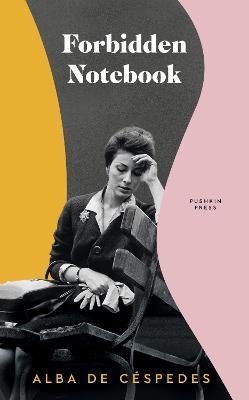
I have read two from the list, both excellent novels that I recommend, click on the titles to read my earlier reviews. Forbidden Notebook by Italian-Cuban author Alba de Cespédes translated by Ann Goldstein is a rediscovered classic from 1952, a highly compelling read about a woman’s self discovery through the transgressive act (find out why) of writing in a notebook.
The Remains by Mexican author Margo Glantz translated from Spanish by Ellen Jones is an extraordinary novella of a woman who returns for the funeral of her ex-husband and relives aspects of their relationship while navigating the audience of mourners, uncertain to whom they should pass on their condolences.
The judges said of the 2023 longlist:
“From an exceptionally rich field of submissions we have chosen 16 remarkable books in first-rate translations. All of them deserve to find delighted readers everywhere.
Our contemporary picks span a dazzling rainbow of genres, cultures and voices – from an Egyptian graphic novel to a Vietnamese vision of migrant life in France; a Chinese fable of an alternative Hong Kong to a comic-epic Swedish novel of ideas; a Mexican musical elegy to a Yemeni documentary testament to the human costs of war.
But this year’s long list also honours a formidable cache of rediscovered gems from major 20th-century women writers: classic works given new life by the translator’s time-defying art.”
The full list of longlisted titles, in alphabetical order, with a summaries, is as follows:
Dorthe Nors, A Line in the World – A Year on the North Sea Coast (nonfiction) translated from Danish by Caroline Waight (Pushkin Press) – a year travelling along the North Sea coast—from the northern tip of Denmark to the Frisian Islands.
In 14 essays, it traces the history, geography, and culture of the places she visits while reflecting on her childhood and her family and ancestors’ ties to the region. She writes of the ritual burning of witch effigies on Midsummer’s Eve; the environmental activist who opposed a chemical factory in the 1950s; the quiet fishing villages surfers transformed into an area known as Cold Hawaii in the 1970s. She connects wind turbines to Viking ships, 13th century church frescoes to her mother’s unrealised dreams. She describes strong waves, sand drifts, storm surges, shipwrecks; nature asserting its power over human attempts to ignore or control it.
Lalla Romano, A Silence Shared (historical fiction, WWII) translated from Italian by Brian Robert Moore (Pushkin Press) – Italian classic about the mysterious relationships between two partisan couples in German-occupied Italy in the wintry mountains of Piemonte.
Sheltering from the war in a provincial town outside of Turin, Giulia and her husband Stefano feel an instant affinity with Ada and Paolo: she a spontaneous, vibrant young woman, he a sickly intellectual, a teacher and partisan in hiding. As the Germans occupy Italy, a subtle dance of attractions between the couples begins, intensified by their shared isolation and the hum of threat over a long, hard winter.
Amanda Svensson, A System So Magnificent It Is Blinding (literary fiction) translated from Swedish by Nichola Smalley (Scribe UK) – A joyful family saga about free will, forgiveness, and connectedness that asks if we are free to create our own destinies or are just part of a system beyond our control?
As a set of triplets is born, their father chooses to reveal his affair. Pandemonium ensues. Two decades later, Sebastian has joined a mysterious organisation, the London Institute of Cognitive Science, where he meets Laura, a patient whose inability to see the world in three dimensions intrigues him. Meanwhile, Clara has travelled to Easter Island to join a cult, and the third triplet, Matilda, is in Sweden, trying to escape the colour blue.
An event forces the triplets to reunite. Their mother calls with news: their father has gone missing and she has something to tell them, a twenty-five-year secret that will change all their lives.
Krisztina Tóth, Barcode (short stories/literary fiction) translated from Hungarian by Peter Sherwood (Jantar) – a first substantial work in prose after 4 volumes of verse, consists of 15 short stories tied together by a poetic sensibility.
Whether about childhood acquaintances, school camps, of love or deceit, all take place against the backdrop of Hungary’s socialist era in its declining years. The stories are strung together, like jewels in a necklace, along metaphorical ‘lines‘, which nearly all include the word for ‘line, bar‘. The losses, disappointments, and tragedies great and small offer nuanced ‘mirrorings’ of the female soul and linger long in the memory.
Thuận, Chinatown (literary fiction) translated from Vietnamese by Nguyễn An Lý (Tilted Axis) – An exquisite and intense journey through the labyrinths of Hanoi, Leningrad, and Paris via dreams, memory, and loss
An abandoned package is discovered in the Paris Metro: local workers suspect it’s a terrorist bomb. A Vietnamese woman sitting nearby, her son asleep on her shoulder, waits and begins to reflect on her life, from her childhood in communist Hanoi, to studying in Leningrad during the Gorbachev period, to the Parisian suburbs where she now teaches English. Through it all runs her passion for Thuy, the father of her son, a writer from Saigon’s Chinatown, who, with the shadow of the China-Vietnam border war falling between them, she has not seen for 11 years.
Through her breathless, vertiginous, and moving monologue alongside the train tracks, the narrator attempts to face the past and exorcize the passion that haunts her.
Zhang Yueran, Cocoon (Historical Fiction) translated from Chinese by Jeremy Tiang (World Editions) – a unique voice from a generation of important young writers from China, shedding a different light on the country’s recent past – on the unshakable power of friendship and the existence of hope
Cheng Gong and Li Jiaqi go way back. Both hailing from dysfunctional families, they grew up together in a Chinese provincial capital in the 1980s. Now, many years later, the childhood friends reunite and discover how much they still have in common. Both have always been determined to follow the tracks of their grandparents’ generation to the heart of a mystery that perhaps should have stayed buried. What exactly happened during that rainy night in 1967, in the abandoned water tower?
Alba de Céspedes, Forbidden Notebook (literary fiction) translated from Italian by Ann Goldstein (Pushkin Press) – a classic domestic novel that centres the inner life of a dissatisfied housewife living in postwar Rome. Exquisitely crafted, Forbidden Notebook recognises the universality of human aspirations.
Valeria Cossati never suspected how unhappy she had become with the shabby gentility of her bourgeois life – until she begins to jot down her thoughts and feelings in a little black book she keeps hidden in a closet. This new secret activity leads her to scrutinize herself and her life more closely, and she soon realizes that her individuality is being stifled by her devotion and sense of duty toward her husband, daughter, and son.
As the conflicts between parents and children, husband and wife, and friends and lovers intensify, what goes on behind the Cossatis’ facade of middle-class respectability gradually comes to light, tearing the family’s fragile fabric apart.
Dorothy Tse, Owlish (Science Fiction/Fantasy) translated from Chinese by Natascha Bruce (Fitzcarraldo) – Thrumming with secrets and shape-shifting geographies, this extraordinary debut novel is a boldly inventive exploration of life under repressive conditions.
In the mountainous city of Nevers, there lives a professor of literature called Q. He has a dull marriage and a lacklustre career, but also a scrumptious collection of antique dolls locked away in his cupboard. And soon Q lands his crowning a music box ballerina named Aliss who tantalizingly springs to life. Guided by his mysterious friend Owlish and inspired by an inexplicably familiar painting, Q embarks on an all-consuming love affair with Aliss, oblivious to the sinister forces encroaching on his city and the protests spreading across the university that have left his classrooms all but empty.
Marguerite Duras, The Easy Life (literary fiction) translated from French by Olivia Baes & Emma Ramadan (Bloomsbury) – For the first time in English, a literary icon’s foundational masterpiece about a young woman’s existential breakdown in the deceptively peaceful French countryside.
Francine Veyrenattes, a 25-year-old woman feels like life is passing her by. After witnessing a series of tragedies on her family farm, she alternates between intense grief and staggering boredom as she discovers a curious detachment in herself, an inability to navigate the world as others do. Hoping to be cleansed of whatever ails her, she travels to the coast. But there she finds herself unraveling, uncertain of what is inside her. Lying in the sun with her toes in the sand by day, dissolving in her hotel room by night, she soon reaches the peak of her inner crisis and must grapple with whether and how she can take hold of her own existence.
An extraordinary examination of a young woman’s estrangement from the world, a work of unsettling beauty and insight, a bold, spellbinding journey into the depths of the human heart.
Magda Szabó, The Fawn (literary fiction) translated from Hungarian by Len Rix (Maclehose) – Eszter Encsy, an accomplished actress, ponders her impoverished childhood and path to accomplishment on hearing news of a childhood acquaintance.
A series of internal monologues delve into the depths of the humiliation, isolation, poverty, social and emotional exclusion and despair she experienced, attempting to comprehend her experiences. At first she recalls them with a disturbing calmness and an indifferent detachment, outwardly remaining unperturbed and icy, but soon finds her manner of speaking and her demeanor slowly changing as it becomes more and more difficult for Eszter to choke down the intense feeling of hatred and resentment she has been allowing to ferment for years.
Bianca Bellová, The Lake (Science Fiction/Dystopia) translated from Czech by Alex Zucker (Parthian Books) – a dystopian page-turner, the coming of age of a young hero.
A fishing village at the end of the world. A lake that is drying up and, ominously, pushing out its banks. The men have vodka, the women troubles, the children eczema to scratch. Born into this unforgiving environment, Nami, embarks on a journey with nothing but a bundle of nerves, a coat that was once his grandfather’s and the vague idea to search for his mother, who disappeared from his life at a young age. To uncover this mystery, he must sail across and walk around the lake and finally dive to its bottom. A raw account of life in a devastated land and the harsh, primitive circumstances under which people fight to survive.
Grazia Deledda, The Queen of Darkness (short stories) translated from Italian by Graham Anderson (Dedalus) – The ancient traditions of Sardinia feature heavily in this early collection. The stories collected in The Queen of Darkness, originally published in 1902 shortly after Deledda’s marriage and move to Rome, reflect her transformation from little-known regional writer to an increasingly fêted and successful mainstream author. The two miniature psycho-dramas that open the collection are followed by stories of Sardinian life in the remote hills around her home town of Nuoro. The stark but beautiful countryside is a backdrop to the passions, misadventures and injustices which shape the lives of its rugged but all too human inhabitants.
Margo Glantz, The Remains (literary fiction) translated from Spanish by Ellen Jones (Charco Press) – The way you hold a cello, the way light lands in a Caravaggio, the way the castrati hit notes like no one else could–a lifetime of conversations about art and music and history unfolds for Nora Garcia as she and a crowd of friends and fans send off her recently deceased ex-husband, Juan.
Like any good symphony, there are themes and repetitions and contrapuntal notes. We ping-pong back and forth between Nora’s life with Juan (a renowned pianist and composer, an accomplished raconteur) and the present day, where she sits among familiar things, next to his coffin, breathing in the mix of mildew and lilies that overwhelm this day and her thoughts.
In Glantz’s hands, music and art access our most intimate selves, illustrating and creating our identities, offering us ways to express love, loss and bewilderment when words cannot suffice. As Nora says, “Life is an absurd wound: I think I deserve to be given condolences.”
Hanne Ørstavik, ti amo (literary fiction based on true life) translated from Norwegian by Martin Aitken (And Other Stories) – a harrowing novel, filled with tenderness, grief, love and loneliness.
A woman is in a deep and real, but relatively new relationship with a man from Milan. She has moved there, they have married, and they are close in every way. Then he is diagnosed with cancer. It’s serious, but they try to go about their lives as best they can. But when the doctor tells the woman that her husband has less than a year to live – without telling the husband – death comes between them. She knows it’s coming, but he doesn’t – and he doesn’t seem to want to know. Delving into the complex emotions of bereavement, it asks how and for whom we can live, when the one we love best is about to die.
Bushra al-Maqtari, What Have You Left Behind? (nonfiction) translated from Arabic by Sawad Hussain (Fitzcarraldo) – powerfully drawn together civilian accounts of the Yemeni civil war that serves as a vital reminder of the scale of the human tragedy behind the headlines.
In 2015, a year after it started, Bushra al-Maqtari decided to document the suffering of civilians in the Yemeni civil war, which has killed over 200,000 people according to the UN. Inspired by the work of Svetlana Alexievich, she spent 2 years visiting different parts of the country, putting her life at risk by speaking with her compatriots, and gathered over 400 testimonies, a selection of which appear here.
Purposefully alternating between accounts from the victims of the Houthi militia and those of the Saudi-led coalition, al-Maqtari highlights the disillusionment and anguish felt by civilians trapped in a war outside of their own making. As difficult to read as it is to put down, this unvarnished chronicle of the conflict in Yemen serves as a vital reminder of the scale of the human tragedy behind the headlines, and offers a searing condemnation of the international community’s complicity in the war’s continuation.
Deena Mohamed, Your Wish Is My Command (graphic novel) translated from Arabic by Deena Mohamed (Granta) – Shubeik Lubeik – a fairytale rhyme meaning ‘Your Wish is My Command’ is the story of three characters navigating a world where wishes are literally for sale; mired in bureaucracy and the familiar prejudices of our world, the more expensive the wish, the more powerful and more likely to work as intended. The novel tell the story of three first class wishes used by Aziza, Nour, and Shokry, each grappling with the challenge inherent in trying to make your most deeply held desire come true.
Deena’s mix of calligraphy and contemporary styles, brings to life a vibrant Cairo neighborhood, and cast of characters whose struggles and triumphs are deeply resonant. Shubeik Lubeik heralds the arrival of a significant new talent and a brave, literary, political, and feminist voice via the graphic novel.
The shortlist for the prize will be published in early November. The winner will be announced in London on Thursday 23 November.



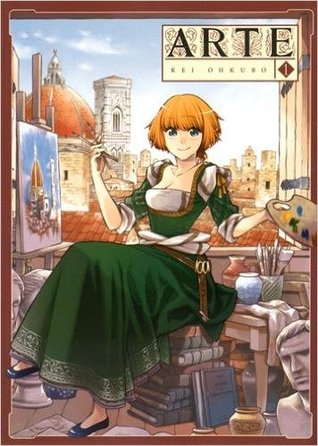 I learned that yesterday was World Book Day and when asked if I did anything to celebrate, I realised that I’d done something I’ve never done before in terms of reading, I finished my first Japanese Manga called ARTE, illustrated and written by Kei Ohkubo translated into French and set in Florence Italy!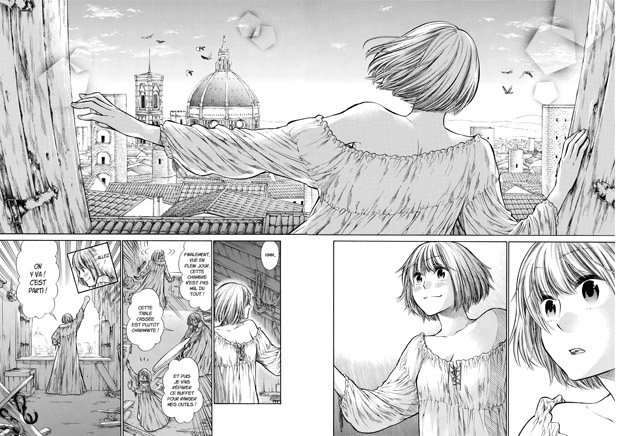


 Word by Word