Erasure by Percival Everett (2001)

I read this after Percival Everett’s excellent So Much Blue (my review) so my reading was influenced by having read that earlier novel, which I enjoyed more.

I did really enjoy this, however I enjoyed So Much Blue more on account of the type of reader I am, because it takes you outside of America to Paris and El Salvador – that novel was about the growth of the protagonist as a result of those experiences, whereas Erasure is more of a commentary on American culture and racial bias.

Revenge Can Backfire
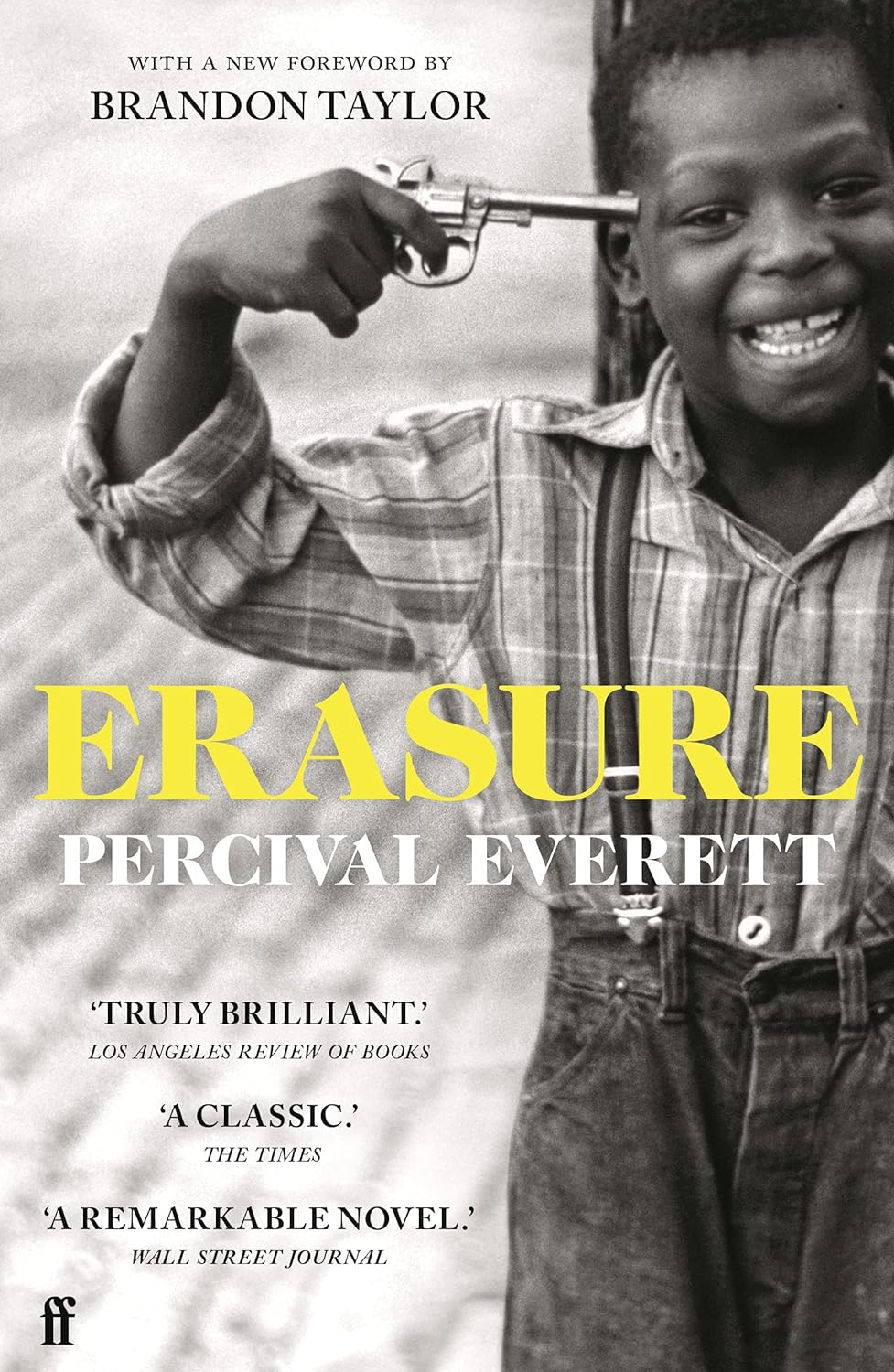
American Fiction film classic satire Cord Jefferson book cover young smiling black boy child holds a toy pistol to his head wearing checked shirt and jeans with braces photo in black and white the word Erasure in yellow text

In Erasure, a deeply satirical novel of the publishing industry and its biases; we have a Black American writer ‘Monk’ as protagonist, whose current work isn’t gaining traction.

I called my agent to check on the status of my novel and he had no good news for me. Three more editors had turned it down. ‘Too dense,’ one had said. ‘Not for us,’ a simple reply from another. And, ‘The market won’t support this kind of thing,’ from the third.

‘So, what now?’ I asked.

‘I don’t know what to tell you,’ Yul said. ‘If you could just write something like The Second Failure again.’ The ice clinked in his glass.

‘What are you telling me?’ I asked.

‘I’m not telling you anything.’

He feels resentful of some of what he is seeing gain popularity (fiction about the Black community using performative and pejorative racial themes and language); and he has had enough of his work being criticised for being too white.

He is middle aged and his mother is showing signs of needing additional care as her dementia begins to endanger her life. His sister and brother are both Doctors as was his late father. He visits his mother and sister, to learn his sister is being harassed by pro-life protestors every day and his mother has been lighting fires inside – a box of papers his father asked her to burn.

The Novel With A Novel

In his angst about work he writes a revenge novella using the pseudonym Stagg R. Leigh, one that uses every terrible trope about his race and sends it to his agent. The agent thinks it is a joke, he is instructed to send it out to prospective publishers anyway.

I remembered passages of Native Son and The Color Purple and Amos and Andy and my hands began to shake, the world opening around me, tree roots trembling on the ground outside, people in the street shouting dint, ax, fo, screet, and fahvre! and I was screaming inside, complaining that I didn’t sound like that, that my mother didn’t sound like that, that my father didn’t sound like that and I imagined myself sitting on a park bench counting the knives in my switchblade collection and a man came up to me and he asked me what I was doing and my mouth opened and I couldn’t help what came out, ‘Why fo you be axin?

I put a page in my father’s old manual typewriter. I wrote this novel,, a book on which I knewI could never put my name:

That 80 page novella, initially entitled My Pafology is contained within the novel Erasure. When I started reading, I skipped ahead to see how long it was. It is a unique experience to read a novel within a novel and one that is…well, I don’t really know how to describe it, because it is so deliberately offensive – and so then we witness the author watch his act of protest backfire as he is made to kind of account for what he has done.

Dealing With A Parent With Dementia

In the meantime he takes his mother and her maid on a short holiday, which results in hastening things forward there, dealing with a tragedy and coming to terms with aspects of the family that had been hidden.

Photo furkanfdemir Pexels.com

As in So Much Blue, where we learned that Percival Everett has a bit of a fascination for secrets, so too are they present here. He explores their impact on those whom they have been withheld from.

It is a thought provoking novel and there are many references to other writers and artists and thinkers within, like clues to the things that the author might have been thinking about while writing, that can take the reader down various rabbit holes. Like this one:

* * *
D.W. Griffith: I like your book very much.
Richard Wright: Thank you.

* * *

Going Down A Rabbit Hole

I learned that film director D.W.Griffith, in 1915, directed a controversial, silent film, Birth of a Nation, that depicted previously enslaved African Americans as uncivilised, and that order was restored to the chaotic South by the noble KKK.

African American author Richard Wright wrote Native Son, a book with a similar premise to My Pafology, one that may or may not undermine the humanity of the African American. James Baldwin objected to it, believing it confirmed the damning judgment on African-Americans delivered by their longstanding tormentors.

All that to say there are complex references and issues contained within Erasure that might require more close reading.

It also satirises the book prize industry, when our protagonist finds himself in a dilemma having been asked to judge a prize.

The Movie American Fiction

The book has recently been made into a film which I have not seen, entitled American Fiction. It was written and directed by Cord Jefferson and won an Academy Award (Oscar) for Best Adapted Screenplay in 2024. Jefferey Wright plays the role of the author ‘Monk’, he received a nomination for Best Actor in the Academy Awards 2024.

I was aware of this, although I did not look at any reviews or trailers, but did wonder how much of the depth of reflection could ever be portrayed in a film.

Highly Recommended. Read the book before seeing the film.

Have you read Erasure or seen the film American Fiction? What did you think?

Further Reading

New York Times: The Book Behind ‘American Fiction’ Came Out 23 Years Ago. It’s Still Current.

NPR: Advice from a critic: Read ‘Erasure’ before seeing ‘American Fiction’ by Carole V. Bell

Percival Everett, Author

Percival Everett is the author of over thirty books, including So Much BlueTelephoneDr No and The Trees, which was shortlisted for the 2022 Booker Prize and won the 2022 Bollinger Everyman Wodehouse Prize.

He has received the Hurston/Wright Legacy Award and the PEN Center USA Award for Fiction, has been a Pulitzer Prize finalist, and is Distinguished Professor of English at the University of Southern California. His novel Erasure has now been adapted into the major film American Fiction.

His latest novel James (a reimagining of Mark Twain’s The Adventures of Huckleberry Finn, told from the perspective of the enslaved Jim) was published on 11 April 2024. He lives in Los Angeles.

The Ballad of the Sad Café (1951) by Carson McCullers

I stumbled across Carson McCullers in our local French library one day, it was one of the titles on the very few shelves dedicated to books written in English. Back then, I realised my reading had exposed me to very little American fiction. I was keen to try a slim classic, even though it was a title I was unfamiliar with. The book was Reflections of a Golden Eye (1941), I remember that it was a strange, uncomfortable tale, full of dread, I knew nothing of the world it inhabited and felt incurious about that environment or its people.

I am wary of authors/books esteemed as classics, to then often encounter impenetrable language, however I came across McCullers again recently at an English book sale, this slim novella with its enticing title, which made me think of the indie cult-film Baghdad Cafe (1987) and the timeless classic soundtrack, Javetta Steele’s ‘Calling You’.

Another Sad Town Enlivened by a Café

So I read this out of curiosity and perhaps a misplaced nostalgia for another sad café, but had low expectations. It was absolutely riveting and so different to the memory of what I had read previously. I loved it!

The opening paragraph describes this lonesome, isolated town where nothing much happens and the climate is harsh. The building/house upon which the story is centred is no longer lively, boarded up and leaning to the point of almost collapse. It appears to have been half painted at one time.

On the second floor there is one window that is not boarded; sometimes in the late afternoon when the heat is at its worst a hand will slowly open the shutter and a face will look down on the town.

A Thumbnail Sketch Encapsulates All

In these first two pages, it is as if McCullers has launched a tasty morsel of bait on a fishing line. Everything that is to come is somehow referenced in these first couple of pages and it leaves the reader with an intriguing curiosity to know what has come about to have left this place and these people abandoned once again, from the liveliness we are sure to soon read about. For no café starts out being sad.

The owner of the place was Miss Amelia Evans. But the person most responsible for the success and gaiety of the place was a hunchback called Cousin Lymon. One other person had a part in the story of this café – he was the former husband of Miss Amelia, a terrible character who returned to the town after a long term in the penitentiary, caused ruin, and then went on his way again.

The characters are crafted with intriguing detail, they are each a little extraordinary in their own way and they act in unpredictable ways. Just like the residents of the town who come to Miss Amelia’s trade store, which eventually becomes a café, the reader too will wonder about the attraction and connection that exists between each of the characters. We come to know the characters by their habits and behaviours, but the thing that binds two characters together in their destinies becomes the mystery of the novella.

Miss Amelia was rich. In addition to the store she operated a still three miles back in the swamp, and ran out the best liquor in the county. She was a dark, tall woman with bones and muscles like a man. Her hair was cut short and brushed back from the forehead, and there was about her sunburned face a tense, haggard quality. She might have been a handsome woman if, even then, she was not slightly cross-eyed. There were those who would have courted her, but Miss Amelia cared nothing for the love of men and was a solitary person. Her marriage had been unlike any other marriage ever contracted in this county – it was a strange and dangerous marriage, lasting only for ten days, that left the whole town wondering and shocked. Except for this queer marriage Miss Amelia had lived her life alone. Often she spent whole nights back in her shed in the swamp, dressed in overalls and gum-boots, silently guarding the low fire of the still.

Insights Into Humanity

In between sketching out her unique characters and narrating the arrival of the two men in her life, McCullers presents the town members often as a group, the “they” voice, the ‘group-think’.

Some eight or ten men had convened on the porch of Miss Amelia’s store. They were silent and were indeed just waiting about.They themselves did not know what they were waiting for, but it was this: in times of tension, when some great action is impending, men gather and wait in this way. And after a time there will come a moment when all together they will act in unison, not from thought or from the will of any one man, but as though their instincts had merged together so that the decision belongs to no single one of them, but to the group as a whole. At such a time, no individual hesitates.

No gesture is without meaning, no look is innocent, no moment recounted is without meaning. A stranger arrives and the café is born.

To Be Loved or Beloved

The author occasionally interjects into the narrative, setting the story line up in advance, providing so-called explanations for some of their behaviour, as if giving the reader clues to the underlying mystery of the interconnection of its three main characters. One of those explanations is on the difference between the lover and the beloved.

…these two come from different countries. Often the beloved is only a stimulus for all the stored-up love which has lain quiet within the lover for a long time hitherto.

…And the curt truth is that, in a deep, secret way, the state of being beloved is intolerable to many.

The story builds to its tense conclusion and is both compelling and contemplative all the way to the end.

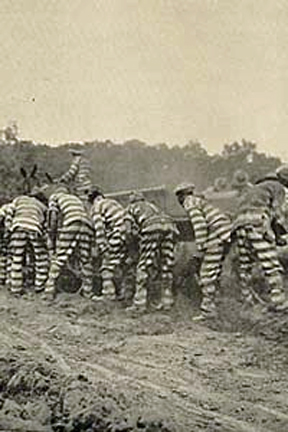
It begins and ends with the one thing that never seems to change, that signifies both life and repression, the sound of first one, rising to twelve men singing, wearing black and white prison suits, working on the distant Fork Falls highway.

The music will swell until at last it seems that the sound does not come from the twelve men on the gang, but from the earth itself, or the wide sky. It is music that causes the heart to broaden and the listener to grow cold with ecstasy and fright. Then slowly the music will sink down until at last there remains one lonely voice, then a great hoarse breath, the sun, the sound of the picks in the silence.

I loved imagining these larger than life characters, discovering the way they were interconnected and drawn to each other’s weakness, thereby exposing something about themselves. And figuring out the triangle of love, desire and revenge that existed between them, the inevitability of what will pass.

Author, Carson McCullers

Born Lula Carson Smith in Colombus, Carson McCullers (1917-1967) was an American novelist, short-story writer, playwright, essayist, and poet. Her first novel, The Heart Is a Lonely Hunter, explores the spiritual isolation of misfits and outcasts in a small town of the Southern United States. Her other novels have similar themes and most are set in the Deep South.

She wrote five novels, two plays, twenty short stories, more than two dozen nonfiction pieces, a book of children’s verse, a small number of poems, and an unfinished autobiography.

Carson McCullers is considered to be among the most significant American writers of the twentieth century. She is best known for her novels The Heart Is a Lonely Hunter (1940), The Ballad of the Sad Cafe (1951), Reflections in a Golden Eye (1941), and The Member of the Wedding (1946). At least four of her works have been made into films.