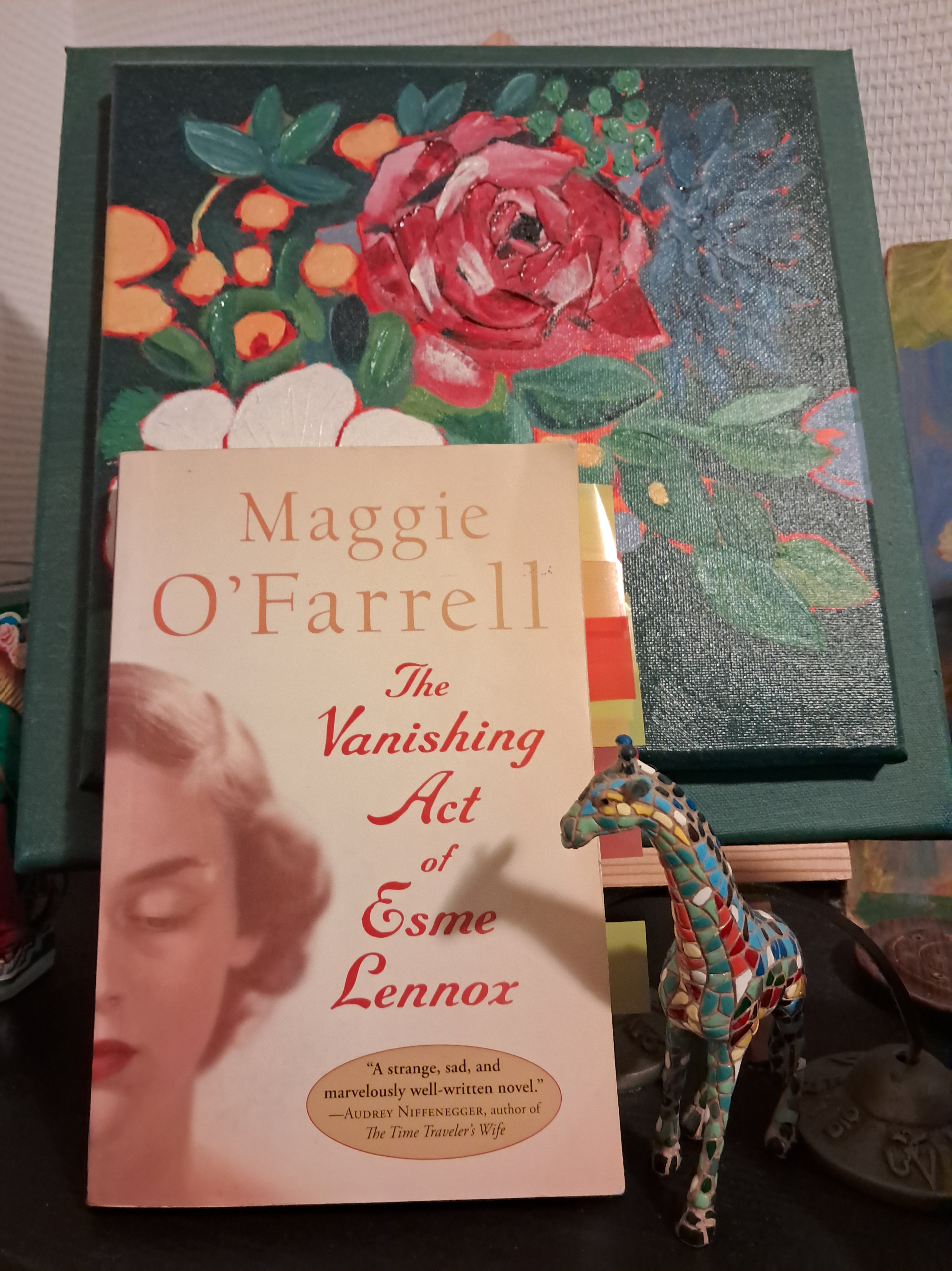
The Vanishing Act of Esme Lennox (2006) by Maggie O’Farrell

In my library picks, I picked up a Maggie O’Farrell novel from her backlist, not one of her historical fiction novels of recent years, more of a Gothic mystery set in mid 20th century Scotland, in and around Edinburgh.

With another work of historical fiction due in 2026 ‘Land‘ set in 1860’s Ireland, and now the recent success of the film ‘Hamnet‘, her star is firmly set in the ascendant.

A Gothic Mystery in Edinburgh
Set in twin timelines, early 1900’s and early 2000’s, it tells the story of a family that returns from India after a tragic loss. Two sisters who were born there are abruptly brought to Scotland, to live in the household of a strict and rigidly corseted upper-middle class family, ruled by a grandmother in an environment that free-spirited Esme Lennox neither fits nor readily accepts conforming to.

As she gets in trouble, her sister sees her own opportunity and makes decisions that will cast long shadows on the family for decades.

Modern Life, Modern Dilemmas

In the early 2000’s, Iris runs a shop and has complex relationships with her brother and an unavailable man Luke she met at a wedding. Into this already complex life, a telephone call informs that she is the next of kin of a resident of the Cauldstone Hospital, a woman they claim is her grandmother Kitty’s sister, despite Iris believing her grandmother had been an only child. She is asked to come to an appointment where all shall be revealed.

Meanwile Esme’s world is about to change, though in another sense she is returning to where it all started.

Esme takes one last look at the driveway and sees a woman who used to have the bed next to her, standing beside a brown car. An old man is stowing a suitcase in the boot. The woman is weeping and peeling off her gloves. The man doesn’t look at her. Esme turns and starts climbing the stairs.

Family Secrets and Omissions

Photo A. Palmowska Pexels.com

Iris’s grandmother Kitty is in care and hardly remembers her grand-daughter. They haven’t been close since she was a child, when she seemed to turn against the child.

Iris visits the long-stay psychiatric hospital and learns more about her grandmother’s secret affairs that appear to have been signed over to her without her knowledge or consent.

‘I have here a copy of a document lodged with us by her solicitor, signed by Mrs Lockhart, naling you as the family member to be contacted about affairs pertaining to one Euphemia Esme Lennox, her sister.’

Iriss is really cross now. ‘She doesn’t have a sister.’

There is a pause in which Iris can hear the man moving his lips over his teeth. ‘I’m afraid I must contradict you,’ he says eventually.
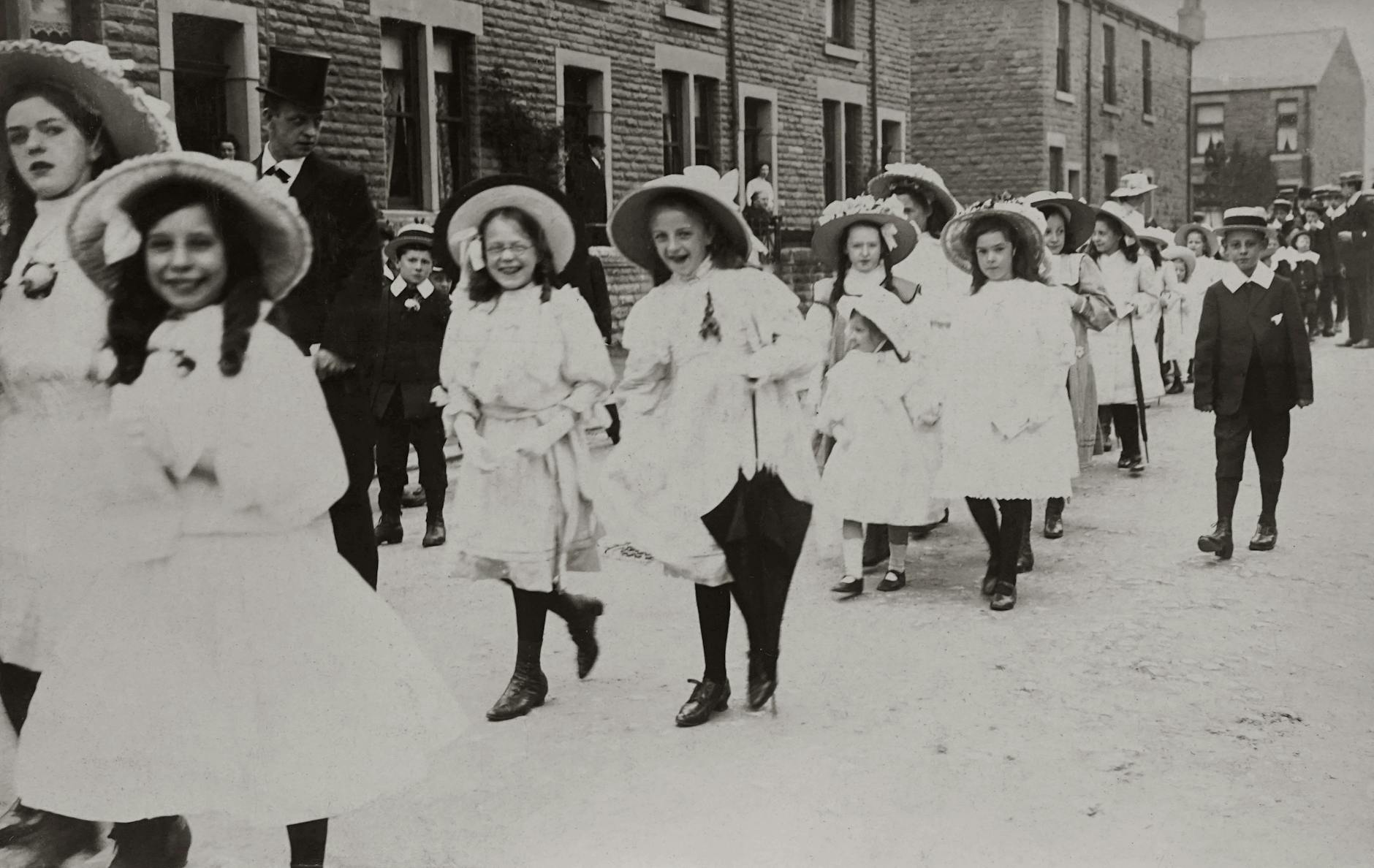
Photo Suzy Hazelwood Pexels.com

No one in her family has heard of this woman, her mother lives abroad, her father is no longer living and her grandmother Kitty has Alzheimers. And the hospital is closing down. If arrangements aren’t made with family members the residents are to be moved to a hostel. Iris can’t possibly take on the responsibility, but she is curious about who this woman is and why she has been left in this place.

‘It’s not unusual for patients of ours to…shall we say, fall out of sight. Euphemia has been with us a long time.’

‘How long exactly?’

Lasdun consults his file, running a finger down the pages. The social worker coughs and leans forward. ‘Sixty years, I believe, Peter, give or take -‘

‘Sixty years?’ Iris almost shouts. ‘In this place? What’s wrong with her?’

The novel concurrently tells the story of those defining circumstances in Esme’s early years that lead to her being sent to the hospital, and Iris’s determination to get to the bottom of what of her grandmother did or didn’t know.

But before she can do this, she will meet and consider whether or not to take in this great Aunt and try to find something out from her grandmother, whose mind is no longer in ordinary reality.

Why Deny Sisterhood?

When Iris brings Esme to her apartment, it becomes clear that she recognises it, she too has lived there.

She cannot fathom the strangeness of all this. She has acquired a relative. A relative who knows her home better than she does.

‘Which was your room?’ she asks.

Esme turns. She points. ‘The floor below. The one overlooking the street. It was mine and Kitty’s. We shared.’

Girls’ Behaviours and Predicaments

The novel contrasts modern life in Edinburgh, depicting Iris’s unconventional but common behaviours with the rigid social norms of early-20th-century Scotland, especially around outspokenness, sexuality, consent and judgement. Any breach of these norms by girls was considered a form of madness and could result in them being committed to a psychiatric institution. The Edwardian era epitomised rigid class structures, strict gender expectations and a superficial elegance that masked deep social control.

Maggie O’Farrell imagines two girls who were not born into those social norms, but come into them later in childhood, and what happens to them after coming from a different culture, even though their parents were from that Scottish background. It seems unbelievable and yet we know it was very common for such situations to happen.

It’s an immersive page-turner and shocking portrayal of misdiagnosis, patriarchal control and the devastating lack of female solidarity, where women choose safety, respectability, compliance and/or silence over loyalty. This silence continues to be inherited in successive generations rather than challenged.

Highly Recommended.

Have you read The Vanishing Act of Esme Lennox? Do you have a favourite Maggie O’Farrell novel?

Let us know what you think in the comments below.

Further Reading
Reviewed here:

I Am, I Am, I Am: 17 Brushes With Death, A Memoir

Hamnet

The Marriage Portrait

The Hand That First Held Mine

Author Maggie O’Farrell

MAGGIE O’FARRELL was born in 1972 in Coleraine, Northern Ireland and grew up in Wales and Scotland. Currently, she lives in Edinburgh.

Her novels include Hamnet (winner of the National Book Critics Circle Award), The Marriage Portrait, After You’d GoneThe Vanishing Act of Esme LennoxThe Hand That First Held Mine (winner of the Costa Novel Award), and Instructions for a Heatwave. She has also written a memoir, I Am, I Am, I Am: Seventeen Brushes with Death

Hamnet, which imagined the untold story of Shakespeare’s son, won the 2020 Women’s Prize for Fiction and was Waterstones’ Book of the Year and is now feature film.

The Ballad of the Sad Café (1951) by Carson McCullers

I stumbled across Carson McCullers in our local French library one day, it was one of the titles on the very few shelves dedicated to books written in English. Back then, I realised my reading had exposed me to very little American fiction. I was keen to try a slim classic, even though it was a title I was unfamiliar with. The book was Reflections of a Golden Eye (1941), I remember that it was a strange, uncomfortable tale, full of dread, I knew nothing of the world it inhabited and felt incurious about that environment or its people.

I am wary of authors/books esteemed as classics, to then often encounter impenetrable language, however I came across McCullers again recently at an English book sale, this slim novella with its enticing title, which made me think of the indie cult-film Baghdad Cafe (1987) and the timeless classic soundtrack, Javetta Steele’s ‘Calling You’.

Another Sad Town Enlivened by a Café

So I read this out of curiosity and perhaps a misplaced nostalgia for another sad café, but had low expectations. It was absolutely riveting and so different to the memory of what I had read previously. I loved it!

The opening paragraph describes this lonesome, isolated town where nothing much happens and the climate is harsh. The building/house upon which the story is centred is no longer lively, boarded up and leaning to the point of almost collapse. It appears to have been half painted at one time.

On the second floor there is one window that is not boarded; sometimes in the late afternoon when the heat is at its worst a hand will slowly open the shutter and a face will look down on the town.

A Thumbnail Sketch Encapsulates All

In these first two pages, it is as if McCullers has launched a tasty morsel of bait on a fishing line. Everything that is to come is somehow referenced in these first couple of pages and it leaves the reader with an intriguing curiosity to know what has come about to have left this place and these people abandoned once again, from the liveliness we are sure to soon read about. For no café starts out being sad.

The owner of the place was Miss Amelia Evans. But the person most responsible for the success and gaiety of the place was a hunchback called Cousin Lymon. One other person had a part in the story of this café – he was the former husband of Miss Amelia, a terrible character who returned to the town after a long term in the penitentiary, caused ruin, and then went on his way again.

The characters are crafted with intriguing detail, they are each a little extraordinary in their own way and they act in unpredictable ways. Just like the residents of the town who come to Miss Amelia’s trade store, which eventually becomes a café, the reader too will wonder about the attraction and connection that exists between each of the characters. We come to know the characters by their habits and behaviours, but the thing that binds two characters together in their destinies becomes the mystery of the novella.

Miss Amelia was rich. In addition to the store she operated a still three miles back in the swamp, and ran out the best liquor in the county. She was a dark, tall woman with bones and muscles like a man. Her hair was cut short and brushed back from the forehead, and there was about her sunburned face a tense, haggard quality. She might have been a handsome woman if, even then, she was not slightly cross-eyed. There were those who would have courted her, but Miss Amelia cared nothing for the love of men and was a solitary person. Her marriage had been unlike any other marriage ever contracted in this county – it was a strange and dangerous marriage, lasting only for ten days, that left the whole town wondering and shocked. Except for this queer marriage Miss Amelia had lived her life alone. Often she spent whole nights back in her shed in the swamp, dressed in overalls and gum-boots, silently guarding the low fire of the still.

Insights Into Humanity

In between sketching out her unique characters and narrating the arrival of the two men in her life, McCullers presents the town members often as a group, the “they” voice, the ‘group-think’.

Some eight or ten men had convened on the porch of Miss Amelia’s store. They were silent and were indeed just waiting about.They themselves did not know what they were waiting for, but it was this: in times of tension, when some great action is impending, men gather and wait in this way. And after a time there will come a moment when all together they will act in unison, not from thought or from the will of any one man, but as though their instincts had merged together so that the decision belongs to no single one of them, but to the group as a whole. At such a time, no individual hesitates.

No gesture is without meaning, no look is innocent, no moment recounted is without meaning. A stranger arrives and the café is born.

To Be Loved or Beloved

The author occasionally interjects into the narrative, setting the story line up in advance, providing so-called explanations for some of their behaviour, as if giving the reader clues to the underlying mystery of the interconnection of its three main characters. One of those explanations is on the difference between the lover and the beloved.

…these two come from different countries. Often the beloved is only a stimulus for all the stored-up love which has lain quiet within the lover for a long time hitherto.

…And the curt truth is that, in a deep, secret way, the state of being beloved is intolerable to many.

The story builds to its tense conclusion and is both compelling and contemplative all the way to the end.

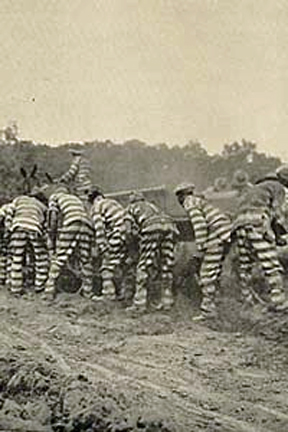
It begins and ends with the one thing that never seems to change, that signifies both life and repression, the sound of first one, rising to twelve men singing, wearing black and white prison suits, working on the distant Fork Falls highway.

The music will swell until at last it seems that the sound does not come from the twelve men on the gang, but from the earth itself, or the wide sky. It is music that causes the heart to broaden and the listener to grow cold with ecstasy and fright. Then slowly the music will sink down until at last there remains one lonely voice, then a great hoarse breath, the sun, the sound of the picks in the silence.

I loved imagining these larger than life characters, discovering the way they were interconnected and drawn to each other’s weakness, thereby exposing something about themselves. And figuring out the triangle of love, desire and revenge that existed between them, the inevitability of what will pass.

Author, Carson McCullers

Born Lula Carson Smith in Colombus, Carson McCullers (1917-1967) was an American novelist, short-story writer, playwright, essayist, and poet. Her first novel, The Heart Is a Lonely Hunter, explores the spiritual isolation of misfits and outcasts in a small town of the Southern United States. Her other novels have similar themes and most are set in the Deep South.

She wrote five novels, two plays, twenty short stories, more than two dozen nonfiction pieces, a book of children’s verse, a small number of poems, and an unfinished autobiography.

Carson McCullers is considered to be among the most significant American writers of the twentieth century. She is best known for her novels The Heart Is a Lonely Hunter (1940), The Ballad of the Sad Cafe (1951), Reflections in a Golden Eye (1941), and The Member of the Wedding (1946). At least four of her works have been made into films.

The Confessions of Frannie Langton by Sara Collins

One Interview Leads to Another Book

The Confession of Frannie Langton Black Slave Scientific RacismAlthough I was aware that this book won the popular Costa First Novel Book Award in 2019, I became intrigued to read it after listening to the author Sara Collins interview Tsitsi Dangaremba in the lead up to the Booker Prize announcement, attending an online event created by the independent London Review Bookshop.
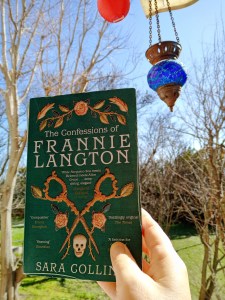
She is an incredibly engaging and astute interviewer, which made me curious to check out her transition to novelist with her award winning debut.

Sara Collins was a practicing lawyer for 17 years (and a mother of five children) before doing her Master of Studies in Creative Writing at Cambridge University, where she was the recipient of the 2015 Michael Holroyd Prize for Creative Writing. She is a British author of Jamaican descent.

Book Review

Frannie is a slave and biologically related to the Master Langton, one couldn’t say ‘daughter of’ because there is nothing in his actions or attitudes that bear any relation to her being in any way connected to him. He doesn’t deserve it.

He educates her so she can be his scribe for the book he is writing Crania, a racist text that is actually based on a real book written by an American craniologist who sought to prove that the races were separate species. He wanted to know what was under the skin of man, a man obsessed by his own race’s perceived superiority and willing to go to all lengths to prove it, driven by another in London, whom he sought to impress.

“Langton once told me that when the English soldiers rounded up the obeah men in Jamaica, after Tacky’s rebellion, they experimented on them. Tied them with shackles, prodded them with electric machines and magic lanterns, gave them all manner of jolts and shocks. It must have felt like thunder going through their bones, or pops of lightening cleaving their skulls. When they could no longer stand it, they were forced to admit that the white man’s magic was stronger.”

gothic fiction Costa Book Awards winnerThe first part of the book is set in Jamaica as Frannie narrates her story, although the opening pages are set in The Old Bailey courthouse, from where she sits accused of murder and in this short narrative, she addresses “you” the person she is telling this story, her lawyer.

We understand she remembers nothing of the events she is on trial for. So perhaps in telling her story, she might remember. And so we go back to learn what brought her to be in this position, back to the Jamaican plantation where she was born, the man who raised her, his wife who knew things but withheld them from her and would banish them both.

It’s a narrative where not quite all is revealed in each revelation, so there is throughout a sense of detail being withheld, which might help reader’s understand her motive or guess her guilt or innocence and so the author prevents this, by telling some but all of the detail, so that in reading we come up with more and more questions. Although this is designed to build mystery and wonder, it became a little annoying.

What is Gothic Fiction?

The author admits to being a fan of gothic fiction and perhaps The Confessions of Frannie Langton is an example of that, with its elements of fear, horror, death, gloom, as well as romantic elements. The romance element didn’t quite work for me, Frannie’s connection with another character felt more authentic, but certainly the rest of the elements were there and the blood-chilling facts that exist in history behind the story are gothic indeed.

She decided to write a Gothic novel because she wanted to explore the roots of scientific racism.

“I thought actually that Gothic was the perfect vehicle for that because it’s such a good form for bringing dark things to light. You know, what surprised me when I was writing and researching the novel is how much those great minds of the Enlightenment were actually obsessed with this idea of deciding whether or not black people were human. And I don’t think we tell the truth about that. I don’t think we’ve examined the truth hard enough about what those men were up to.” Sara Collins

It is the suggestion of the horror and the slow build up to it being revealed that delivers the distasteful aspect of the genre and in particular because these white men involved in such activities did actually exist.

Man is a horror.

It’s an extraordinary and commendable achievement, though I think I’ll be more careful before dipping my toe into this genre again.

Further Reading

Sara Collins on the True Crime inspiration & research behind her novel

NPR Review: ‘Frannie Langton’ Takes Power Over Her Own Story by Annalisa Quinn

NPR Interview: A Different Kind Of Story About Slavery In ‘The Confessions Of Frannie Langton’

My Review: This Mournable Body by Tsitsi Dangarembga

Upcoming Online Event at London Review Bookshop: Recollections of My Non-Existence: Rebecca Solnit & Mary Beard