
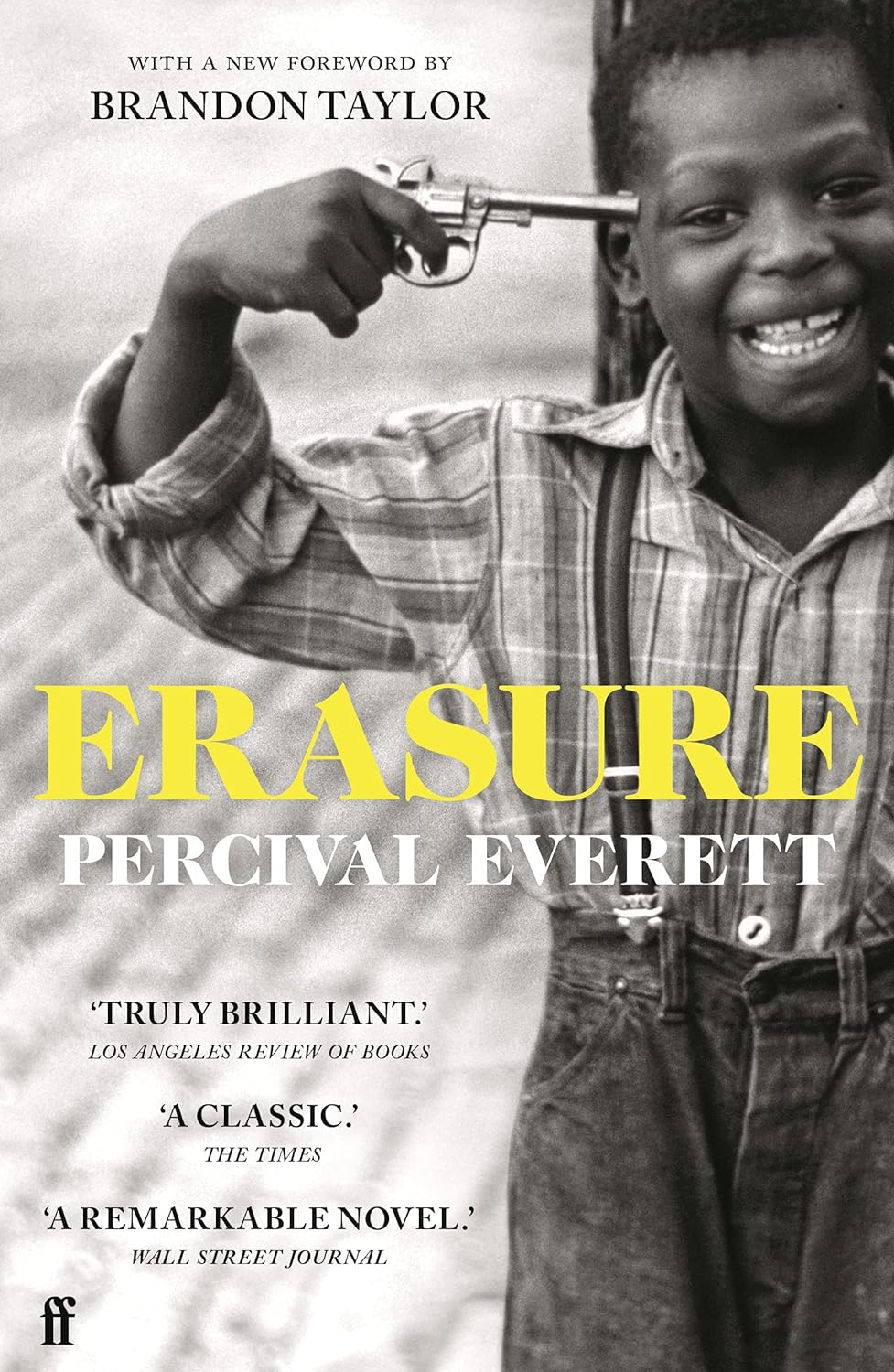
Having already read and enjoyed three novels by Percival Everett, So Much Blue (2017), Erasure (2001), and James (2024), when I saw The Trees at the local bookstore when I’d been in a reading rut, I picked it up, knowing it would be a guaranteed entertaining read.
Percival Everett had already written 21 novels by the time he was shortlisted for The Booker Prize in 2022, won that year by an equally satirical novelist Sri Lankan author Shehan Karunatilaka for his The Seven Moons of Maali Almeida (my review).
Everett was more of a cult writer, well-known among regular readers, but not a mainstream name. His experimental style, genre-bending and intellectual satire made him more popular in literary and academic circles than in popular fiction. The author describes himself as “pathologically ironic“.
That began to change when The Trees was shortlisted for the Booker Prize in 2021 and his novel Erasure was adapted into the film American Fiction (2023). And then his 2024 novel James (a reimagining of Huckleberry Finn from Jim’s perspective) won the US National Book Award and the Pulitzer Prize for Fiction.
The Trees
So knowing the kind of writer Everett is, I read this without looking at the blurb. It was ironic to read about what is a murder investigation into the soul of America’s violent past, immediately after I finished Killers of the Flower Moon, the story of the targeting of the Osage people after they came into significant wealth.
The Trees is about the mysterious murders of white men in Money, Mississippi, an allegorical reckoning with centuries of racial terror inflicted upon Black communities. It is written in lean, precise and economical prose, like a script, unfolding like a crime story with mild, intriguing suspense driving the plot forward.
Copycat Crimes & Condemnation

Every time a man is found murdered, another body appears alongside them, a man who resembles Emmett Till, a young black boy lynched in the same town 65 years before. Locals find him the perfect scapegoat, creating fear and paranoia among the community, until the dead man reappears at the site of a second murder.
Confusion reigns, except for the team from the MBI (Mississippi Bureau of Investigation), who have been sent in to assist, though met with resistance by the local sheriff and townsfolk.
Satirical elements appear in his depiction of law enforcement and the media: their incompetence and self-interest are exaggerated to reveal systemic failings. As a spate of copycat killings spreads across the country, the investigation begins to have wider implications.
Remember Their Names
There is a great grandmother Mama Z who has been compiling files on every lynching that has happened in America since her father Julius Lynch was a victim in 1913, she is remembering their names, lest anyone forget.
When I write the names, they become real, not just statistics. When I write the names they become real again. It’s almost like they get a few more seconds here.
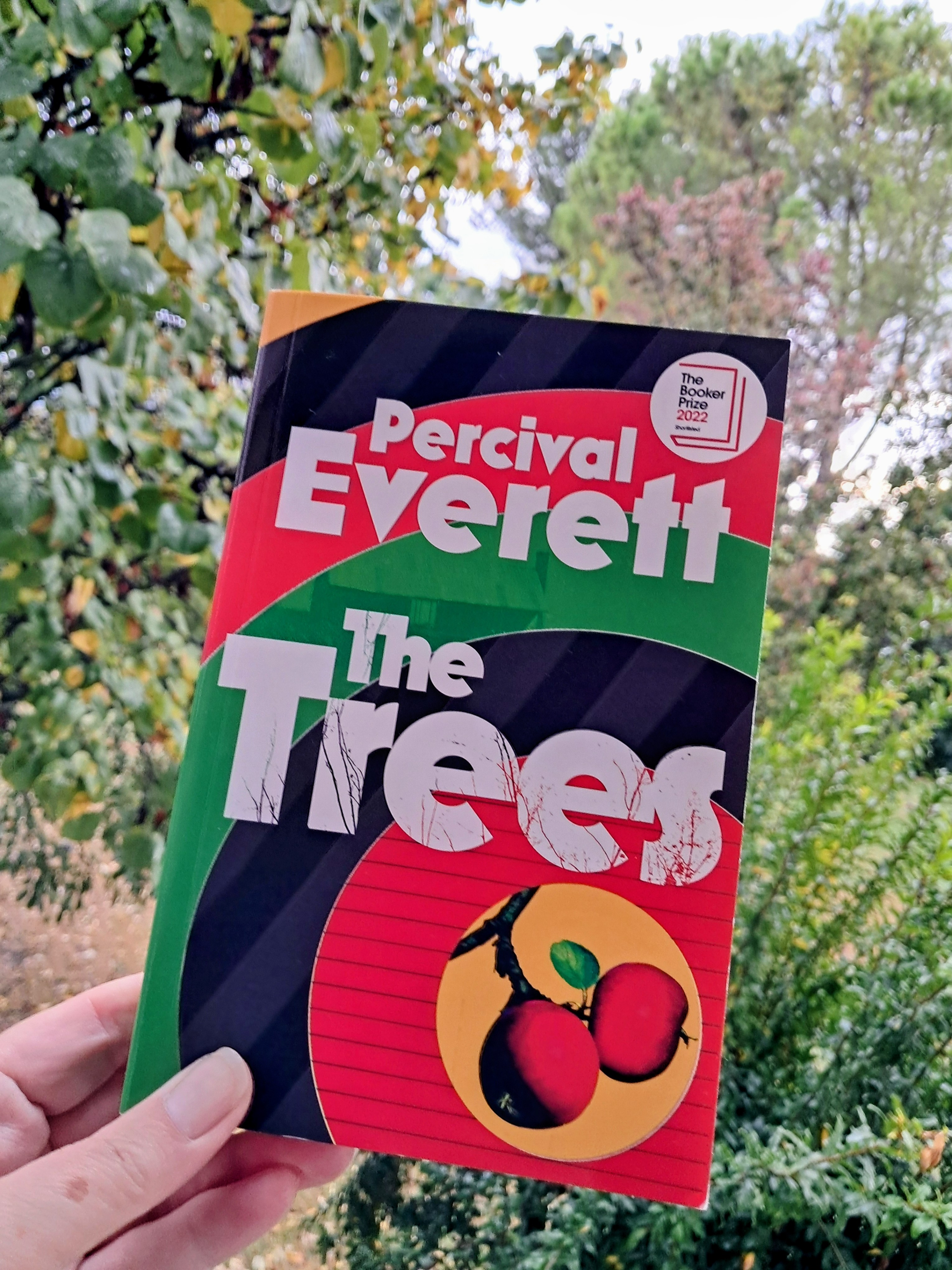
The book I read has an interesting cover, it looks like a dartboard, or a target and the circles are yellow, green, black and red, the colours of the Black Panthers, an influential militant black power organization from the 60’s whose members confronted politicians, challenged the police, and protected black citizens from brutality.
Witness and Memory

The Trees refers to the place where many were hung and I’m guessing that the fruit of those trees, represented on the book cover by twin peaches is a reference to all those who died who could not continue to reproduce. Trees represent historical memory, they are witness to the persistence of racial violence.
One thing I notice is how much easier it is to read about a violent past than it is to watch a twenty first century depiction of it. There’s no over dramatisation of the violence or needless exaggeration of the characters. While here on the page, there are an abundance of literary devices in use to deliver themes of racial violence and historical memory.
I certainly hope they don’t make this one into a film, I would not wish to see it, but I admire the ability of the author to demonstrate the effect of turning the tables and making a white population consider the trauma of having such atrocities committed against them.
Further Reading
Read an Extract from The Trees by Percival Everett
Percival Everett interview: ‘How long did it take to write The Trees? Sixty-three years’
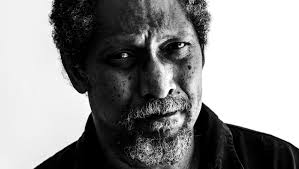
Author, Percival Everett
Percival Everett lives in Los Angeles, where he is Distinguished Professor of English at the University of Southern California.
He has been nominated for the Booker Prize twice – he was shortlisted for The Trees in and shortlisted for James in 2024 – and is the author of over 30 books since his debut, Suder, was released in 1983. His works include I Am Not Sidney Poitier, So Much Blue, Erasure and Glyph.
A Guggenheim Fellow and Pulitzer Prize Finalist for his novel Telephone, Everett has won the PEN Oakland/Josephine Miles Literary Award, the Academy Award in Literature, the Bollinger Everyman Wodehouse Prize for Comic Fiction, and the Windham-Campbell Literature Prize for Fiction. In 2021, he received the Ivan Sandrof Lifetime Achievement Award at the National Book Critics Circle Awards and in 2024 won 4 major literary awards including the Pulitzer Prize for Fiction with James.
You’ve said in the past that reading is one of the most subversive acts we can perform. Can you elaborate?
There’s a reason that oppressive regimes often resort to burning books. No one can control what minds do when reading; it is entirely private. We make of literature what we need to make. This is true of art. There is nothing more challenging to an oppressive government than a populace that can read, and therefore think.





 Word by Word