
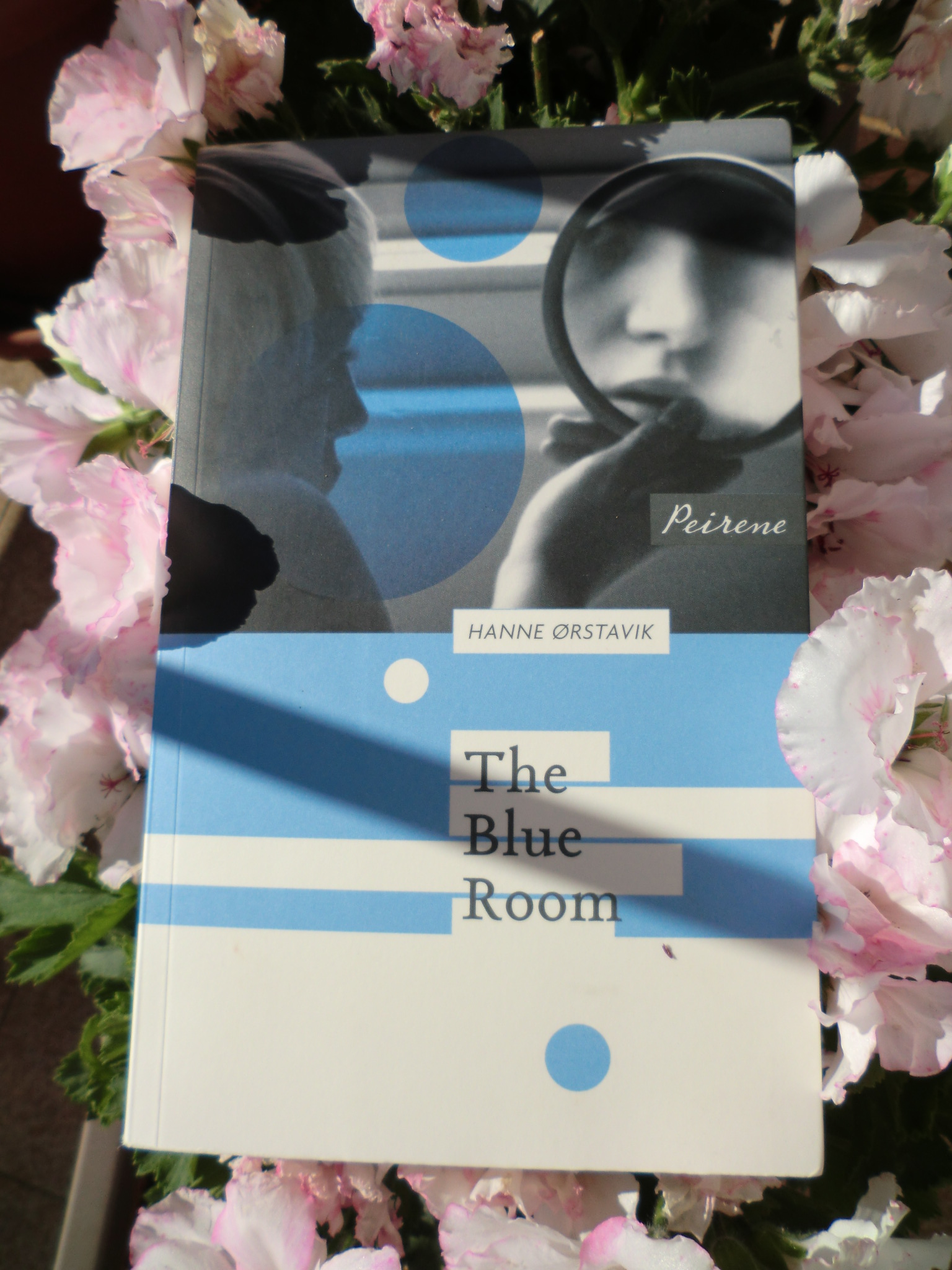
 The Blue Room is the latest novella from Peirene Press, a publishing concept I wrote about here.
Peirene’s novellas always promise something a little different, a mix of women and men authors, all of them originating in a language other than English and sometimes writers whose work is being translated into English for the first time.
Perhaps the only positive aspect of there being so little fiction of foreign origin translated into English (4-5%), is the grand opportunity that awaits publisher’s like Peirene Press and Gallic Books to discover true gems of literature to share with the English reading world.
Story telling is universal and equally engaging no matter where it comes from. Just like travel, literature in translation can offer insights into another culture and perspective.
June’s coming-of-age novella, The Blue Room by Hanne Ørstavik translated by Deborah Dawkin, is already well-known in Norway and internationally; she has written numerous books which have been translated into 18 languages, though not until now, into English. The recipient of literary awards in Norway including the Doblou Prize for her entire literary output, she is one of the most admired authors in contemporary Norwegian literature.
Provoking readers with her large, bold font message on the opening page, Meike Zeirvogel says of The Blue Room:
“Everyone who has read Fifty Shades of Grey should read this book. Why?
The Blue Room holds up a mirror to a part of the female psyche that yearns for submission. The story shows how erotic fantasies are formed by the relationship with our parents. It then delves further to analyse the struggle of women to separate from their mothers – a struggle that is rarely addressed in either literature or society.”
Making us wonder what revelations might unfold.
Johanne lives with her mother in a small apartment, she occupies the only bedroom, her mother hangs a curtain in the living room and sleeps there. The story starts on the day Johanne is due to leave for America with her boyfriend Ivar. She wakes to find the door to her bedroom locked and no response from the other side.
As she spends the day in her room, musing on the likely action and varying theoretical states of mind of Ivar, who would have waited for her and come to his own conclusions concerning her absence, she also thinks back over the past two weeks since she first met him at the university canteen, in between her lectures on psychology, some of which she shares with us, creating a bland kind of irony; the reader can’t help but read significance into the lessons she is learning in class as events play out in her life, where she discovers the essence of her slumbering sexuality, awakened in the shadow of her mother’s history, coming to us in flashes.
 From the first pages, I recognise it as a slow read, sentences that beg to be read twice, thoughts expressed that benefit from quiet reflection and words that hum from the page in clandestine harmony.
“Suddenly it came over me again and I started to cry. No sobbing, just tears. Water, I thought, nothing but salt water, dropping onto the paper, making minuscule white suns. Clearly the slat had an effect on the colours, erasing them. I didn’t understand what was happening inside me. Then it passed, like a rain cloud, drifting away.”
Although it wouldn’t be called a mystery or suspense novel, there exists all through the pages a sense of foreboding and it was almost with relief that I turned the last pages, half expecting something more sinister to await me or perhaps that was the latent effect of the suspense novel that I did read before embarking on this.
It captures the natural evolution of innocence and like the allure of watching two colours mix on a canvas to see what shade it will yield, first it is necessary to know one’s own true colour before we can observe or understand the effect when it combines with another.
An alluring read, that captivates as it reveals.
Looking forward to the next in the series!
 Word by Word