Let Me Go Mad In My Own Way (2025) by Elaine Feeney

Electra Sophles Anne Carson Annie Ernaux Shame Intergenerational inheritance Ireland

Back in 2023 Irish author Elaine Feeney’s novel How To Build a Boat (my review) was longlisted for the Booker Prize and shortlisted for the Irish Book Awards. That was a bumper year for Irish novelists with four of them on the longlist and Paul Lynch’s Prophet Song winning the prize.

How to Build a Boat was a great read with interesting, memorable characters, about an oppressive school and a free spirit whose presence disturbed the controlling order and rigidity of the institution by making a boat inside the school walls.

When I saw she had another book out with a provocative title like this, I decided to dip in and see what it was about.

French and Greek Literary References, The Female Voice

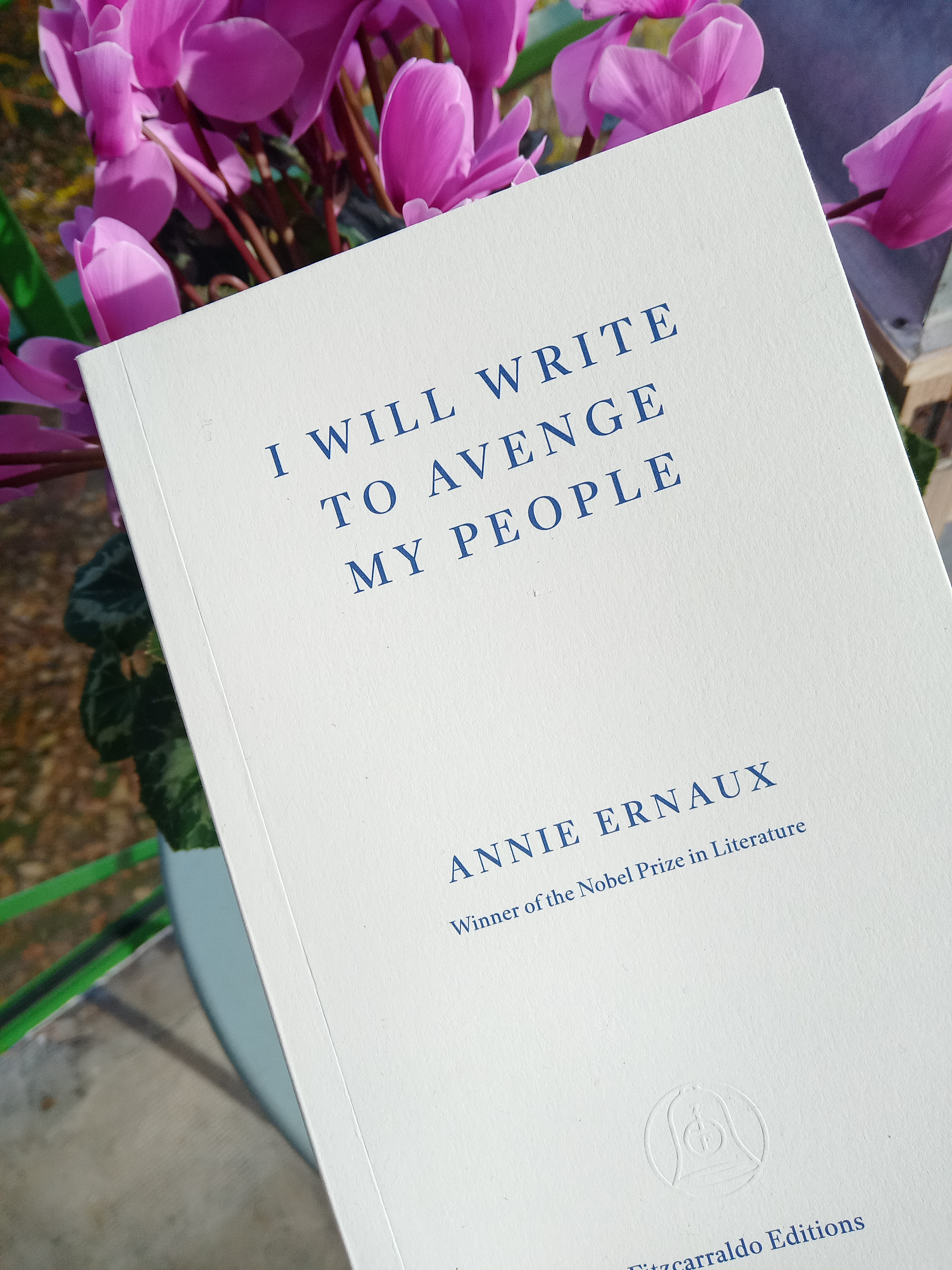
If the title isn’t a giveaway to reclaiming and redefining madness, a convenient label historically used to oppress women and have them incarcerated in the past, the epigram from Annie Ernaux’s novella Shame further reminds us of the often silenced, lived experience of women and girls, peeling back social shame, intergenerational violence and little recognised, inherited trauma that continues to reverberate and affect current behaviours and relationships.

This can be said about shame: those who experience it feel that anything can happen to them, that the shame will never cease and that it will only be followed by more shame. Annie Ernaux, Shame

A Story In a Title

The title of Feeney’s book is a powerful statement from the ancient Greek playwright Sophocles. The line appears in his play Electra, translated as: “I ask this one thing: let me go mad in my own way.” In the play, the main character, overwhelmed by grief, injustice and familial violence, demands to grieve and rage on her own terms. It is a cry for the right to express and feel one’s own emotional suffering and pain, in the way it is desired, needed.

“Don’t tell me how to feel or how to react, let me experience my madness as I must.”

Elaine Feeney said in an interview that she encountered the phrase in Anne Carson’s translation of Electra and immediately felt its resonance, both personally and within her book’s themes.

Going Mad or Getting to Grips With the Past

irish literature contemporary fiction

Her novel is about an Irish woman named Claire O’Connor who had been living in London with her boyfriend Tom Morton, unravelling after the death of her mother. Unable to cope, she breaks up with Tom and returns to the West of Ireland, initially to care for her father.

Back living in the family home awakens memories and issues for Claire and her two brothers, who are more used to avoiding and ignoring past and present bad behaviours.

The unexpected arrival of Tom and new friends Claire makes at her new university job, create a situation that brings people together that wouldn’t ordinarily meet.

Choosing to Live Differently

This new dynamic challenges some of those repressed feelings and the characters will either continue to deny or choose to grow.

‘There’s land here, isn’t there?’ He was playing with me now. ‘They’re not making any more of it – I’ll bet they don’t teach you that inside in the universities.’

I wanted to say that none of us wanted his land, full of rock, thistles and furze bushes. That it was a noose. I wanted to say the land was never mine. I knew well enough to know that.

Generational Influence

The story is told in different timelines, in the first person present, when Claire is an adult and has returned to Ireland, in 2022 and then there are chapters about the family from 1920, events around the old abandoned house at the back their property.

The O’Connor’s were good tenant farmers and had then been given this small handsel of land, a slight acreage of a holding from the Estate in the Land Commission’s Exchange for compliance. They had, until this, been generations of shepherds. Mostly, too, they were emigrants. A compliant people who believed in God being good and work being eventually rewarded for all eternity.

1920 was a period when there was unsettling violence from the Black and Tan Forces in East Galway around the Irish War of Independence, cultivating an atmosphere of fear and violence and an era where there was little escape, and few and far opportunities. Though 100 years in the past, undercurrents of that violent era continue to pump through the veins of this family.

Then there is Claire’s childhood memory of a Hunt Day in 1990, when the Queen of England was looking for a black mare for the Household Cavalry. Flashes of memory bring it all back as Claire confronts the past in order to better create any chance she might have of a better future.

Great Storytelling and Thought Provoking Depth

It is a thought provoking novel rooted in personal, collective and inherited memory, that deals with ‘the home‘ as the institution that requires dismantling, and it is the coming together of family, friends and the new relationships in Claire’s life that will facilitate the change that can redefine what home can become.

It’s also a novel that is entertaining with or without the layers of meaning that come from the references, but it is one that I have enjoyed all the more for understanding more about the motivations of the author and the literary influences she has referenced and talks about in the following interview.

And speaking of the Booker Prize, the longlist for 2025 will be announced on Tuesday 29 July 2025. This year’s Chair of Judges is an author who has never been in a book club, Roddy Doyle, who is joined by Booker Prize-longlisted novelist Ayọ̀bámi Adébáyọ̀; award-winning actor, producer and publisher Sarah Jessica Parker; writer, broadcaster and literary critic Chris Power; and New York Times bestselling and Booker Prize-longlisted author Kiley Reid.

Further Reading or Listening

An Interview by Bad Apple, Aotearoa: Ash Davida Jane interviews Elaine Feeney

Listen to Elaine Feeney read an extract from her novel Met Me Go Mad In My Own Way

Elain Feeney, Author

Elaine Feeney is an acclaimed novelist and poet from the west of Ireland. Her debut novel, As You Were, was shortlisted for the Rathbones Folio Prize and the Irish Novel of the Year Award, and won the Kate O’Brien Award, the McKitterick Prize and the Dalkey Festival Emerging Writer Award. How to Build a Boat was also shortlisted for Irish Novel of the Year, longlisted for the Booker Prize, and was a New Yorker Best Book of the Year.

Feeney has published the poetry collections Where’s Katie?The Radio Was GospelRise and All the Good Things You Deserve, and lectures at the University of Galway.

How To Build A Boat by Elaine Feeney

How To Build a Boat is a contemporary Irish novel that deals with people in a community navigating lives complicated by things that have happened or are happening to them, in this case a 13 year old boy Jamie is starting high school and it’s clear he is being singled out by some of the mean boys (and not for his height or bright red hair).

Irish Literature literary fiction Booker Prize longlist 2023

The novel was longlisted for the Booker Prize 2023 and shortlisted for the Irish Book Awards 2023, both of which announce winners in late November.

In a way it reminded me of Sebastian Barry’s Old God’s Time, in the sense that it relates to the power of connections in the community, the unexpected and the previously unknown, that can help pave the way towards healing and the passing through of the tumultuous hallways of grief.

Old God’s Time is more introspective and focused on a single character, while How To Build a Boat gives equal weight to a number of characters, there is more dialogue and a greater sense of place, of the physical environment and dwelling places of its inhabitants.

How can I miss someone I have never met? Jamie said.
Grief was profoundly different for both humans. One felt an intense anger he had never recovered from, the other knew something was missing, a vacuum to where a mother should fit, and he had a fixed determination to fill it.

Jamie’s mother Noelle died post childbirth at the age of 15 and he is being raised by his young father Eoin and grandmother. He takes everything literally and is serious minded and ambitious.

Jamie got it. He just didn’t want to get it. Noelle had never stopped moving from the first minute he had met her on screen. She was in constant and limited motion.

His one resounding ambition is to invent/create a machine that will be in perpetual motion; in his mind it will somehow allow him to remain connected to his mother, who, though he never knew her, he visualises through the one remaining video that is left of her, competing in a swimming gala.

There had been hundreds of clips. Noelle laughing after school. Noelle walking in the woods. Noelle soaked to the skin on a picnic. Noelle pulling faces outside the cinema. Noelle painted like a Dalmatian at Halloween with a black-and-white hair wig. But after a rare night out with the soccer club, Eoin, angry and lonely and drunk in his small, dark living room, deleted the phone’s contents. After which, he placed his phone on the laminate floor of the two-up-two-down and smashed it hard under the heel of his foot. After which, he vomited. After which, he passed out until morning when he woke frantic and pacing about with a dry mouth and a pounding headache, and in a lather of sweat and overwhelmed with the desire to disappear. But Jamie woke, crept downstairs and began asking so many questions that Eoin had no choice but to recover and get on with the getting on a young boy requires. And for years after, Eoin replayed each deleted clip in his mind before he’d fall into a fretful sleep, until the clips grew so hazy and faint and there came a time when Eoin couldn’t visualise Noelle’s face at all,
and though he tried to (re)build it:
smile, red hair, eyes, freckled nose, wide shoulders
parts of her vanished until it was finally impossible to recreate her.

Yusra Mardini Butterfly The Swimmers Elaine Feeney
Photo by Heart Rules on Pexels.com

At the new school he encounters Tess (Mrs McMahon) the English teacher and Taigh (Mr Foley), the woodwork teacher, whose classroom has been built in what was the old swimming pool.

These two are also in the midst of transition; Tess is married to Paul who has little patience or empathy for his wife’s uncertainty. She has come to the end of being able to suppress her feelings and knows that running away is no longer a sustainable solution to her agitated, easily triggered mind.

They were almost a decade married now and to avoid misinterpretations in the way they communicated, they had grown polite and consistent with each other. To Tess, it was as though she had catapulted. She stopped giving Paul her point of view. And Paul stopped worrying about what ailed Tess.

Taigh has left the island where he was raised and keeps his distance from people, avoiding growing close to anyone while he adapts to his newfound independence.

The three are connected through the school and Taigh’s suggestion to Jamie that they build a currach (a traditional Irish boat with a wooden frame, over which animal skins or hides were once stretched, though now canvas is more usual).

It is a school project that a number of the boys work on and commit time to, though not necessarily supported by the very traditional, linear leadership or parents with single-minded expectations of their protege. The project in different ways facilitates consideration of the many pressures weighing on them all.

It is a heart-warming, thoughtful novel of the importance of community interactions and the power of imagination and creativity and teamwork to nurture and heal and progress the journey of everyone involved, when obstacles are removed and the way is cleared for out of the box thinking, support and the healing that can result from going with the flow.

I thought it was an excellent, enjoyable, thought provoking read of hope and optimism.

Further Reading

Elaine Feeney Booker Interview: ‘It’s impossible not to consider pain and loss when writing’

New York Times Review: Grief, Community and Boat Building in a Moving New Novel, In Elaine Feeney’s latest book, a child’s grief-driven engineering dream connects a handful of isolated citizens in a small Irish town by Sophie Ward.

The Guardian: How to Build a Boat by Elaine Feeney review – secret shame and practical woodwork by Killian Fox.

Elaine Feeney, Author

Elaine Feeney is an award-winning poet, novelist, short story writer and playwright from the west of Ireland.

How to Build a Boat, longlisted for the Booker Prize 2023, is her second novel. The 2020 debut, As You Were, was shortlisted for the Rathbones Folio Prize and the Irish Novel of the Year Award, and won the Kate O’Brien Award, the McKitterick Prize, and the Dalkey Festival Emerging Writer Award.

Feeney has published three collections of poetry, including The Radio Was Gospel and Rise, and her short story ‘Sojourn’ was included in The Art of the Glimpse: 100 Irish Short Stories, edited by Sinéad Gleeson. Feeney lectures at the National University of Ireland, Galway.  

” I am constantly imagining and reimagining this place; its socio-economics; geo-political landscape; pagan versus Christian traditions; new cultures; power and who holds it; the post-colonial effect on language, emigration, class and agriculture. Our proximity to the sea seems to energise writers.” Elaine Feeney on Ireland