
As I mentioned in the Booker Prize shortlist post, this is one of the two shortlisted novels I’m reading before the winner announcement on Nov 10.
Cross Cultural Relationships, Identity and Belonging
Flashlight interested me because it is a portrayal of a cross-cultural marriage and family that highlights the tensions between adults with different backgrounds and expectations, coping within one culture and the way a child of that union navigates both her life and her parents, when she comes from them both.
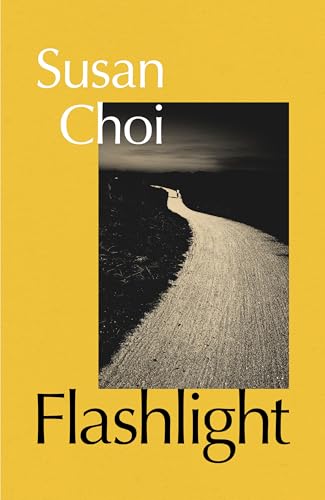
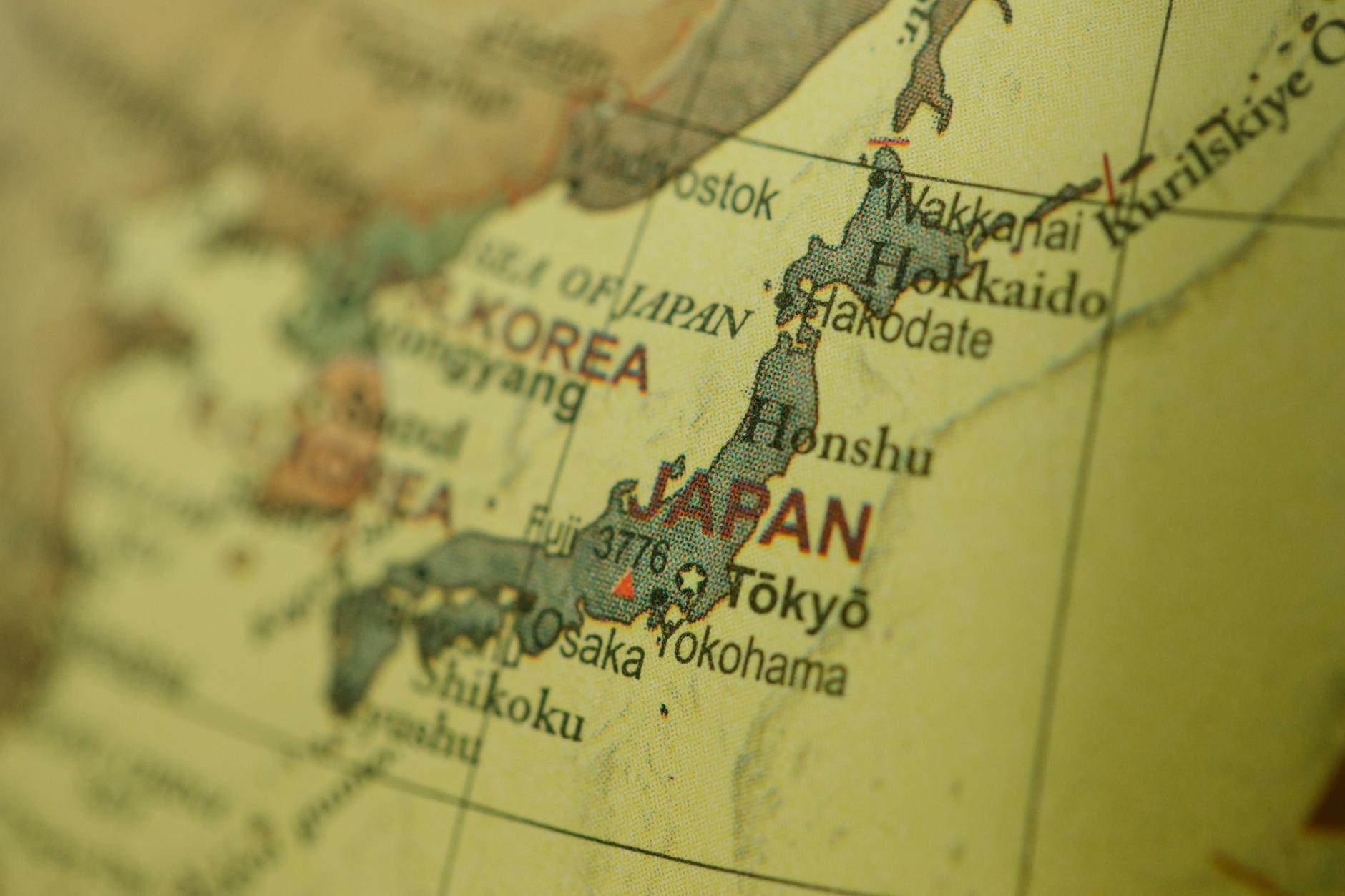
The novel begins with a scene plucked from the middle of the story, when ten year old Louisa and her father Serk are out for a walk in the early evening, in a coastal town in Japan.
Serk was born in Japan to Korean parents and while furthering his education in America, met Louise’s mother Anne. The family are in Japan on a one year secondment from his American university.
Hours later, Louisa is found washed up on the beach and her father is missing, presumed drowned.
Finding One’s Place Nowhere
The story then returns to the beginning, where we learn of the childhoods and upbringing of Serk in Japan and Anne in America, of his attachment to Japan and his success in school, while his family long to return to Korea (having not told him earlier where they were from) and wish their children to attend another school where they can learn about their culture and identity.
To learn it was not Japanese but Korean was so profoundly disorienting that the greater discovery, that he himself was Korean, was for the moment secondary.
As Serk matures, he comes to understand the ambiguous nature of nationality and belonging, of being caught between two nations, perceived and treated as an outsider by both of them; American thus becomes both an escape and an even greater frustration.
…disillusioned as he was, when his parents decided to abandon Japan he was dumbfounded.
The first half of the novel, prior to his disappearance has the feel of domestic fiction as the family navigate the intimate dramas of their lives and find their way.
Both Serk and Anne have withheld parts of their lives from each other and this adds tension to their marriage, as these things are sensed but unknown, or threaten to become visible, ultimately undermining their relationship.
That fall, Serk’s college announced it would send a member of its history department as a visiting professor to Japan, starting the following April. Before the history professor was chosen, Serk was asked if he would like to be considered and said he would not.
Louisa becomes partially aware of their secrets, adding to her own confusion and struggle to find a sense of belonging.
When Louisa hated her mother, it was because the thought of her caused her so much pain.
When she hated her father, it was because she was conscious of emulating his remoteness.
Shattered Lives Separate
In the second half of the novel, the family is no longer a cohesive unit, their lives diverge and chapters are then told from each character’s separate location and perspective. The pace changes, an element of mystery appears in the timeline and there was such a feeling of a true-crime element, that I paused reading and checked the back of the book for a bibliography. Sure enough, there are 15 works of fiction and non-fiction referenced, very revealing.
What Really Happened to the Disappeared
As the mystery of what happpened to Serk is revealed, other characters appear who are searching for their own disappeared and thus stories of a similar nature are discovered, told with such detail that they seemed as though true.
So while the novel continues, it also provides an insight into historical tensions between Japan and North Korea and the untold stories of a number of families whose tales of missing members of their family were ignored and disbelieved until subsequently proven to be true.
I don’t want to reveal too much more than what you can read in the blurb, because encountering the story is all the better for not knowing. Not everything that occurs is written, as each character chapter ends, we often know what is to be revealed and we fill that in ourselves, creating connections as the narrative leaps forward from one character to the next.
Perhaps no one but Anne, who had lived with him and tried for so long, could understand how impossible Serk made it to know the least thing about him. A constant wretched privacy had radiated from him, more powerful and more wretched the nearer you got.
An Illuminating Text
Flashlight was so many things, a complex story of a multi cultural family, the relinquishment of a child, four people whose lives came together then split apart, who we continue to observe, often decades later. It explores the effect on each person in the family of their culturally diverse pasts, their birth circumstance and the geographic moves they make that shift perceptions of who they are.
It exposes the cruelties of nations, abuses of humankind, the determination of those who seek the truth, the perseverance of those who want to bring justice and the importance of closure, of being present even when someone seems beyond comprehension.
What an effort to bring all that together and create a novel that traversed so many elements of the cross cultural family, the immigrant life, the (false) allure of the return, lost family members and the dangers of trying to find them. I was reminded a little of Jessica Au’s Cold Enough for Snow, but this is much less introspective and Min Jin Lee’s Pachinko, but with a different focus on aspects of history & family predicaments.
This was such an eye opening, thought provoking read that felt like reading two novels, the first half interesting but mundane and predictable, the second half mysterious, disconcerting and dangerous. For me it started a little slowly and almost methodically and then suddenly you become aware of a much greater story within which this narrative sits, and then it became completely absorbing and I didn’t want to put it down.
Highly Recommended.
Further Reading
Read an extract from Flashlight by Susan Choi
‘Flashlight is a sprawling novel that weaves stories of national upheavals with those of Louisa, her Korean Japanese father, Serk, and Anne, her American mother. Evolving from the uncertainties surrounding Serk’s disappearance, it is a riveting exploration of identity, hidden truths, race, and national belonging. In this ambitious book that deftly criss-crosses continents and decades, Susan Choi balances historical tensions and intimate dramas with remarkable elegance. We admired the shifts and layers of Flashlight’s narrative, which ultimately reveal a story that is intricate, surprising, and profound.’ Booker Judges
Author, Susan Choi
Born in South Bend, Indiana, Susan Choi is the author of six novels.
Her first novel, The Foreign Student, won the Asian-American Literary Award for Fiction. Her second, American Woman, was a finalist for the 2004 Pulitzer Prize. Her third, A Person of Interest, was a finalist for the 2009 PEN/Faulkner Award for Fiction. In 2010 she was named the inaugural recipient of the PEN/W.G. Sebald Award. Her fourth novel, My Education, received a 2014 Lambda Literary Award. Her fifth novel, Trust Exercise, won the 2019 National Book Award for Fiction – and was a US bestseller.
Her sixth novel, Flashlight, began as a short story in the New Yorker in 2020, and won the Sunday Times Audible Short Story Award in 2021. She serves as a trustee of PEN America and teaches in Writing Seminars at Johns Hopkins University.
 Word by Word