Lessons in Chemistry by Bonnie Garmus

I admit that I likely wouldn’t have read this if it hadn’t been pressed on to me to read by 3 people. I’ve seen it rise up the reading charts, and in reading it, I recognise that quality that makes some books become the one that goes beyond avid and even occasional readers, to reach those that rarely if ever read at all. And boom, it’s a worldwide bestseller.

Lessons in Chemistry centres around a young woman scientist/chemist Elizabeth Zott. It’s set in America between 1952 and the early 1960’s and Elizabeth has forged a path into science, and in the opinion of some has gone too far down that path. Her academic career is eventually upended by one man who decides to take matters in his own hands to stop her, though with her Masters complete, she is still able to find work in a lab.

Despite continued setbacks, prejudices, sexism, attempts to discredit or steal her work, she perseveres with her research. One day she meets her equally young, revered, male colleague Calvin Evans, helping herself to his stocks of beakers and it signals the beginning of a meeting of minds, a chemistry, between the two, that changes their lives.

Elizabeth is one of those quirky characters, like Eleanor in Eleanor Oliphant Is Completely Fine and Majella in Michelle Gallen’s Big Girl, Small Town, she lacks a filter, is not overly sensitive to bad behaviour, innuendo and discrimination – rather she responds to it neutrally, factually, in a straight up, unemotional manner.

As we read, we realise how unusual that is, because every woman of a certain age, will recognise these workplace dynamics and recall themselves or someone in this situation and will remember how it was – and the pressure to dismiss it, to sweep it under the carpet, to not challenge it – because of the consequences (and lack of).

Photo by Polina Tankilevitch on Pexels.com

Elizabeth too receives the consequences of the relentless, ever-present misogyny, she gets kicked out out university, she’ll get fired, however she continues to bounce back, challenging the status quo.

She perseveres, because she is logical, because she had a different upbringing and wasn’t groomed and conditioned in the way many girls were to accept what she was encountering. It’s not because she has an attitude, it’s because of who she is, at her core. It is humorous because she perseveres, because she takes charge and continues to make her own decisions, never becoming the victim. She is never silenced.

Some describe this as funny. In my opinion, it is not. It is very real – but it is highly unusual to encounter a person, even in fiction, who exposes these aspects of society, and rises – and then finds a way – as she does with her new role, presenting cooking lessons on midday television as science lessons to housewives – starting a mini revolution.

“That’s why I wanted to use ‘Supper st Six’ to teach chemistry. Because when women understand chemistry, they begin to understand how things work.”
Roth looked confused.
“I’m referring to atoms and molecules , Roth, she explained. “The real rules that govern the physical world. When women understand these basic concepts, they can begin to see the false limits you create for them.”
“You mean by men?”
“I mean by artificial cultural and religious policies that put men in the highly unnatural role of single-sex leadership. Even a basic understanding of chemistry reveals the danger of such a lopsided approach.”

I won’t share the quote, because reading it for the first time is too good in the context of the story, but when the rowing coach complains to Elizabeth about how his wife has been influenced by her show, was one of my favourite laugh out loud moments in the book.

Photo by Julissa Helmuth on Pexels.com

Elizabeth slowly gathers around her a supportive, small inner circle of people (and a dog) who get her, the relief of having such people in her life is palpable to the reader. Her friend Walter Pine, articulates in a moment, when he recalls the effect of first meeting her, a day she came to challenge him over his daughter stealing her daughter’s lunches.

She’d stormed past his secretaries in her white lab coat, hair pulled back, voice clear. He remembered feeling stunned by her. Yes, she was attractive, but it was only now that he realised it had little to do with how she looked. No, it was her confidence, the certainty of who she was. She sowed it like a seed until it took root in others.

The writing is pitch perfect, the story hums along at pace and like all greats summer reads, it gives the reader a sense of satisfaction. I would call this ‘magical satire’, because there is a wonderful dog character named Six-Thirty, whom Elizabeth assumes is intelligent, so teaches him a vast vocabulary, although she gives him what might be construed as superpowers, but he is a great character, going through his own coming-of-age, as he leaves an abusive environment to join their quirky family community.

Ultimately, perhaps it is merely about how in all aspects of life,even those deemed more masculine, women bring something different, something complementary and when we can work in partnership, alongside others, the result can be to empower and uplift and improve everyone’s lives, not just those in power, who want to dominate, or those beneath them who continue to support that model.

Perfect relaxing, holiday reading, highly recommended.

Bonnie Garmus, Author

Bonnie Garmus is a copywriter and creative director who has worked widely in the fields of technology, medicine, and education. She is an open-water swimmer, a rower, and mother to two daughters. Born in California and most recently from Seattle, she currently lives in London with her husband and her dog, 99.

Lessons in Chemistry is her debut novel, it was nominated by many bookstores as their Book of The Year and was the Goodreads Best Debut of 2022.
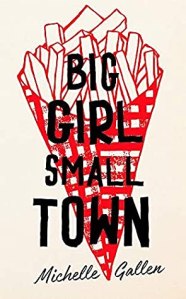
Big Girl, Small Town by Michelle Gallen

Northern Irish Vernacular

I liked the idea of reading a Northern Irish novel that used more of the phonetic vernacular as encountered in  Milkman by Anna Burns. Years ago on my first visit there, I bought a slim volume on some of the words used in the North but out of the context of a story or novel they made little sense and in the course of travels there wasn’t enough exposure to it to immerse in. So this seemed like a perfect opportunity.

I got so into it, I started writing to a friend about weans and oul wans an shite. She thought I was typing too fast and not using spellcheck.  And from the comments I’ve read on twitter by those who would know, it’s been deemed an authentic rendition.

The vernacular dialogue in this is absolutely perfect. Captures the patter, the understatement, the colour, the wry knowingness of the exchanges. Rónán Hession

Big Girl, Small Town takes place during a week in the life of socially awkward but inwardly clear-eyed 27-year-old Majella who from the opening page we learn has a list of stuff in her head she isn’t keen on, a top ten that hasn’t changed in seven years. Things like gossip, physical contact, noise, bright lights, scented stuff, sweating, jokes and make-up.

Sometimes Majella thought that she should condense her whole list of things she wasn’t keen on into a single item:  – Other People.

The list of things she does see the point in is shorter and includes eating, Dallas (except for the 1985-86 season), her da, her granny, Smithwicks (the most consumed Irish ale in Ireland), painkillers, cleaning and sex.

She lives with her alcoholic mother in a fictional border town, her father disappeared years before, presumed not to be living, though no one knows that for sure. They have just heard news of the death of her 85-year-old Granny, suspected as murder.

A Unique Narrative Structure

Each chapter begins with a time of day and an item from the list, such as:

Monday
4.04 p.m.
Item 12.2 Conversation: Rhetorical questions

and the story is narrated through her regular, unchangeable routine and manifestations of these items as she encounters them, like here where she shares one of her pet dislikes, her mother’s rhetorical questions.

Majella? D’ye not have work tae go til this evening?
Majella had work to go to, just as she had done every Monday for the past nine years. And Majella knew that her Ma knew that, because her work schedule and weekly Mass were the only routines their lives revolved around.

Donegal McCleans Malin

Outside a pub & grocery store in Malin, Donegal

Majella works in a local fish and chip shop with her colleague Marty and each evening we meet local characters and encounter more items; 3.3 Noise: Shutters in work and item 3.4: Noise: Shite singing, item 1: Small talk, bullshit and gossip, item 8.4: Jokes: Repeated jokes.

There’s routine and repetition and although it might seem uninteresting to follow along day after in this quotidian recital, even the chip counter conversations and order placements I enjoy, triggering as they do a recent (Oct 2019) humorous encounter of our own in a chipper (chip shop) in Northern Ireland.

Digression – A Personal Experience of Linguistic Nuance

I now understand better having finished the book, why the man at the chipper in Newcastle looked aghast at my son when in response to his question ‘Do you wan sauce onit?’ he replied ‘Yes please, Moutarde, I mean Mustard’. This was after my son had looked at me and said, ‘I can’t understand what he’s saying’, when the man asked him following his request for a chicken burger, ‘Wud ya likit S’thrn fried or Batter’d?’. I said ‘I’m not going to explain what battered is, so just take Southern Fried’. Who’d have thought a takeaway shop could provide such an entertaining, cross-cultural experience.

In Majella’s chipper, no one ever asks for mustard. Some of them ask for things that go beyond the everyday boundaries of pleasantries, the banter of some replays itself each visit, like an old record on repeat. Majella is clearly intelligent but hasn’t been in an environment that has encouraged to pursue that elsewhere, so instead she has found a role that suits her character (in a town with the highest unemployment rate in the country) and despite everything, it is clear that she is unlikely to become trapped by the same vices that capture most who’ve given up on their dreams.

It’s entertaining, it’s kind of sad, it’s funny and also confrontational. You read it and feel like you’re really in the skin of this character and though we might want more for her, it’s clear she’s ok and if watching Dallas reruns sounds a bit odd, it provides a bit of a cliffhanger of an ending as she reflects on the lessons of that Machiavellian character J.R. Ewing.  While most probably only saw what she was on the outside, beneath it all she was totally in charge of herself and about to become even more empowered than she had ever been.

The Author Michelle Gallen

Michelle Gallen Big Girl Small Town

Her debut novel,  Big Girl, Small Town has been nominated for the CWIP Prize (Comedy Women in Print) 2020, the UK and Ireland’s first comedy literary prize. In the podcast below she discusses why it has taken so long for this type of women’s writing to appear, suggesting that in the North there has been a sea-change, a cultural change that has finally enabled different voices to come in that allows women to write bawdy, irreverent, darkly humourous content that addresses sex in a very frank way.

Michelle Gallen – who grew up in the most bombed small town in Europe post World War II and went to school in an area with the highest unemployment rate in the industrially developed world – when interviewed, said of her motivation:

“I wrote Big Girl Small Town to shine a spotlight on the consequences of the British-Irish border on a family in a deeply divided community over decades of peace and ruthless violence. It tells the story from the dark heart of the community, revealing the human growth and resilience of a proudly ungovernable community on the very edge of Britain.”

She admits that Majella might be happier if she’d watched less Dallas and read more books. Asked how she thought Majella would have coped with corona virus, she said:

“I think that while Majella would welcome the social distancing aspect of managing Covid-19, she would – like most people – be intensely worried for the virus’s effect on those who are vulnerable: the sick, the infirm and the elderly.”

And on what she might find comfort in reading:

“She would find a kindred soul in the narrator of Convenience Store Woman by Sayaka Murata. She’d have a real laugh reading Lisa McInerney’s The Glorious Heresies. And I can see her finding comfort in the lovely Leonard and Hungry Paul by Rónán Hession.” Michelle Gallen

Comedy Women in Print Literary Prize 2020

Further Reading & Listening

Irish Times Article – Post troubles tale of a damaged woman 

Irish News Interview – Tyrone author’s debut novel delves into our troubled past with a helping of chips and Dallas on repeat

Irish Times The Woman’s Podcast, Episode 396 starts at 27.50 : Listen to three of Ireland’s newest authors Michelle Gallen, Niamh Campbell and Rachel Donohue join Róisín Ingle to speak about their debut novels and the inspiration behind them.

Audio Extract: Listen to 2 minutes from the beginning of the novel, read by Nicola Coughlin

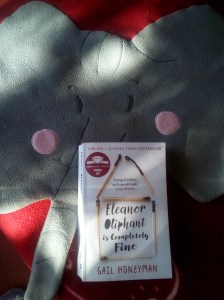
Eleanor Oliphant is Completely Fine by Gail Honeyman

A popular book in 2017, it won the Costa Book Award and has gone on to become a bestseller and will become a film starring Reese Witherspoon (who acquired the film rights), an incredible success for the debut novel of Gail Honeyman. To be honest, it hadn’t been on my radar, however when a friend lent me her copy, insisting I read it and a rainy day beckoned, I turned the page…

The book begins with an interesting quote from Olivia Laing’s book The Lonely City:

“…loneliness is hallmarked by an intense desire to bring the experience to a close; something which cannot be achieved by getting out more, but only by developing intimate connections. This is far easier said than done, especially for people whose loneliness arises from a state of loss or exile or prejudice, who have reason to fear or mistrust as well as long for the society of others.”

Eleanor Oliphant has been in the same office job in Glasgow, Scotland for almost eight years, she’s in her late twenties, intelligent, observant and diligent, she likes and needs routine and copes fine with her lack of social engagement, lack of friends, lack of family – with the exception of a weekly conversation with her mother on Wednesdays – and seems not to feel anything even when she overhears her colleagues speaking unkindly behind her back.

So used to her self imposed isolation and predictable life is she, that she seems shocked when a new employee Raymond from IT, whom she calls when her computer freezes one morning, initiates conversation with her outside the office, speaking to her as if she might be just like the others.
In this introduction to Eleanor, we aren’t sure of her, though her obvious intelligence and comfort in routine, he slight air of superiority despite the comments of her colleagues, suggest some kind of cognitive difference and her lack of a filter or self-censoring ability make her abject honesty a cause of surprise to some. Her habit of consuming vast amounts of vodka at home alone at the weekend, suggest something more dire lurks in her past.

Over the course of the novel, more of her early life is revealed and we learn that she has been through some kind of childhood trauma, which might explain some of her behaviours. This really sets up what for me was the main question, was this a case of nature, nurture (lack of) or trauma or a combination of them all. Honeyman leaves it to the reader to decide, but regardless of what influences made Eleanor the way she is, she is ripe for transformation. And she seems to have realised it herself, albeit, lead by a new obsession.

For, at the same time, and from the opening pages, she believes she may have met the perfect man, or is about to meet him, she obsesses about this man and builds him into her image of perfection, as had been defined by her absent mother, and prepares to improve herself physically in preparation of meeting him.

Meanwhile, through Raymond, her actual social connections begin to widen and they awaken something familiar in her, feelings that go with being invited to be part of a community, small acts of kindness, of inclusiveness, and Raymond helps her navigate these interactions, as might a friend.

It is a well written, engaging and thought provoking read, partly because of what is not known and slowly revealed, but the dialogue gives the story pace and there are plenty of new activities and social interactions Eleanor participates in, providing the space for her to grow and develop within.

“I wondered how it would feel to perform such simple deeds for other people. I couldn’t remember. I had done such things in the past, tried to be kind, tried to take care, I knew I had, but that was before. I tried, and I had failed, and all was lost to me afterwards. I had no one to blame but myself.”

I did find the character of Eleanor a little difficult to believe in, the long years of solitude followed by a relatively sudden transformation seem to occur too easily and quickly, however if I were to suspend judgement on the authenticity of the character and the speed of her life change, which wasn’t hard to do, then it becomes a kind of coming-of-age novel about a young woman overcoming a traumatic past and demonstrates (a little too conveniently) the healing that can come from genuine friendship and being part of a family and community and a functional workplace (if there is such a thing).

The introduction of a therapist also allows for the conversations that explore the difference between the fulfillment of physical needs and emotional needs, neatly tying things up and rounding off Eleanor’s late education and self development.

And while it’s not exactly a romance, there are elements of the ambiguity of her friendship with Raymond that certainly are likely to make this a popular film.

An entertaining, light read, that leaves you with more than a few questions.

Buy a copy of this book via Book Depository