
This is my first read of American author Percival Everett, a prolific writer I have been aware of for a few years and wanted to read. So Much Blue is partly set in France so I chose to read that first. I loved it. It’s a multi-layered novel with different strands contributing to an eventual shift in the main protagonist.
A Triple Timeline Narrative

It starts out light and comical with a number of laugh out loud moments and as the story develops, the reflections grow deeper and the experiences become more risky, it becomes more serious.
There are three timelines and the narrative switches between the three, as all are important to the present situation, where the protagonist, artist Kevin Pace is painting a large 12 X 21 foot canvas in his shed and will not show it to anyone, not his wife Linda, his best friend Richard or his children. The painting harbours his secrets. In a rare interview Percival said:
“I’m interested in secrets: how important they are, and how much secrets contribute to the truth of something.”
House – Present Moment
The chapters entitled House are set in the present. Pace is fifty six years old, a recovering alcoholic and abstract artist, living with his wife Linda and their two children Will (12) and April (16). He is experiencing a kind of reckoning with himself. It has something to do with the locked shed where he works on a ‘maybe masterpiece’ he is creating, and events of the past that he is reconciling with. At the same time, right now, there is a situation with his daughter, which he is not managing very well.
I considered myself a significant and singular failure as both a husband and a father.
Paris – Ten Years Ago
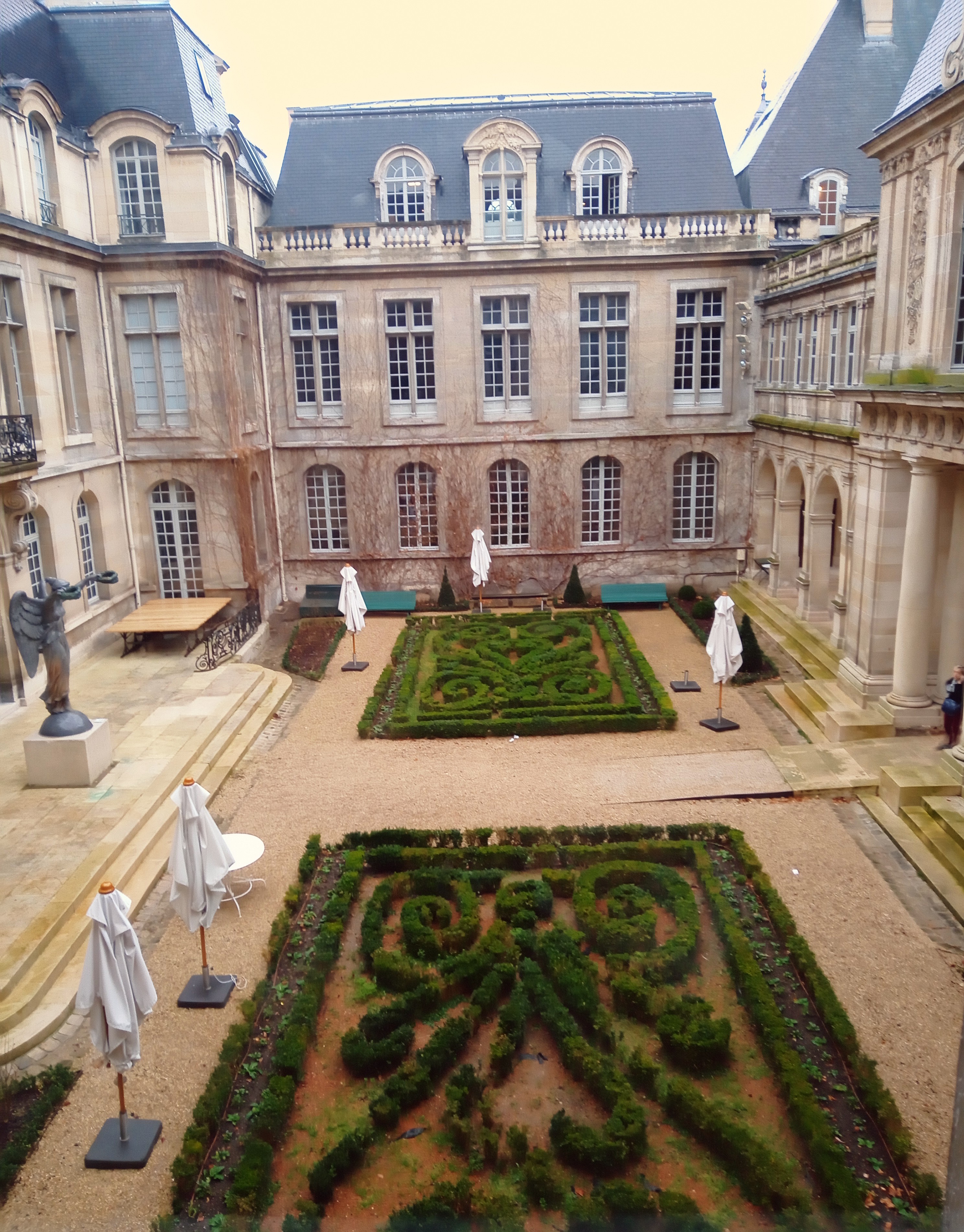
To understand who he is and what is behind his painting, we read about two life changing experiences he went through, that have contributed to who he is today. The first, in the chapters entitled Paris took place ten years ago when he was 46 years old; a brief affair with a very young Parisian woman. Though it is one of his secrets and regrets, it was the first time he had experienced something and it contributes to his later understanding and growth.
It could have been argued that ten years earlier I had succumbed to a banal midlife crisis, but now I was falling victim to something far worse, a late-life revelation.
1979 – 30 years ago

The second experience was a covert trip to El Salvador in 1979 with his friend Richard, while they were still university students. They travelled there to look for Richard’s brother Tad, who was missing, believed to be involved in bad business. The two boys went there without knowledge that the country was on the brink of civil war and witnessed terrible things, that would haunt Kevin for years to come. The 1979 chapters are a wild ride and a shocking wake up call to the young men.
If only I had the excuse of misunderstanding why I was there, perhaps then some of the guilt would not exist, perhaps then I would not have blamed myself to this day, perhaps then I would not long for a piece of me that died that day. But my friend had come to me, depressed, fearful, lost, and he had asked for my help. I offered it willingly, if not completely innocently or selflessly. That was 30 years ago. It was May 1979.
Alcoholic or Workaholic
As an artist, he is interested in colour and its representation and so we too come to understand what that means to him. Though we are not able to see what he creates, we can imagine. Ultimately, the art is not enough and he must revisit some of the past in order to realise what he must do to make amends.
It was far more socially acceptable to be a workaholic, the obsessed artiste, than it was to be a drunk, but using an old neighbour’s phrase, I’m here to tell you that one addiction was as bad as the next.
The real sadness was that I drifted away from my life and children because of alcohol, but instead of finding the current back to them when I ceased, I camped out on an uncharted island in the middle of myself. Nonetheless, selfish as I was, things were better. I was more trustworthy. An absentminded artist is more forgivable than an alcoholic.
So Much Blue After the Reds, Browns and Ochres
I found reading it very vivid and could imagine the scenes so well. The character of Kevin is flawed but self-aware, he is aware of his failings and there will be transformation of sorts by the end.
I looked across the dining room at a small canvas of mine. There was no blue in it. It was often pointed out that I avoided blue. It was true. I was uncomfortable with the colour. I could never control it. It was nearly always a source of warmth in the underpainting, but it was never on the surface, never more than an idea on any work. Regardless that blue was so likeable, a colour that so many loved or liked – no one hated blue – I could not use it. The colour of trust, loyalty, a subject for philosophical discourse, the name of a musical form, blue was not mine. And by extension green was not mine. In fact, in Japanese and Korean, blue and green have the same name. As blue as the sky is, the colour came late to humans.
Brilliant. Look forward to reading more.
‘A picture is a secret about a secret’. Diane Arbus
Further Reading
NPR Review: So Much Blue is Everett’s Best Yet by Michael Schaub
New York Times: In ‘So Much Blue,’ a Married Painter Spills Secrets by Gerald Early
Percival Everett, Author
Percival Everett is the author of over thirty books, including So Much Blue, Telephone, Dr No and The Trees, which was shortlisted for the 2022 Booker Prize and won the 2022 Bollinger Everyman Wodehouse Prize.
He has received the Hurston/Wright Legacy Award and the PEN Center USA Award for Fiction, has been a Pulitzer Prize finalist, and is Distinguished Professor of English at the University of Southern California. His novel Erasure has now been adapted into the major film American Fiction.
His latest novel James (a reimagining of Mark Twain’s The Adventures of Huckleberry Finn, told from the perspective of the enslaved Jim) was published on 11 April 2024. He lives in Los Angeles.
 Word by Word
I have just finished reading James. I loved it, despite not having read The Adventures of Huckleberry Finn. This one sounds quite extraordinarily different. Definitely interested!
LikeLiked by 2 people
I have James to read as well, but decided to start with So Much Blue and Erasure and I’ll finish with James. Looking forward to them all! So pleased to hear you enjoyed James.
LikeLiked by 1 person
Hi Clare
Thanks for this little review of an author we have never heard of.
We think, we’ll have a look at ‘The Trees’.
All the best
The Fab Four of Cley
🙂 🙂 🙂 🙂
LikeLiked by 2 people
Thank you for reading and commenting, I hope you enjoy The Trees, that is another one I may have to consider reading as well.
LikeLiked by 1 person
Goodness, this sounds really intriguing, Claire! I read The Trees when it was shortlisted for the Booker 18 months or so ago, and it wowed me from the start. If anything, this sounds more complex and layered than The Trees, and the art theme definitely appeals. What a clever, inventive writer he seems to be!
LikeLiked by 2 people
Yes, I had heard that every novel is different, that he doesn’t obey rules, crosses genre etc and I do get a sense of authorial freedom and yet there is clearly a strong foundational aspect, an intention that may or may not be picked up by readers. I loved it and thought the timelines contributing to the story, to his past that informed his artwork was really interesting. To me there’s a kind of healing that takes place.
I’m sure James is going to be super popular, but I wanted to explore some of his earlier work first and So Much Blue was brilliantly done, with the visual mystery left to the reader’s imagination, unlike Starnone’s central tableau which graced the cover of the book.
Everett admitted to being inspired by Miles Davis Kind of Blue and there is a song titled Blue in Green, but as for the masterpiece of art, that belongs to the reader!
LikeLiked by 1 person
This does sound good Claire. I’ve only read The Trees but I really enjoyed it.
LikeLiked by 1 person
I think I’m going to have to add The Trees to my TBR now too.
LikeLiked by 2 people
it’s very dark but very funny
LikeLiked by 2 people
Nicely done review.
LikeLiked by 1 person
Thanks Martie.
LikeLike
Percival Everett is certainly having his moment. The movie ‘American Fiction’ sparked my interest. Then I read a terrific profile in the New Yorker. A friend of mine says ‘James’ is a must-read and since I do love all things blue, I may have to put your recommendation at the top of the TBR.
LikeLiked by 1 person
I do hope you read So Much Blue Deborah. I am going to read James, it does seem like one of the novels of 2024. I just finished reading Erasure, I haven’t seen the film American Fiction, but I am intrigued now to know how it was made and written given all the inner reflection in the book.
LikeLike
Hello, Claire — I can’t help thinking of you now that I’m reading ‘So Much Blue.’ You’re so right — it’s an extraordinary novel on more than one level, not the least of which is the way he singles out particular words for reflection. Percival Everett has had a quiet following for years. To see how a movie brought new recognition to his work is a product of the times in which we live—just at a time when his latest novel has garnered all the praise it deserves.
LikeLike
Pingback: Erasure by Percival Everett (2001) – Word by Word
Thank you Claire. So Much Blue will be my introduction to Percival Everett. I live in Paris so that portion of the book will be of special interest. I watched American Fiction just before the Oscar presentations this year so Erasure is on my list of things to read as well as James.
LikeLiked by 1 person
I hope you enjoy So Much Blue Brenda, I found it to be the ideal introduction to Everett’s oeuvre.
LikeLike
Pingback: James by Percival Everett – Word by Word
Pingback: The Trees by Percival Everett (2021) – Word by Word