
I decided to read Mother of Pearl (1996) as a precursor to Mary Morrissy’s latest novel Penelope Unbound (2023), a re-imagined and slightly changed life of Nora Barnacle (the wife of James Joyce) which I intend to read in 2024. Having enjoyed Nuala O’Connor’s excellent novel Nora, I’ll be curious to see where Morrissy takes her.
It is only now, since the death of Joyce’s grandson Stephen in 2020, one of the most litigious heirs in history, that stories can safely be written about Nora and James Joyce – as Stephen did all he could to prevent access or usage of the family archive, including the destruction of hundreds of letters. James Joyce, a brilliant writer with an overprotective grandson
It seems that Mary Morrissy likes to take inspiration from real life characters or stories, and so it was with Mother of Pearl. A little backstory then before reviewing the novel.
Truth Stranger Than Fiction
A notorious baby-snatching case in 1950’s Ireland was the inspiration for Mary Morrissy’s Mother of Pearl. Re-imagining elements of that story, rather than retelling the facts was a decision she made because the truth would have come across to readers as unbelievable. Morrissy in an article on her website explains:
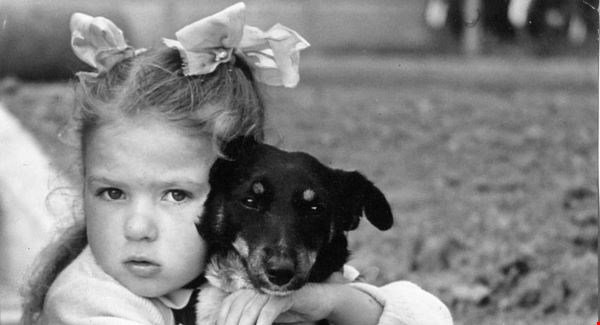
Elizabeth Browne, above, was kidnapped from a pram on Henry Street in Dublin on November 25, 1950. Her kidnapper, Mrs Barbara McGeehan, who lived in Belfast, took her north on the train and passed her off as her own child to her unsuspecting husband.
Four years later – and this is where truth is stranger than fiction – Mrs McGeehan travelled south again and stole another child, this time a boy, Patrick Berrigan, from outside Woolworths on Henry Street. As luck would have it, a fellow passenger on the Belfast train noticed Mrs McGeehan, in particular that she had no milk for her baby, and went to the dining car to get some. Afterwards when the alert was raised about the Berrigan baby kidnap, she remembered this incident and contacted the police.
Mrs McGeehan was traced to her home in the White City estate in Belfast where police found the Berrigan baby and the four-year-old Elizabeth Browne, now renamed Bernadette. In these pre-DNA days, she was identified by a distinctive birth mark, and her parents, news-vendors John and Bridget Browne, travelled to Belfast to claim her.
Identity Trauma
What interested Morrissy in particular, was the identity trauma of a four-year-old being forcibly removed from a loving home and familiar “parents” and being returned to a family, who though biologically related, were strangers to her.
Clearly this was something Elizabeth’s parents thought about or experienced the repercussions of, because there was another twist, a strange fact that once again did not go into the novel. After Mrs McGeehan served her two year jail year sentence for the kidnap, the Browne family contacted her. Following their reconciliation, every year Elizabeth would travel to Belfast to spend a holiday with the very same woman who had kidnapped her.
Though Elizabeth would marry and have her own family, sadly she died at the very young age of 38 years from cancer.
The Novel, A Dark Re-Imagining
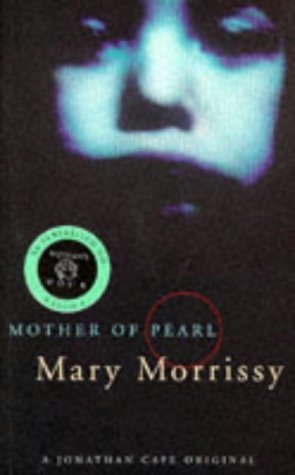
A novel in three parts, Mother of Pearl explores perspectives in three women’s lives, the first two will mother the same child, the third is that of the child grown – the consequence of a repressed childhood, of events never talked about, of the effect of those events and years and the suppression of them, on her psyche.
Part 1 – We meet Irene in Granitefield sanotorium, an institution where she spends some years due to having contracted TB. She willingly leaves her family behind and finds some kind of comfort in the hospital environment, electing to remain there as an employee long after she has recovered from her illness and might easily have left.
The operation, they told her, had saved her. But she had lost four of her ribs, cracked open by a giant pair of shears…Without her ribs Irene felt as if part of her protection against the world had been removed.
Standing vigil, she is known to recognise the imminence of death patients. One in particular will be kife changing.
Irene knew the moment she saw Stanley Godwin that he was watching someone beloved die. Healthy people keeping vigil seemed to take on the symptoms of the disease.
This son, who is with his mother, suddenly understands the implications of his mothers death, of the great loss and hole in his life, her absence will mean for him. His attention moves towards Irene.
Inwardly he was quaking. He could comprehend the impending loss; what he couldn’t imagine was his life afterwards. A middle-aged man about to be granted unwanted freedom.
Outside of the institution, longing for a child she knows will not come, brooding on her own losses, Irene succumbs to fantasies and one day indulges her desire, removing a sickly child from a hospital, a baby she names Pearl.
This was her offspring, hers alone, the child of her illness, Irene’s first loss. And she was still out there. Not dead, simply lost. In a hospital ward somewhere, unclaimed, waiting for her mother. This time Irene determined she would tell no one, not even Stanley. She would seek out the child who was rightfully hers, the fruit of Eve’s ribs.
Part 2 – We meet Rita, who becomes Mrs Mel Spain, mother of the baby she had not initially realised how much she wanted, until the day she is taken from her. And the husband Mel, son of an absent father, who feels a yearning to follow in his carefree footsteps.
It didn’t stop Mel wondering, however, how his father had managed the extraordinary trick of disappearing into thin air. He had become invisible by simply walking out of his life. Ten years after the event, as he nursed his fourth drink of the night, Mel finally understood how easy it must have been. It was not, as he had always thought, a daring but calculated move; it was a matter of impulse and extreme selfishness.
Part 3 – we meet the child, a child who remembers little of her early life, who is told stories that don’t resonate with the dream-like memories she has, who feels like an outsider in her family and can not explain to herself why.
Exploring themes of loss, abandonment, denial, Mother of Pearl takes us inside the dysfunction of family, of obsession with and rejection of a child, of the long-lasting impact on those formative years of the compromised adult that will little understand their own inclination(s), as those threads of early development and the scars of traumatic events imprint on their psyche and affect their future selves.
A compelling and thought provoking read that is all the more astounding given the events that propelled the author to recreate such a situation.
Further Reading
The Guardian: Penelope Unbound by Mary Morrissy review – masterly alternative life of Nora Barnacle by John Banville
JSTOR Interview With Mary Morrissy, Studies, An Irish Quarterly Review Vol. 87, No. 347 (Autumn, 1998)
Author, Mary Morrissy
Mary Morrissy was born in Dublin in 1957. She has published four novels – Mother of Pearl (1995), The Pretender (2000), The Rising of Bella Casey (2013) and Penelope Unbound (2023) and a collection of short stories, A Lazy Eye (1993).
She won a Hennessy Award for short fiction in 1984 and a prestigious US Lannan Literary Foundation Award in 1995. Mother of Pearl was shortlisted for the Whitbread/Costa Award and longlisted for the Women’s (Orange)Prize for Fiction (1996) while The Pretender was nominated for the Dublin Impac Award and shortlisted for the Kerry Group Irish Fiction Award. The Rising of Bella Casey was nominated for the Dublin Literary Award.
A member of Aosdána, she is a journalist, a teacher of creative writing and a literary mentor. She blogs on art, fiction and history at marymorrissy.com
“I suppose I explore a female kind of darkness. My characters tend to be very restricted, restricted emotionally, I mean, by fear and guilt and an inability to move in and inhabit the centre of their own lives. And despite all our so-called modernity, I think this still holds true for thousands of women. We may have broken away from the traps of our mothers’ generation, but there is a long way to travel before women have, if I may use the phrase in this context, parity of esteem. - Interview with Mary Morrissy, Studies, An Irish Quarterly Review Vol. 87, No. 347 (Autumn, 1998)
 Word by Word