
This was my third novel by Percival Everett, having very much enjoyed So Much Blue (2017) and Erasure (2001). I knew James would be quite a different premise because it is connected to the well known, classic adventure story of Huckleberry Finn.

I have a brief sense of familiarity with Tom Sawyer and Huckleberry Finn, I may have seen episodes of a television show when I was a child. I wasn’t sure if I had ever read the book it is based on. I don’t think so. Boy and the Sea Beast by Ann de Roo was more my kind of adventure story.
Set in the period just before the American civil war is about to break out, we meet Jim, a black slave, waiting outside for corn bread. Two boys, Tom and Huck are trying to play a trick on him and plan to steal something from the kitchen.
A Boy, A Young Man or an Adult
I admit that for the first 60 pages I thought Jim was a young boy too. When on page 62 he asks after his wife and child I shift my perspective. The way the two boys were interacting with him (pranking him) seemed appropriate towards another boy, not a man.
In a world where slavery exists, relationships have a perverse hierarchy, one that is demonstrated from the opening scene of the novel. When I go back and close read I see where there were signs I missed.

Jim helps collect wood and takes a risk by putting some aside (hidden) for different members of his family and community.
The weather remain unseasonably cold and I found myself pilfering wood for not only April and Cotton, but also my family and a couple of others. I was terribly concerned that the wood might be missed, and that fear worked its way into reality one Sunday afternoon.
He hears that the owner is planning to sell him to a man in New Orleans. Without waiting for morning Jim decides to escape, though he feels bad about leaving his family. He is determined to find a way to raise the funds to free his family from slavery.
“You can’t run,” Sadie said. “You know what they do to runaways.”
“I’ll hide out. I’ll hide out on Jackson Island. They’ll think I’ve run north, but I’ll be there. Then I will figure out something.”
He heads down to the river, the Mississippi, crosses to an island where he finds a safe place to rest a while. To his surprise he encounters the boy Huck, who is running from his abusive, drunkard father Pap. It is not good news, because Huck has left things in a way that people will believe him to have been murdered. And now Jim is missing.
Language and Expectations
Whenever Jim is around Huck, he speaks in a certain way, a kind of dialect. We know that Jim has had access to the house library in the past, that he can read, write and articulate, but he must suppress his ability to understand intellectually and more importantly hide his capable manner of his speech, in order to keep him safe from those whose racist ways of thinking will be threatened by a man showing superior comprehension.
When Jim gets bitten by a snake and spends a few nights in a fever, his dream time ramblings put him at risk. He starts having conversations with Voltaire and other French philosophers, a pattern that emerges whenever he enters dream state. (And typical of Everett to throw in French literary motifs – they add both comic relief and increase the danger surrounding the protagonist). His subconscious is unable to hide the knowledge he has acquired over the years.
François-Marie Arouet Voltaire put a fat stick into the fire. His delicate fingers held the wood for what seemed like too long a time.
On the inside cover there is a map of the river and the locations on his journey south where they will have different encounters, where they become separated for a while. Each time they are separated, sometimes for a significant period, they manage to find each other again.
How To Trust a Man
It is not easy for Jim to trust another man. The people he encounters may be slaves or white men, or men passing as white, or white men. Each encounter presents a situation he must navigate, an aspect of the society within which they live, how different people are.
He has withheld information from Huck that might have benefited him. He considers telling him, but fears he might be angry and betray him, causing his capture.
One of the most uncomfortable encounters he has is with a travelling minstrel show, a band of white men who put on a show and sing to people, songs that mock black people. While the man who runs that show says he does not believe in slavery, he “hires” Jim as a tenor for his show. This presents the farcical and most dangerous situation as he is be painted to be a black man as if he were a white man.
The most costly, traumatic episode for Jim comes following the help of four men he encounters at the riverside. They ask what they might bring him and he asks for a pencil. It is a most dangerous thing for an enslaved man to have on him or for another to source for him and the cost will be high. They also understand its power and want him to have it.
To Read and Write, A Subversive Act

The discovery of abandoned books and paper is one of the most significant discoveries Jim makes. It marks the beginning of a new stage in his life. He is going to write. About his life and its meaning. His first attempt is with a stick, the pencil he obsesses over and eventually acquires will bring further elucidation.
I really wanted to read. Though Huck was asleep, I could not chance his waking and discovering me with my face in an open book. Then I thought, How could he know that I was actually reading? I could simply claim to be staring dumbly at the letters and words, wondering what in the world they meant. How could he know? At that moment the power of reading made itself clear and real to me. If I could see the words, then no one could control them or what I got from them. They couldn’t even know if I was merely seeing them or reading them, sounding them out or comprehending them. It was a completely private affair and completely free and, therefore, completely subversive.
A Turning Point
There comes a point where Jim has had enough experiences and encountered sufficient people that his purpose becomes stronger and clearer and his fear dissipates. The mood is changing as groups of young people begin to amass to fight in the war. At this point he turns around and heads back north, from where he came. His purpose changes, becomes clear, his resolve strong.
It marks a shift in his relations with those around him, including Huck. He has encountered help and harm from different quarters, he has taken risks and overcome adversity. He moves from “running from” to “running towards”. His language changes and he begins to take on the character of a leader.
I thought it was an excellent novel and collection of encounters that confronted many of the issues and circumstances of the society they lived in at the time and the dangers a runaway slave had to navigate in order to seek freedom. How the journey changed him and the inevitability of violence taking a place in the life a man, not prone to violence, but brought to it by the oppression and injustice surrounding him.
I love that we are beginning to see a narrative shift in stories, in terms of the perspective from which stories are told and the nuance of character developed in those who have been sidelined or typecast.
From Book to Film, Writing Slant
I’m looking forward to what the partnership between Percival Everett and Taika Waititi will create, in bringing this story to the big screen, a creative partnership just announced this past week.
With my pencil, I wrote myself into being. James
Percival Everett, Author
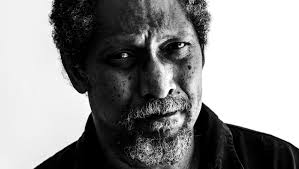
Percival Everett is the author of over thirty books, including So Much Blue, Telephone, Dr No and The Trees, which was shortlisted for the 2022 Booker Prize and won the 2022 Bollinger Everyman Wodehouse Prize.
He has received the Hurston/Wright Legacy Award and the PEN Center USA Award for Fiction, has been a Pulitzer Prize finalist, and is Distinguished Professor of English at the University of Southern California. His novel Erasure was adapted into the major film American Fiction.
The novel James (a reimagining of Mark Twain’s The Adventures of Huckleberry Finn, told from the perspective of the enslaved Jim) was published on 11 April 2024. He lives in Los Angeles.


 Word by Word